
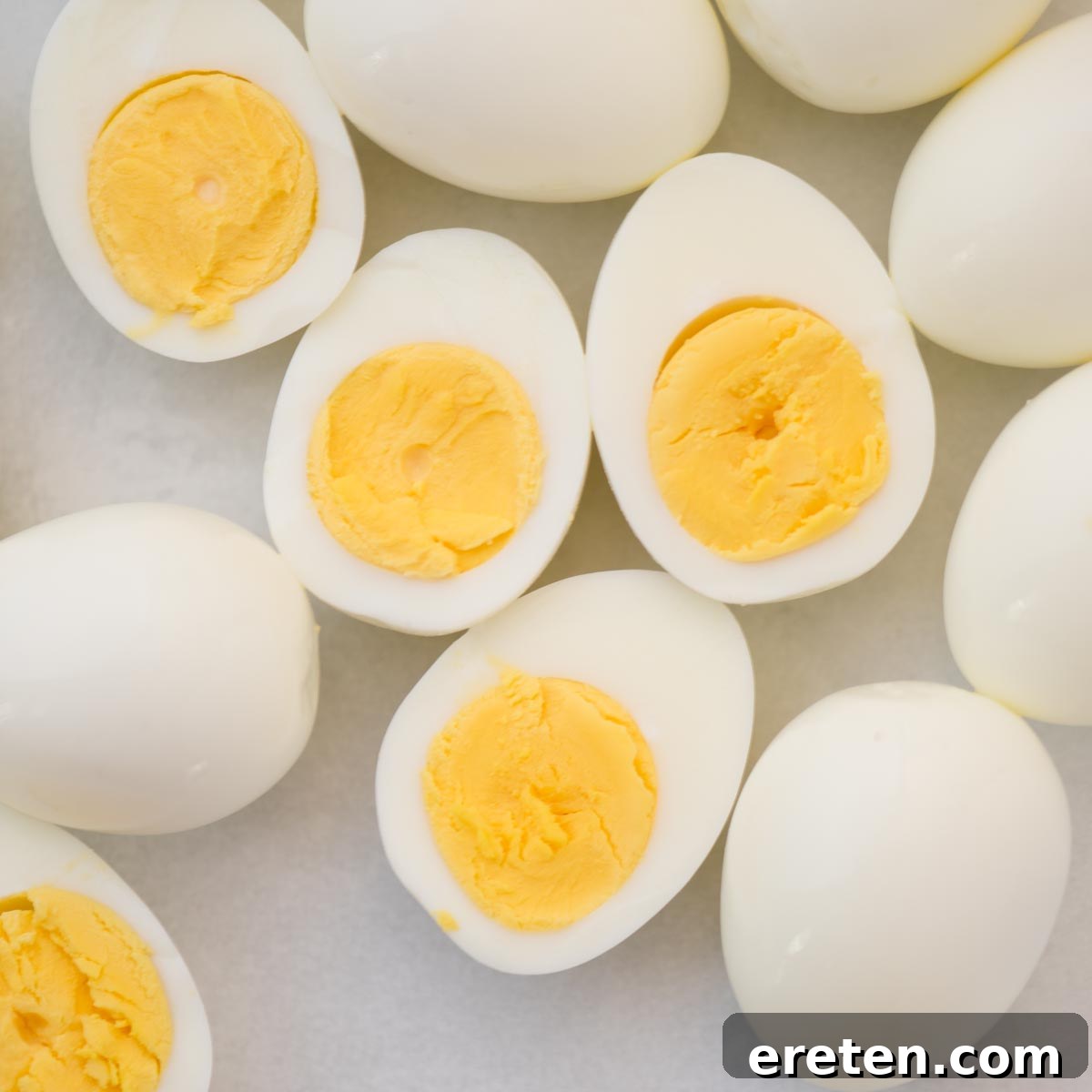
The Ultimate Guide to Perfectly Hard-Boiled Eggs: Easy Peel, Creamy Yolks Every Time
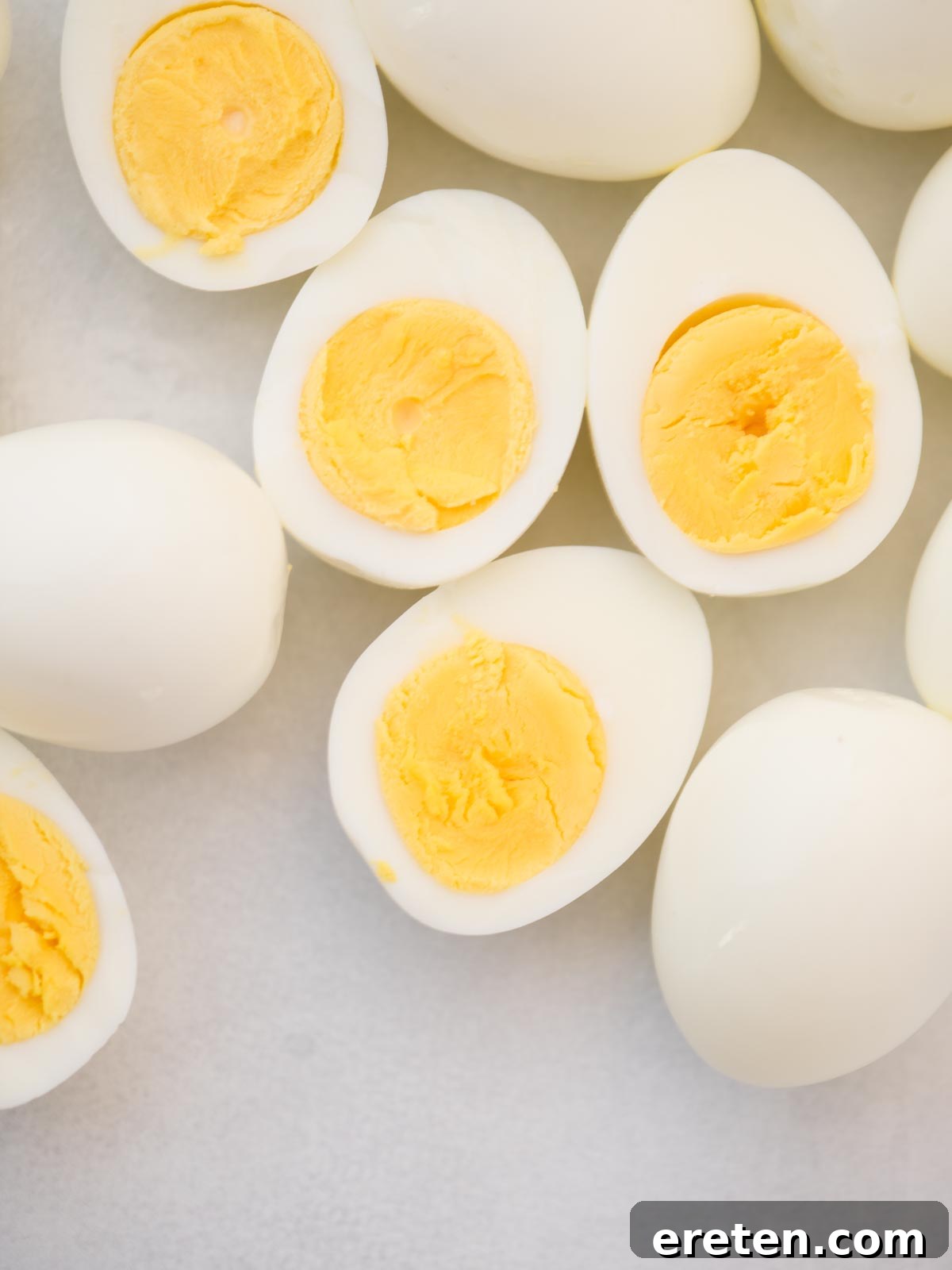
Achieving perfectly cooked hard-boiled eggs with vibrant, creamy yolks and shells that peel away effortlessly might seem like a culinary mystery. Many methods promise success but often leave you with frustrating results: overcooked yolks sporting an unappetizing grey ring, or stubborn shells that cling to the egg white, tearing away precious chunks of your perfectly edible creation. If you’ve ever found yourself battling with a freshly boiled egg, ready to give up halfway through the peeling process, you’re not alone.
But what if there was a simple, foolproof technique that guaranteed flawless hard-boiled eggs, every single time? A method that banishes the dreaded grey ring, ensures a silky, tender yolk, and makes peeling a breeze? Look no further. This comprehensive guide will walk you through the precise steps and essential tips to master the art of hard-boiled eggs, transforming your kitchen experience from frustrating to fantastic. Whether you’re preparing them for a nutritious snack, an elegant appetizer, or as a key ingredient in your favorite recipes, you’ll discover the secret to consistently perfect results.
This post may contain affiliate links, meaning I may earn a small commission at no extra cost to you if you make a purchase through my links.
Mastering the Art of Hard-Boiled Eggs: A Foolproof Recipe
Say goodbye to rubbery whites, chalky yolks, and shredded eggs! My method for cooking hard-boiled eggs is designed to eliminate common frustrations and deliver consistently excellent results. This isn’t just another egg recipe; it’s a game-changer that will revolutionize the way you prepare one of the simplest yet most versatile foods. With just a few simple tricks, you’ll achieve eggs that are a joy to eat and incredibly easy to work with.
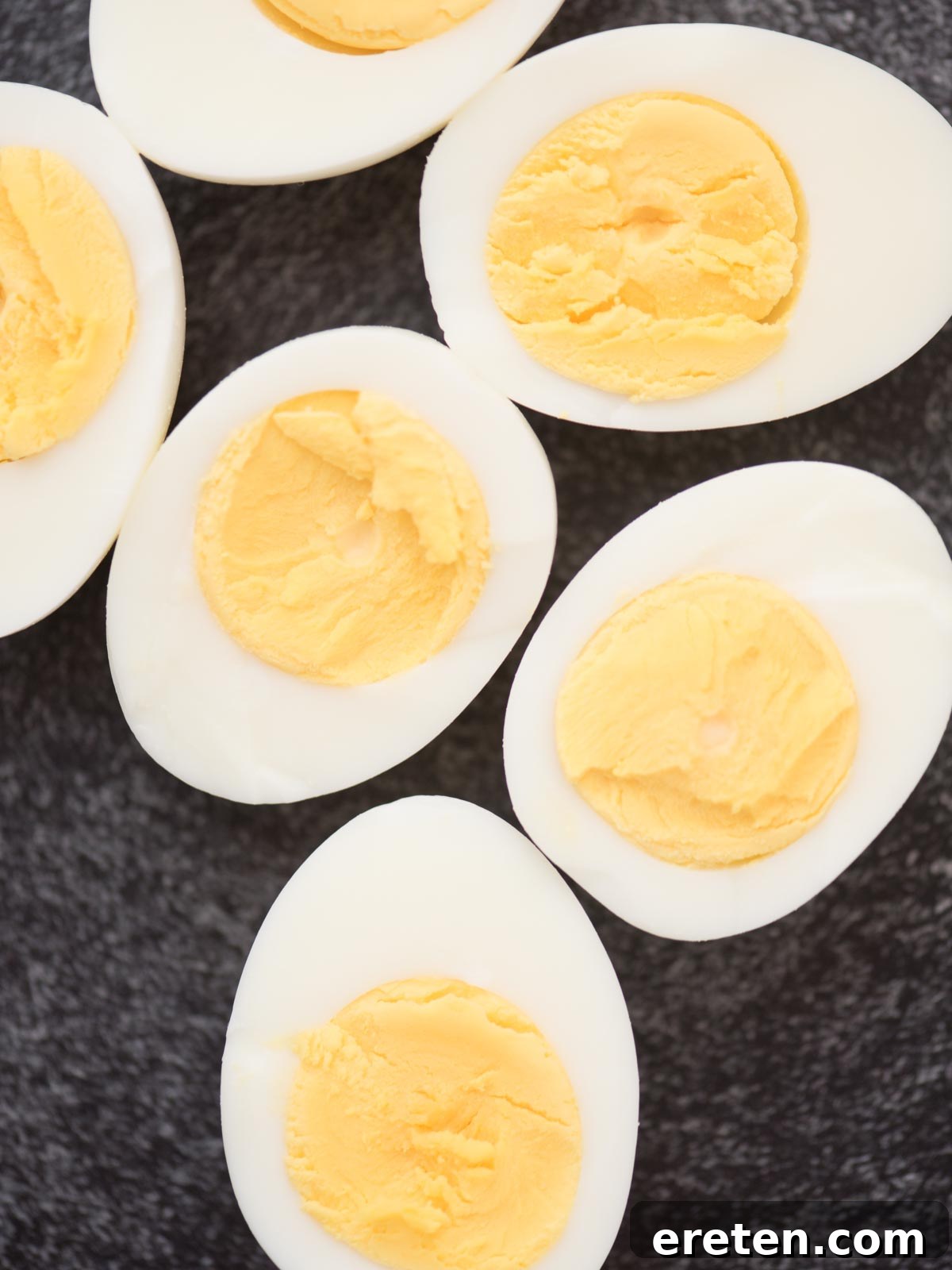
Imagine slicing into a hard-boiled egg and finding a beautiful, bright yellow yolk without any hint of discolouration. Picture the shell sliding off smoothly, leaving behind a pristine, unblemished egg white. This isn’t just wishful thinking; it’s the standard you can expect with this technique. Whether you’re planning to make creamy deviled eggs, a rich egg salad, a hearty tuna salad, or simply enjoy them on their own, this recipe ensures perfectly cooked hard-boiled eggs that are a true delight.
One of the key secrets I’m about to reveal goes against much of the conventional wisdom you might find online. This counter-intuitive step is precisely what makes the difference between mediocre hard-boiled eggs and truly spectacular ones. Get ready to impress yourself and anyone you share these perfectly prepared eggs with!
Why This Method Guarantees the Best Hard-Boiled Eggs
You’ll quickly fall in love with this hard-boiled egg recipe, and here’s why it stands out from the rest:
- Unrivaled Consistency: This is truly the last hard-boiled egg recipe you’ll ever need! Once you grasp this simple technique, you can replicate perfect results every single time, whether you’re making one egg or a dozen.
- Versatile Perfection: While designed for hard-boiled eggs, this method can also be easily adapted to create ideal soft-boiled eggs, giving you control over your preferred yolk consistency.
- Superior Texture and Flavor: No more dry, crumbly, or grey yolks. Expect beautifully creamy, perfectly cooked yolks that are a pleasure to eat on their own, enhancing any dish they’re added to.
- Effortless Peeling: The bane of many home cooks, difficult peeling becomes a thing of the past. Our special technique ensures shells slide off easily, leaving you with smooth, intact egg whites.
- Healthful and Convenient: Hard-boiled eggs are a fantastic source of protein and nutrients. This method makes it easy to incorporate them into your meal prep, providing a quick, healthy snack or ingredient ready at your fingertips.
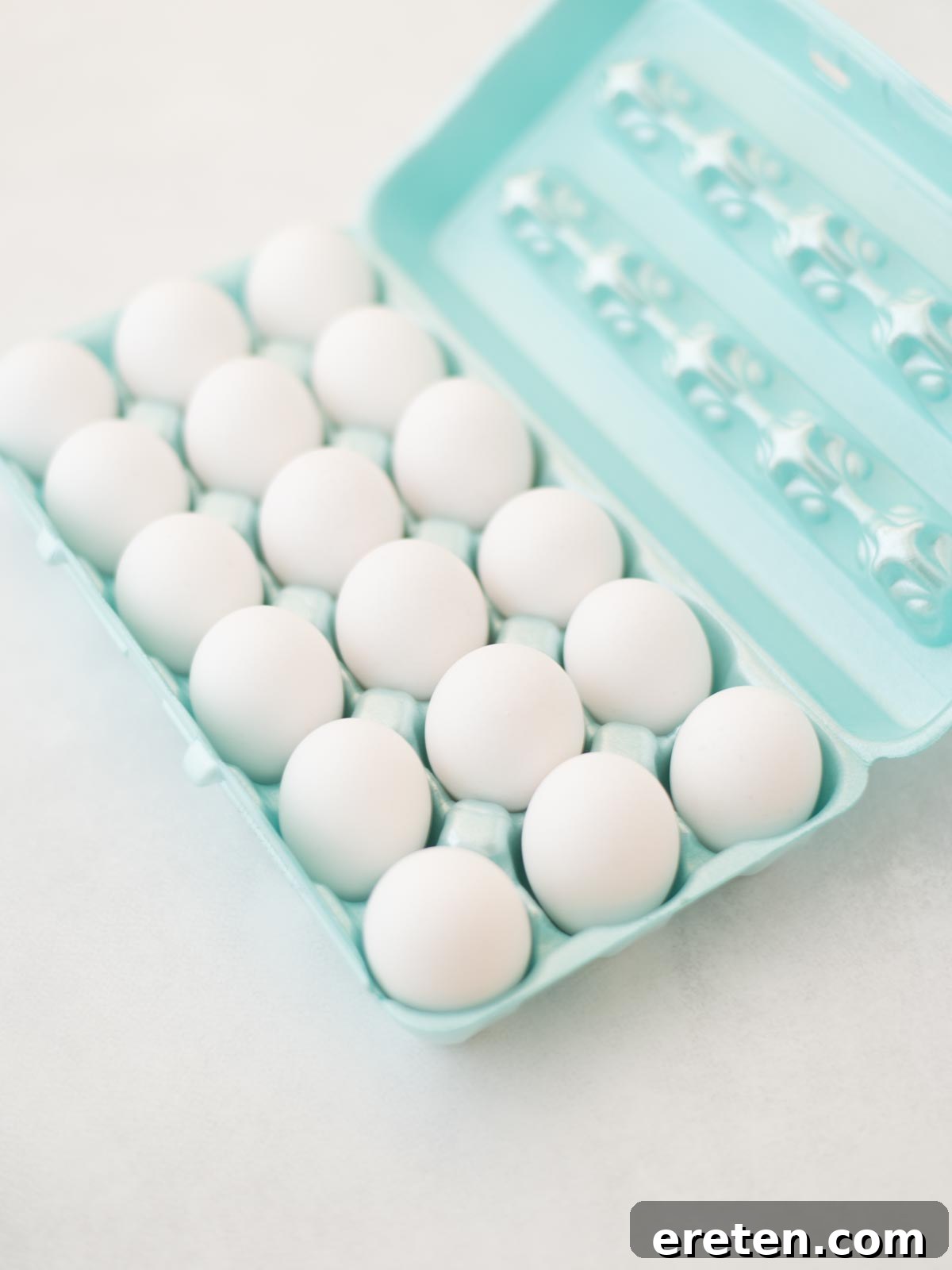
Essential Ingredients for Perfect Hard-Boiled Eggs
Making the best hard-boiled eggs requires just a few simple ingredients and tools, most of which you likely already have in your kitchen:
- Eggs: For this recipe, I recommend using a dozen large eggs. The quantity can vary based on your needs, but a full pot helps prevent excessive movement. While it might seem counter-intuitive, having more eggs in the pot can actually help stabilize them, reducing the likelihood of cracking as they gently bump against each other rather than violently against the pot walls. Fresh eggs are excellent for flavor and texture, but interestingly, eggs that are a few days to a week old tend to peel more easily.
- Water: Plain tap water works perfectly for boiling eggs. You’ll need enough water to fully submerge all the eggs you plan to cook. Starting with room temperature water in a larger pot can help prevent cracks if you’re not using the boiling water method from the start, but for precision, our method begins with already boiling water.
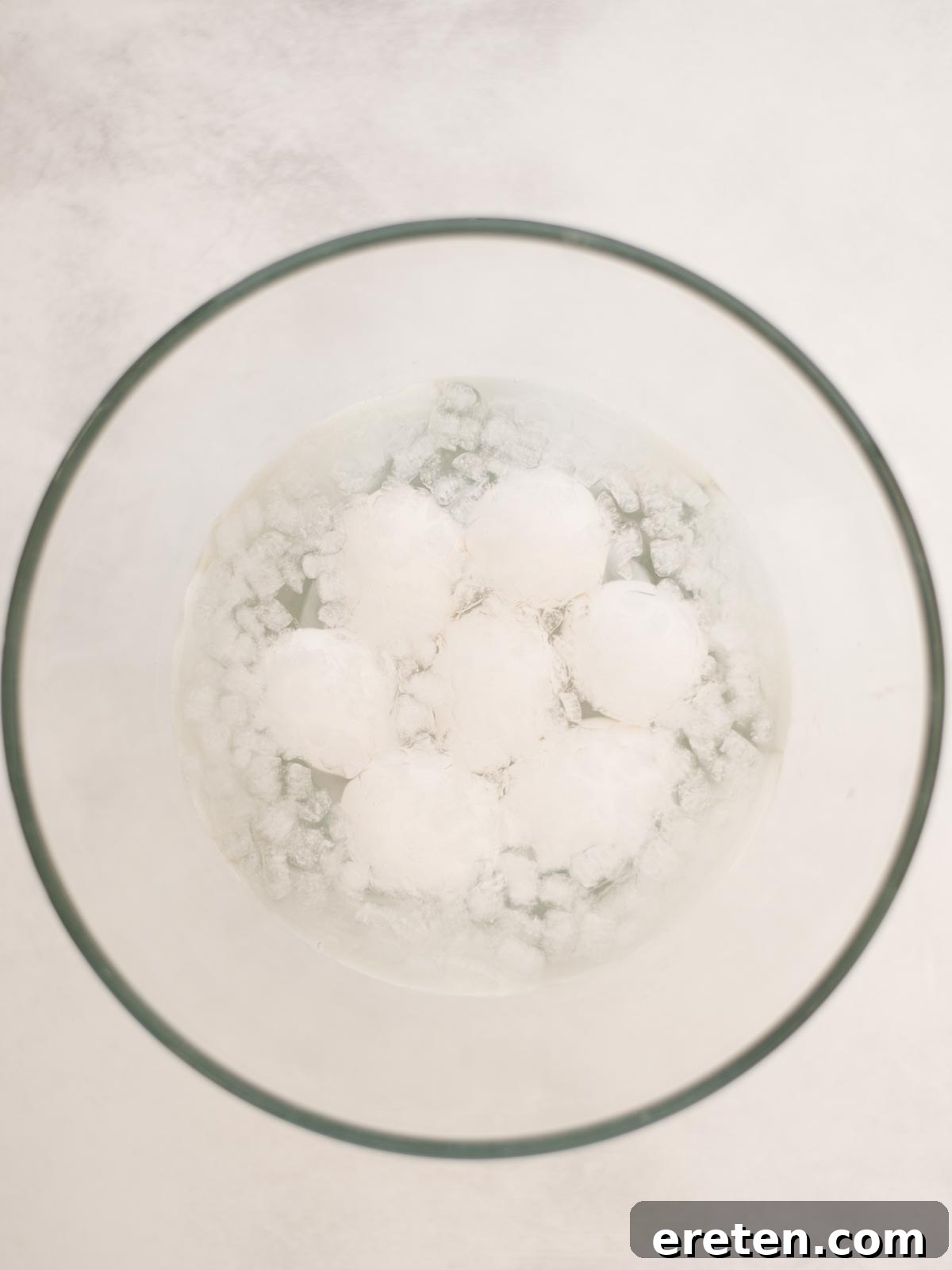
- Ice: This is a crucial, non-negotiable component for achieving easy-to-peel eggs and stopping the cooking process precisely. Prepare a large bowl filled with ice and cold water; this ice bath will be essential immediately after the eggs finish boiling. The rapid temperature change helps the egg white contract, separating it from the shell membrane, which is the secret to a smooth peel.
Substitutions and Variations for Your Perfect Hard-Boiled Eggs
This method is highly adaptable, allowing for various types and sizes of eggs, as well as different cooking consistencies:
- Egg Type: Feel free to use any variety of chicken eggs. Brown eggs, white eggs, blue eggs – the shell color does not impact the cooking process or the final result. Focus on the size and freshness for optimal outcomes.
- Egg Size: While this recipe is optimized for large eggs, you can easily adjust it for medium, extra-large, or jumbo eggs. Simply modify the cooking time:
- Medium Eggs: Reduce boiling time by 1-2 minutes.
- Extra-Large Eggs: Increase boiling time by 1-2 minutes.
- Jumbo Eggs: You may need to add 2-3 minutes to the standard cooking time.
Always monitor carefully, as precise timing is key to your desired yolk consistency.
- Soft-Boiled Eggs: This exact method yields beautifully soft-boiled eggs simply by adjusting the cook time. For a runny yolk with firm whites, aim for 6-8 minutes in the boiling water, depending on how soft you prefer the yolk. The immediate ice bath is still crucial for halting the cooking process and ensuring easy peeling, even for soft-boiled eggs.
Step-by-Step Guide: How to Make the Best Hard-Boiled Eggs
Follow these simple instructions to achieve perfectly cooked, easy-to-peel hard-boiled eggs every single time:
- Prepare for Boiling: Begin by bringing a large pot of water to a vigorous, rolling boil. Ensure there’s enough water to fully submerge all the eggs without them crowding too much. While the water heats, prepare your ice bath: fill a large bowl with ice and cold water. This crucial step will be needed immediately after cooking.
- Reduce Heat for Safety: Once the water is at a full rolling boil, reduce the heat to low. This will calm the turbulent bubbles, making it safe to add your eggs without the risk of them jostling and cracking against each other or the pot. This gentle approach is key to preventing premature cracks.
- Gently Add Eggs: Using a slotted spoon, carefully lower each egg into the simmering water. Avoid dropping them, as this can cause cracks. Placing them gently ensures they settle into the pot without damage.
- Return to Boil: Once all eggs are in the pot, turn the heat back up to high. Bring the water back to a rolling boil as quickly as possible. This ensures precise timing for the cooking process.
- Boil to Perfection:
- For **perfectly hard-boiled eggs** with firm but creamy yolks, boil for **10 minutes**.
- For **soft-boiled eggs** with runny yolks, boil for **6-8 minutes**, depending on your desired consistency.
Start your timer as soon as the water returns to a rolling boil.
- Immediate Ice Bath: This is the most critical step for easy peeling and preventing overcooked yolks. As soon as the timer goes off, immediately remove the eggs from the boiling water using your slotted spoon and transfer them directly into the prepared ice bath. Let them cool in the ice water for at least 5-10 minutes, or until they are cool enough to handle comfortably. The rapid cooling stops the cooking process and helps the egg whites shrink away from the shell membrane.
- Peel and Serve or Store: Once thoroughly chilled, peel the eggs (see peeling tips below) and either serve them immediately or store them in the refrigerator for later use.
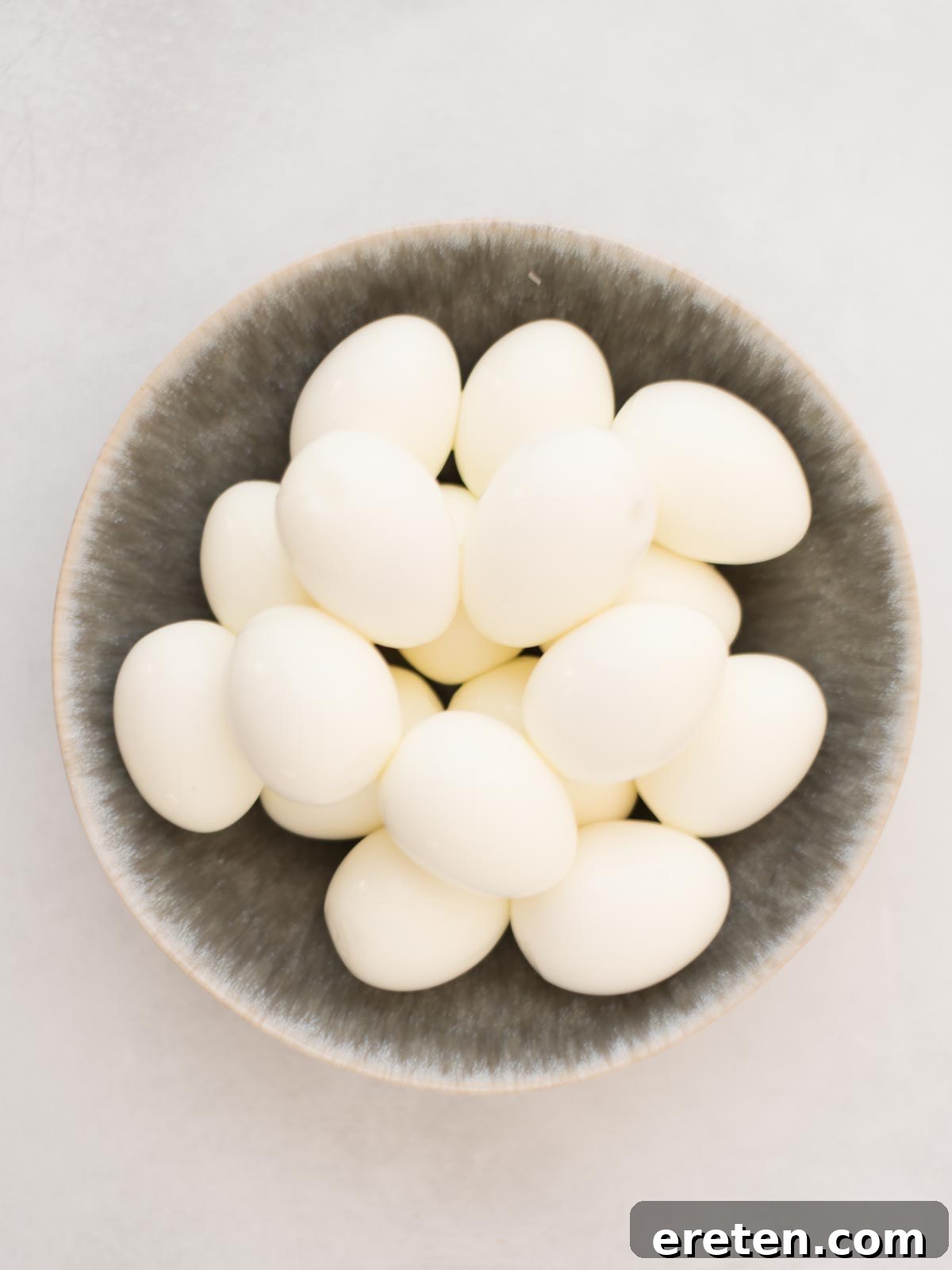
Optimal Cook Times for the Best Hard-Boiled Eggs
The cooking duration is paramount when aiming for perfect hard-boiled eggs. Overcooking is the primary culprit behind that undesirable grey-green ring around the yolk and a dry, chalky texture. Here’s a quick guide to achieve your desired consistency:
- For Perfectly Hard-Boiled Eggs: Cook large eggs in vigorously boiling water for exactly **10 minutes**. This timing yields a fully set, creamy yellow yolk without any discolouration.
- For Soft-Boiled Eggs: Depending on how runny you prefer your yolk, cook large eggs for **6 to 8 minutes**.
- **6 minutes:** Very runny yolk, set whites.
- **7 minutes:** Jammy, slightly runny yolk, fully set whites.
- **8 minutes:** Almost set, tender yolk with no runniness.
Regardless of your desired doneness, the moment the cooking time is up, it is crucial to immediately remove the eggs from the hot water and plunge them into an ice bath. This abrupt temperature change instantly halts the cooking process, preventing residual heat from overcooking the yolks, and, most importantly, helps the shell separate cleanly from the egg white, making peeling remarkably easy.
How to Easily Tell if an Egg is Hard-Boiled
There’s a simple, classic trick to determine if an egg has been hard-boiled without cracking it open: the spin test! Place the egg on a flat surface, like a countertop, and give it a quick spin.
- If the egg spins rapidly, smoothly, and stops easily when you touch it lightly, it is **hard-boiled**. The solid interior allows for stable rotation.
- If the egg wobbles, spins slowly, or continues to spin after being briefly touched, it is **raw**. The liquid interior shifts and creates instability.
This quick and easy test is a great way to sort your boiled eggs from your raw ones in the refrigerator!
The Secret to Effortless Hard-Boiled Egg Peeling
Peeling hard-boiled eggs can be a frustrating chore, but with the right technique, it becomes remarkably easy. The key is in how the egg is prepared and cooled, and then how you approach the shell. Here’s a foolproof method for peeling your perfectly cooked hard-boiled eggs:
- Crack All Over: Gently tap the egg on a hard surface, like your kitchen counter, to create a crack. Rotate the egg in your hand and continue tapping it gently all over until the shell is finely fractured and covered in small cracks. This honeycomb of cracks makes the shell much easier to remove in larger pieces.
- Start at the Wider End: The wider end of the egg often contains a small air pocket between the egg and the shell membrane, making it the ideal starting point for peeling. Begin to peel away the shell, working from this wider end.
- Utilize Running Water (Optional, but Recommended): For an even smoother peeling process, hold the cracked egg under a gentle stream of cold running water, or dip it into a bowl of cold water (like your ice bath, if it’s still cold). The water helps to get under the membrane and lubricate the space between the egg white and the shell, allowing the shell to slide off much more easily and minimizing tearing of the egg white.
- Roll and Peel: As you peel, try to roll the egg gently between your hands or on the counter. This helps to further loosen the shell and membrane, allowing them to come off in larger sections.
Versatile Uses for Your Perfect Hard-Boiled Eggs
Beyond being a nutritious and convenient snack, perfectly hard-boiled eggs are incredibly versatile and can elevate a wide array of dishes. Their firm yet creamy texture and rich flavor make them a staple in many cuisines. Here are just a few delicious ways to enjoy your perfectly cooked eggs:
- Classic Egg Salad: The quintessential use! Mash them with mayonnaise, mustard, celery, and seasonings for a delightful sandwich filling or a side dish. Try this homemade egg salad recipe.
- Potato Salad Enhancer: Diced hard-boiled eggs add a lovely texture and richness to old-fashioned potato salad, complementing the potatoes and creamy dressing beautifully.
- Fresh Chopped Salads: Slice or chop them and sprinkle over any chopped salad for an extra boost of protein and flavor. They pair wonderfully with greens, vegetables, and various dressings.
- Ramen Topping: A perfectly sliced hard-boiled egg is a traditional and delicious addition to homemade ramen noodles, adding richness and visual appeal to your bowl.
- Elevated Avocado Toast: Slice and arrange hard-boiled eggs on your avocado toast, sprinkle with everything bagel seasoning or red pepper flakes for a gourmet breakfast or lunch.
- Quick Protein Snack: Enjoy them plain with a pinch of salt and pepper for a healthy, portable snack that keeps you full and energized.
- Deviled Eggs: A crowd-pleasing appetizer, deviled eggs are always a hit. Use your perfectly cooked yolks as the base for a creamy, flavorful filling. Check out these Halloween Deviled Eggs or classic Southern Deviled Eggs.
- Niçoise Salad: A French classic, this vibrant salad combines tuna, green beans, potatoes, olives, and of course, quartered hard-boiled eggs.
Storing Your Perfectly Hard-Boiled Eggs
Proper storage is essential to keep your hard-boiled eggs fresh and safe to eat. With proper care, they can be a convenient protein source ready for quick snacks or meal prep throughout the week.
- Refrigeration is Key: Hard-boiled eggs, whether peeled or unpeeled, must always be stored in the refrigerator. Do not leave them at room temperature for more than two hours, as this can lead to bacterial growth and spoilage.
- Airtight Container: To maintain their freshness and prevent them from absorbing odors from other foods in your fridge, store your hard-boiled eggs in a food-safe, airtight container. This also helps to prevent them from drying out.
- Shelf Life: When stored correctly in the refrigerator, hard-boiled eggs will keep for up to one week. This applies whether the shells are on or off. While some people prefer to peel them all at once for convenience, leaving the shells on can offer a bit of extra protection and potentially extend freshness by a day or two.
- Do Not Freeze: It is strongly advised not to freeze hard-boiled eggs. Freezing dramatically alters the texture of the egg white, making it rubbery, tough, and watery upon thawing. The yolk may also become mealy. They simply won’t be palatable after freezing.
Frequently Asked Questions About Hard-Boiled Eggs
Boiled eggs don’t always float, and floating isn’t a reliable indicator of doneness. An egg will float in salted water due to increased density, regardless of whether it’s raw or cooked. In unsalted water, if a raw or boiled egg floats, it usually indicates that the egg is older. As eggs age, moisture evaporates through their porous shells, and the air pocket inside the egg grows, making it more buoyant.
The ultimate secret to easy-peeling hard-boiled eggs lies in two critical steps: precise cooking and an immediate ice bath. Cooking the eggs perfectly (neither undercooked nor overcooked) followed by an abrupt transfer to an ice bath immediately after boiling creates a thermal shock. This shock causes the egg white to contract rapidly, separating it from the inner membrane of the shell, making the shell slide off effortlessly.
Hard-boiled eggs are done based on precise timing in vigorously boiling water. For perfectly firm yet creamy hard-boiled eggs, cook them for 10 minutes. For soft-boiled eggs, a cooking time of 6 to 8 minutes will yield yolks ranging from runny to jammy, respectively. An immediate ice bath is essential right after these timings to stop the cooking and ensure desired consistency.
For the most consistent and perfectly cooked results, eggs should be carefully placed into already boiling water. While some recipes suggest starting eggs in cold water and bringing them to a boil, this method makes it difficult to control the exact cooking time. Eggs begin to cook as the water slowly heats up, leading to inconsistencies, potential overcooking (and that grey ring!), and often tougher whites. By adding eggs to boiling water, you start the timer precisely, ensuring uniform cooking and a superior outcome.
Eggs should be transferred to an ice bath (a bowl of ice water) immediately after boiling. Keep them in the cold water for at least 5 to 10 minutes, or until they are completely cool to the touch and comfortable to handle. This rapid cooling process is vital for two reasons: it instantly stops the cooking process to prevent overcooked yolks, and it helps the egg white separate from the shell membrane, making peeling significantly easier.
More Delicious Egg Recipes to Explore
If you’ve enjoyed mastering hard-boiled eggs, you’ll love these other fantastic egg-centric recipes that are perfect for breakfast, brunch, or any meal of the day:
- Classic Egg Salad
- Hash Brown Egg Cups
- Veggie, Turkey, Sausage and Basil Frittata
- Halloween Deviled Eggs
- Southern Deviled Eggs
If you make this recipe and love it, we would love a 5 ⭐️⭐️⭐️⭐️⭐️ rating! Your feedback helps us continue to provide free, high-quality recipes.
Best Hard-Boiled Eggs Recipe
Print Recipe
Ingredients
- 12 large eggs
Instructions
-
Bring a pot of water to a rolling boil. Prepare an ice bath in a large bowl.
-
Reduce the heat to low to calm the vigorous bubbles.
-
Gently place the eggs into the water using a slotted spoon to prevent cracking.
-
Turn the heat back up to high and bring the water back to a full rolling boil.
-
Cook for 10 minutes for hard-boiled eggs, or 6-8 minutes for soft-boiled.
-
Immediately remove the eggs from the boiling water and transfer them to the ice bath. Let cool for 5-10 minutes.
-
Peel the eggs (refer to peeling tips above) and serve immediately, or store in the refrigerator for later.
Nutrition
Nutrition information is automatically calculated, so should only be used as an approximation.