
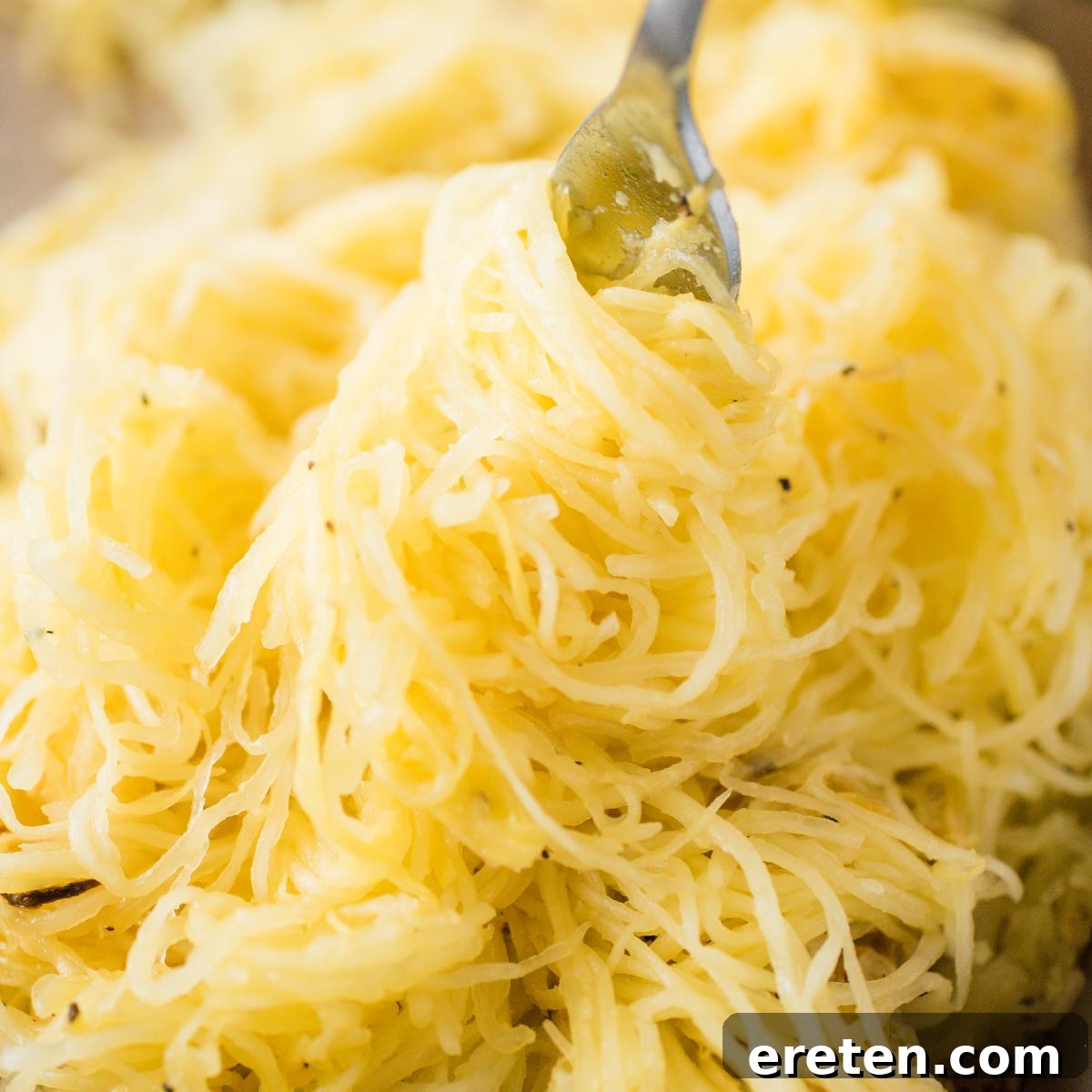
Roasted Spaghetti Squash – Unlock the secret to perfect, long strands of spaghetti squash every single time. Forget the mushy, watery disappointments of the past! When roasted with the right technique, spaghetti squash transforms into delicious, tender, noodle-like strands, offering a fantastic low-carb alternative to traditional pasta. This comprehensive guide will walk you through the precise steps to achieve culinary perfection, ensuring your spaghetti squash is flavorful, firm, and beautifully textured.
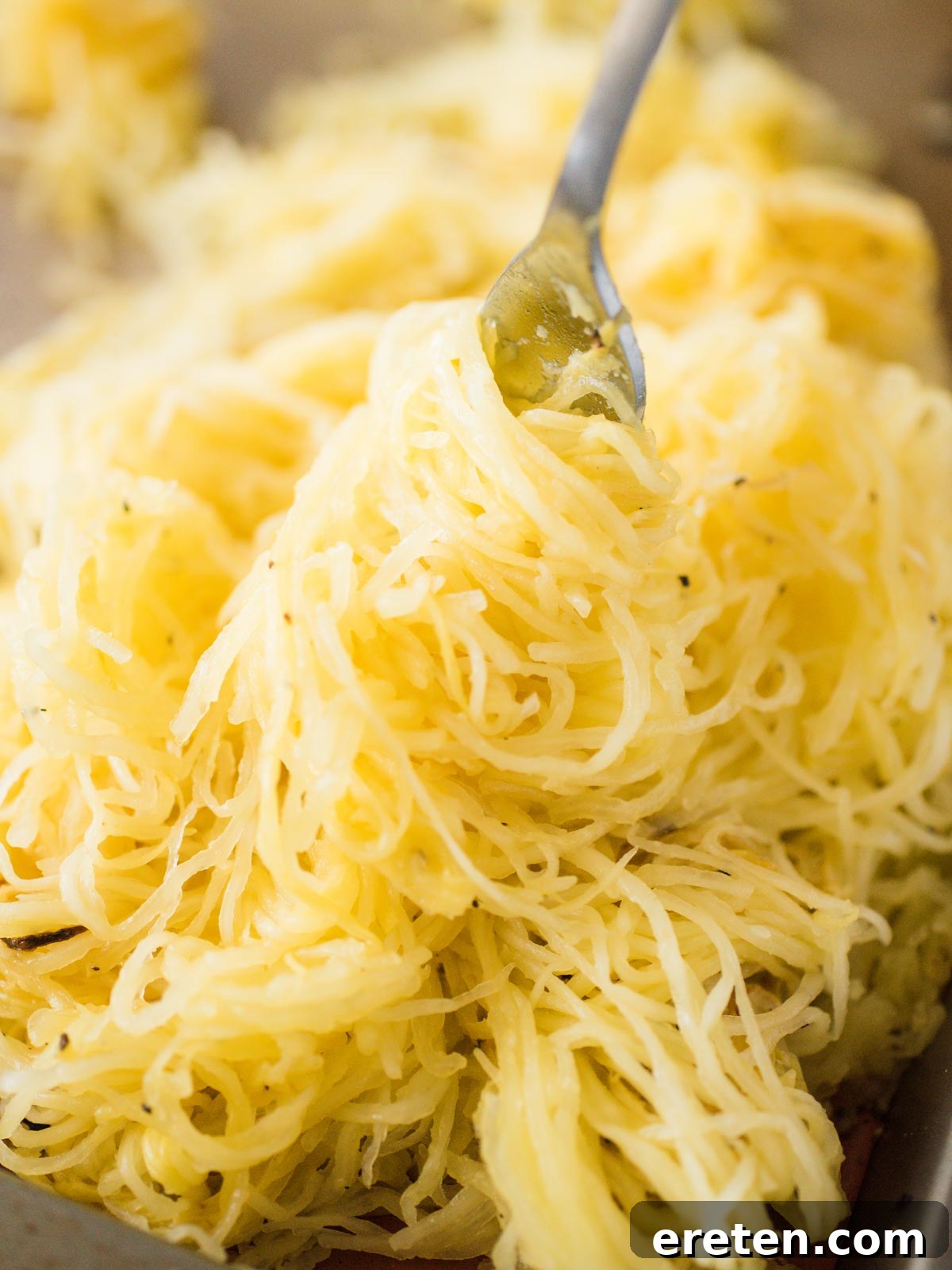
How to Roast Spaghetti Squash Perfectly: A Foolproof Method for Delicious Results
The difference between a bland, watery spaghetti squash and one that’s bursting with flavor and boasts wonderfully firm, lengthy strands lies entirely in the roasting method. Many common approaches lead to steamed, rather than roasted, squash, resulting in an unappealing texture. This guide emphasizes a specialized technique that involves cutting the squash into rings and a crucial pre-salting step, guaranteeing succulent, spaghetti-like results every time. Master this recipe, and you’ll forever change your perception of this versatile winter squash.
Essential Ingredients for Oven Roasted Spaghetti Squash
Achieving perfectly roasted spaghetti squash doesn’t require a long list of exotic ingredients. In fact, simplicity is key to letting the natural flavors of the squash shine. Here’s what you’ll need for this incredibly satisfying and healthy side dish:
- Spaghetti Squash – Any size will work for this recipe. Choose one that feels firm and heavy, indicative of a good harvest.
- Oil – A good quality oil helps the squash crisp up and caramelize beautifully. Avocado oil is a fantastic choice due to its high smoke point and neutral flavor, but olive oil or even vegetable oil can be used effectively.
- Salt – Salt plays a dual role here: seasoning and drawing out excess moisture. A coarse sea salt or kosher salt is recommended for its texture and ability to adhere well to the squash, enhancing flavor.
- Pepper – Freshly ground black pepper adds a wonderful aromatic kick. While pre-ground pepper works, the vibrant flavor of freshly cracked peppercorns truly elevates the dish.
With just these four basic ingredients, you’re set to create an impressive and healthy dish that’s remarkably versatile.
How to Select the Best Spaghetti Squash
Choosing a high-quality spaghetti squash is the first step towards a delicious meal. When you’re at the grocery store or farmer’s market, look for specific characteristics to ensure you pick a ripe, fresh, and flavorful specimen:
- Firmness: The squash should feel very firm to the touch, without any give. A soft squash indicates it’s past its prime or has begun to spoil.
- Dry Exterior: The skin should be dry. Avoid any squash that feels damp or clammy.
- Intact Skin: While minor scratches or marks are acceptable, steer clear of squash with significant cracks, punctures, or deep bruises, as these can lead to premature spoilage.
- Absence of Soft Spots: Crucially, there should be no bruised, soft, or mushy spots anywhere on the exterior. These are clear indicators of decay.
- Weight for Size: A good spaghetti squash will feel notably heavy for its size. This density suggests a rich, meaty interior with good moisture content (the kind we’ll strategically remove!).
- Presence of Stem: Look for a squash with a dry, rounded stem still attached. This helps seal the squash, prolonging its freshness.
- Peak Season: Although spaghetti squash is available year-round, its peak season typically runs from fall through winter. During these months, you’re more likely to find the freshest and most flavorful squash.
By following these simple tips, you’ll be well on your way to selecting the perfect foundation for your roasted masterpiece.
When Should You Avoid Eating Spaghetti Squash?
Just as it’s important to choose a good squash, it’s equally important to know when to discard one. Using a spoiled squash can lead to an unpleasant taste and texture, or even digestive issues. Here are the warning signs:
- Bruised, Soft, or Mushy Spots: If, prior to roasting, your spaghetti squash exhibits any significant soft, bruised, or mushy areas on its rind, it has likely begun to spoil. This indicates internal decay and it’s best not to use it.
- Mold Growth: Any visible mold, fuzzy patches, or discolored areas on the skin are definite signs of spoilage.
- Unpleasant Odor: A fresh spaghetti squash has a mild, earthy scent. If you notice any sour, fermented, or otherwise off-putting smells, discard it immediately.
- Discoloration: While typically pale yellow, if areas of the rind are excessively discolored, dark, or slimy, it’s a sign that the squash is no longer good for consumption.
- Texture Post-Roasting: After roasting, if your squash develops an overly slimy texture, an unusual smell, or changes color significantly, it may have spoiled during storage or was already past its prime.
Once roasted, spaghetti squash should be stored in an airtight container in the refrigerator and consumed within 3-4 days for optimal freshness. Always trust your senses: if it doesn’t look, feel, or smell right, it’s safer to err on the side of caution and throw it out.
Innovative Method: How to Cut Spaghetti Squash into Rings for Roasting
The traditional method of cutting spaghetti squash lengthwise often leads to shorter strands and a steamier interior. Our preferred technique involves cutting the squash into rings. This method exposes more surface area to the oven’s dry heat, resulting in longer, more distinct strands and a superior roasted texture. Follow these steps for perfect spaghetti squash rings:
- Pierce the Squash: Before cutting, use a sturdy fork to poke several holes all around the exterior of the spaghetti squash. This crucial step allows steam to escape during the microwaving phase, preventing pressure buildup and making the squash easier to handle.
- Soft-Cook in Microwave: Place the whole, pierced squash in the microwave and heat on high for approximately 5 minutes. This step isn’t meant to cook the squash entirely, but rather to soften its incredibly tough exterior, making it significantly easier and safer to cut.
- Slice into Rings: Once softened (it should still be firm but less resistant to a knife), carefully cut the squash into 1 ½-inch thick rings using a large, sharp chef’s knife. This ring shape is key to achieving those long, desirable strands.
- Remove Seeds: With the squash now in rings, scoop out the seeds and fibrous pulp from the center of each ring. Don’t discard these seeds! They are excellent when roasted, offering a nutritious and crunchy snack. Set them aside for later.
Cutting spaghetti squash into rings not only makes it easier to handle and prepare but also optimizes the roasting process for maximum flavor and texture. This simple shift in technique truly makes a world of difference.
Step-by-Step Guide: How to Roast Spaghetti Squash in the Oven
Once your spaghetti squash is prepped into rings, the roasting process is straightforward but demands attention to a few key details to prevent a watery outcome and ensure beautifully separated strands. Follow these instructions closely for a flawless roasted spaghetti squash:
- Preheat Oven: Begin by preheating your oven to a high temperature of 425°F (220°C). High heat is essential for roasting, not steaming, the squash.
- Initial Poking (if not already done): If you didn’t poke holes initially or if you’re working with pre-cut squash, ensure to poke several holes into the flesh of the rings using a fork. This allows any residual steam to escape.
- Microwave (if whole): If you’re starting with a whole squash, microwave it for 5 minutes as detailed above to soften the skin, then cut into rings and scoop out seeds.
- Salt and Rest for Moisture Release: This is a critical step for preventing mushy squash. Lay the squash rings on a flat surface and sprinkle both sides generously with salt. Let them sit for 10 minutes. During this time, the salt will draw out excess moisture from the squash, which is the primary culprit behind a watery result.
- Blot Dry: After 10 minutes, you’ll notice beads of moisture on the surface of the squash. Use a paper towel to thoroughly blot away this released liquid. This step is non-negotiable for achieving a firm texture.
- Prepare Baking Sheet: Line a large baking sheet with either a silicone baking mat or parchment paper. This prevents sticking and makes cleanup a breeze.
- Oil and Season: Place the blotted squash rings onto the prepared baking sheet. Lightly brush both sides of each ring with your chosen oil (avocado or olive oil work best). Then, sprinkle with additional salt and pepper to taste. You can also add other desired seasonings like garlic powder, paprika, or herbs.
- Roast to Perfection: Transfer the baking sheet to the preheated oven and roast for 35-40 minutes. The exact time may vary slightly depending on your oven and the thickness of the rings. You’re looking for the squash to be tender but not overly soft, with slightly caramelized edges.
- Cool Slightly: Once roasted, carefully remove the baking sheet from the oven. Allow the squash rings to cool for a few minutes until they are cool enough to handle comfortably with your hands.
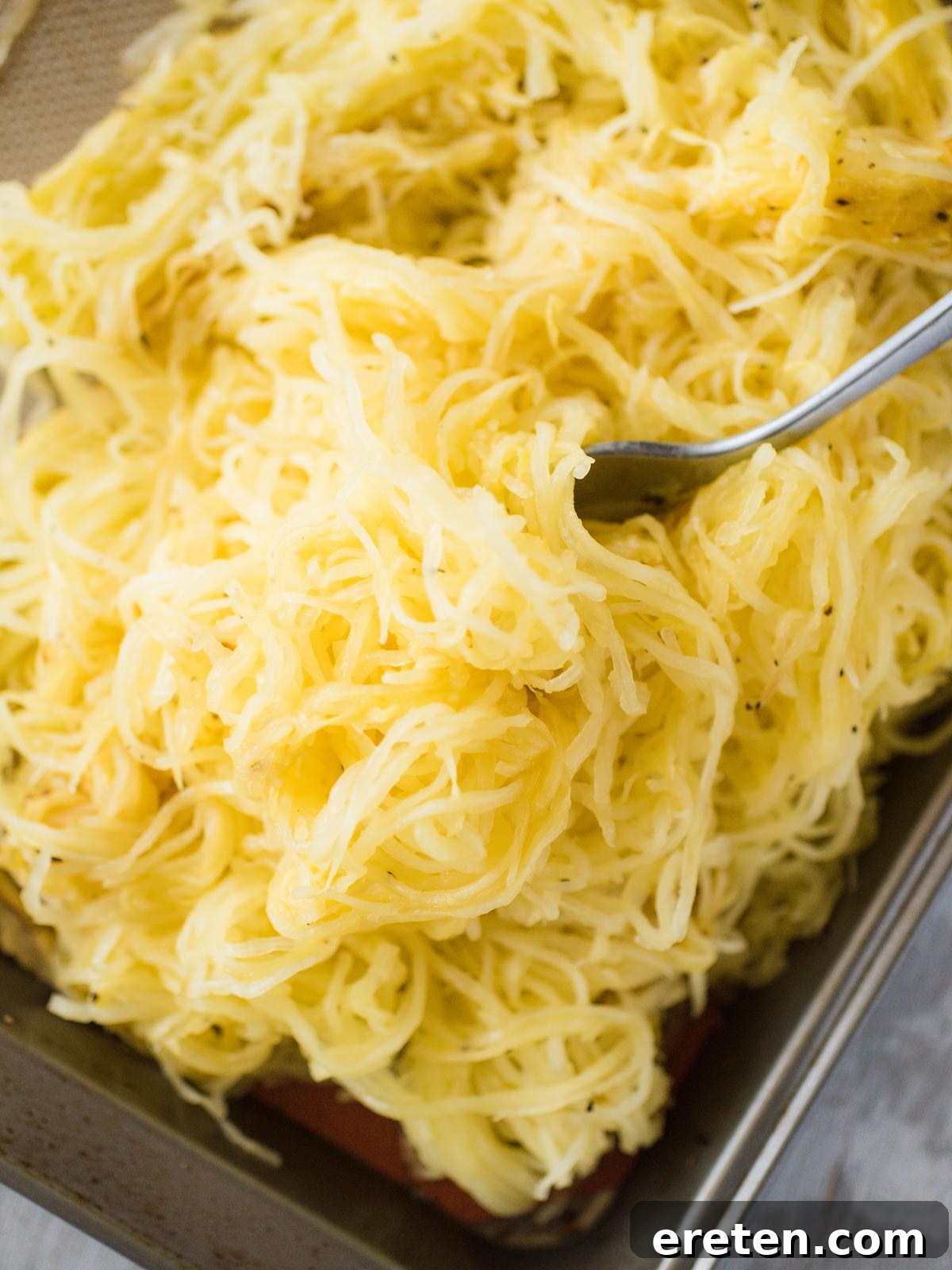
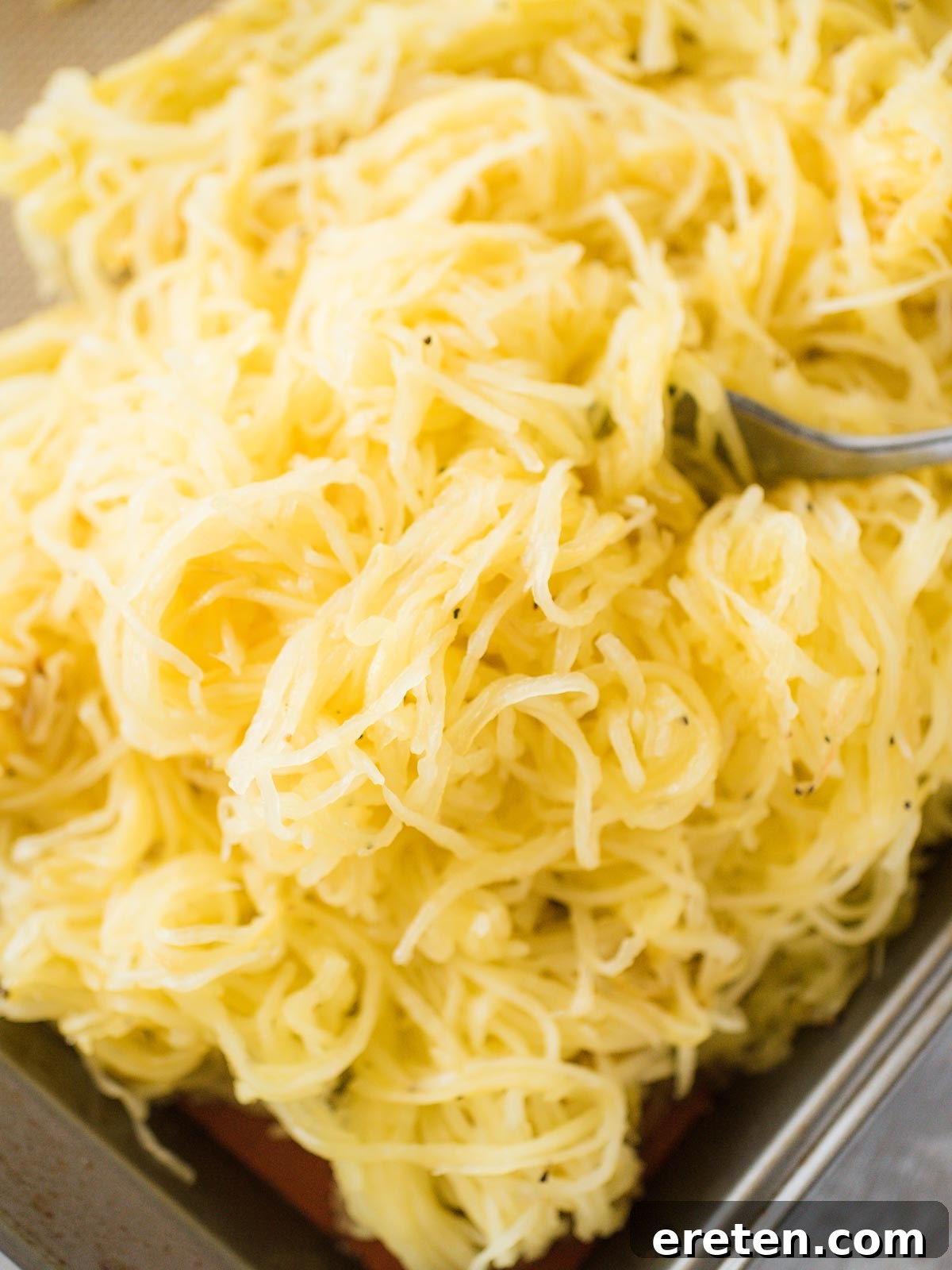
- Peel and Separate: Gently peel the exterior rind from each roasted squash ring. You’ll find this much easier after cooking. Then, using a fork, gently scrape and separate the tender strands of spaghetti squash. They should effortlessly pull away, resembling long, delicate noodles.
- Serve and Enjoy: Your perfectly roasted spaghetti squash is now ready! Serve immediately as a healthy side dish or as a base for your favorite sauces and toppings.
This method ensures maximum flavor, ideal texture, and those coveted long, beautiful strands, making your roasted spaghetti squash a truly delightful culinary experience.
Optimal Roasting Time for Spaghetti Squash
For spaghetti squash rings cut to approximately 1 ½ inches thick, roasting in a preheated oven at 425°F (220°C) typically takes between 35 to 40 minutes. The key is to roast until the squash is tender when pierced with a fork but still holds its shape, and the edges are slightly golden brown and caramelized. Overcooking will lead to a mushy texture, so keep an eye on it towards the end of the cooking time.
Don’t Waste Them! How to Roast Spaghetti Squash Seeds
Many people toss the seeds of spaghetti squash, but you’re missing out on a delicious and nutritious snack! Roasting spaghetti squash seeds is simple and yields a crunchy, savory treat perfect for trail mixes, salads, or simply munching by the handful. They are packed with fiber, protein, and healthy fats.
- Prepare the Seeds: After scooping them out of the squash rings, thoroughly rinse the seeds under cold water to remove any clinging pulp. Pat them completely dry with a paper towel. This step is crucial for even roasting and crispiness.
- Preheat Oven & Line Sheet: Preheat your oven to a lower temperature of 300°F (150°C). Line a baking sheet with parchment paper to prevent sticking.
- Season the Seeds: Transfer the clean, dry spaghetti squash seeds to a bowl. Drizzle with a small amount of olive oil (about a teaspoon for a squash’s worth of seeds) and sprinkle with salt and pepper. Toss well to ensure the seeds are evenly coated. Feel free to experiment with other seasonings like garlic powder, onion powder, smoked paprika, chili powder, or even a dash of maple syrup for a sweet and savory twist.
- Spread and Roast: Spread the seasoned seeds out in a single layer on the prepared baking sheet. Ensure they are not overcrowded, as this can lead to steaming instead of roasting.
- Bake and Stir: Roast for 15 minutes. Then, remove the baking sheet, give the seeds a good stir or shake to promote even browning, and return them to the oven for an additional 10-15 minutes, or until they are golden brown and crispy. Watch them closely, as they can burn quickly.
- Cool and Enjoy: Once roasted, remove the seeds from the oven and let them cool completely on the baking sheet. They will become even crispier as they cool. Store in an airtight container at room temperature.
This simple addition allows you to get the most value and nutrition from your spaghetti squash, minimizing waste and maximizing flavor.
Delicious Pairings: What to Serve with Roasted Spaghetti Squash Strands
Roasted spaghetti squash is incredibly versatile, making it an excellent canvas for a wide array of flavors and dishes. Its mild, slightly sweet flavor and pasta-like texture allow it to complement both rich and light sauces, serving as a healthy alternative to traditional noodles. Here are some fantastic ideas for what to serve with your perfectly roasted spaghetti squash:
- Classic Pasta Sauces: Treat it just like spaghetti! It pairs beautifully with hearty bolognese sauce, a slow-simmered ragu sauce, or a creamy alfredo sauce. The strands hold up well, absorbing the flavors of the sauce.
- Pesto: Toss the warm squash strands with fresh basil pesto, cherry tomatoes, and a sprinkle of Parmesan cheese for a vibrant and light meal.
- Garlic Butter & Herbs: A simple toss with melted butter, minced garlic, fresh parsley, or dill creates an elegant and flavorful side dish that highlights the squash’s natural taste.
- Marinara or Tomato Sauce: A simple, flavorful marinara sauce with meatballs or Italian sausage is always a hit.
- Roasted Vegetables: Combine the spaghetti squash with other roasted vegetables like broccoli, bell peppers, or zucchini for a nutrient-packed vegetarian meal.
- Grilled or Baked Protein: Serve alongside grilled chicken, baked salmon, or seared steak for a balanced and satisfying dinner.
- Stir-Fries: Use it as a base for a light stir-fry with your favorite vegetables and protein, seasoned with soy sauce or a sesame-ginger dressing.
- Soups and Stews: Add a handful of cooked spaghetti squash to thicken or add texture to vegetable soups or stews.
- Casseroles: Incorporate it into your favorite casserole dish for added texture and a boost of nutrients, replacing traditional pasta or rice.
- Taco Bowls: For a low-carb alternative, use spaghetti squash as the base for a taco bowl, topping it with seasoned ground meat, salsa, avocado, and sour cream.
The possibilities are truly endless when it comes to enjoying roasted spaghetti squash. Let your creativity guide you!
Storage and Reheating Guide for Roasted Spaghetti Squash
Proper storage ensures your delicious roasted spaghetti squash remains fresh and flavorful for future meals. It’s also excellent for meal prepping!
- Refrigeration: Allow the roasted spaghetti squash to cool completely to room temperature before storing. Place it in an airtight container and keep it in the refrigerator for up to 3-4 days. This prevents moisture buildup and spoilage.
- Freezing: For longer storage, cooked spaghetti squash freezes exceptionally well. Once cooled, transfer the separated strands into freezer-safe bags or airtight containers. Remove as much air as possible to prevent freezer burn. It can be stored in the freezer for up to 6 months.
- Reheating from Refrigerator:
- Microwave: Gently reheat in the microwave for 1-2 minutes, stirring halfway through, until warmed through. Be careful not to overcook, as this can make it mushy.
- Stovetop: My preferred method for reheating is on the stovetop. Heat a skillet over medium heat, add the squash, and stir frequently for 3-5 minutes. This method helps to evaporate any residual moisture, restoring a firmer, less watery texture.
- Reheating from Freezer:
- Thawing: It’s best to thaw frozen spaghetti squash in the refrigerator overnight before reheating.
- Microwave/Stovetop: Once thawed, reheat using the microwave or stovetop methods described above. The stovetop method is particularly effective for removing any excess moisture that may have accumulated during the freezing process.
With these storage and reheating tips, you can enjoy the deliciousness of roasted spaghetti squash throughout the week or months to come.
Can You Freeze Cooked Spaghetti Squash?
Absolutely! Cooked spaghetti squash freezes very well. Once it has cooled completely, separate the strands and place them in an airtight, freezer-safe container or bag. It can be stored in the freezer for up to 6 months. When ready to use, simply thaw it in the refrigerator before reheating.
Is It Better to Freeze Spaghetti Squash Cooked or Raw?
For the best texture and flavor, it is significantly better to freeze spaghetti squash after it has been cooked. Freezing it raw results in a much mushier and more watery texture upon thawing due to the breakdown of cell walls. Cooking it first helps maintain its integrity and desired spaghetti-like strands when reheated.
How Do You Reheat Frozen Spaghetti Squash?
To reheat frozen spaghetti squash, first, transfer it from the freezer to the refrigerator and allow it to thaw completely overnight. Once thawed, you can reheat it gently in the microwave in 1-minute increments, stirring in between, until it’s heated through. Alternatively, for a better texture that helps remove any additional moisture, reheat it in a skillet over medium heat on the stovetop, stirring occasionally until warm.
Frequently Asked Questions About Roasted Spaghetti Squash
Yes, roasted spaghetti squash is an excellent component for meal prepping. You can roast it ahead of time and store it in an airtight container in the refrigerator for up to 3-4 days. If you’re looking to prepare even further in advance, it also freezes beautifully. Just make sure it cools completely before transferring to a freezer-safe container, where it can be stored for up to 6 months. Having it ready to go makes weeknight meals much simpler!
Watery spaghetti squash is a common complaint, but it’s entirely preventable. Here are the main reasons and how to fix them:
- Low Roasting Temperature: If your oven isn’t hot enough, the squash will steam rather than roast, trapping moisture inside. Always use a high temperature, like 425°F (220°C), to encourage caramelization and moisture evaporation.
- Roasting Whole: Roasting the squash whole or cut lengthwise with the cavity facing up allows steam to collect within the squash, leading to a watery, mushy interior. Cutting it into rings and placing them cut-side down maximizes surface area exposure to direct heat, allowing steam to escape more effectively.
- Alternative Cooking Methods: While appliances like the Instant Pot or microwave can cook spaghetti squash, they rely on steaming, which inherently produces a wetter, softer result compared to oven roasting. Stick to oven roasting for optimal texture.
- Skipping the Salting & Blotting Step: This is arguably the most crucial step! Spaghetti squash contains a lot of natural moisture. Salting the rings beforehand and allowing them to rest for 10 minutes draws out significant amounts of water. Blotting this moisture away with a paper towel before oiling and roasting makes a huge difference in achieving firm, non-watery strands.
The goal is to provide every opportunity for excess moisture to escape. Following the ring-cut method and the pre-salting technique will significantly reduce the risk of watery spaghetti squash.
Overcooking spaghetti squash will cause it to lose its desirable “spaghetti” texture and become mushy and bland. The strands will be less distinct, breaking down easily, and may take on an unpleasant, watery consistency. It can also lead to browned or burned areas if cooked for too long at a high temperature. Aim for tender but still slightly firm strands that separate easily with a fork.
While technically edible when cooked, most people prefer to remove the skin of roasted spaghetti squash before eating. When roasted, the skin softens considerably, similar to other winter squash varieties. However, it can still be quite firm and fibrous compared to the tender interior strands. For the best culinary experience, we recommend peeling the skin away from the roasted rings to access the delicious, noodle-like flesh.
Yes, absolutely. Overcooking is a common pitfall that can ruin the texture of spaghetti squash. If it’s cooked for too long, the delicate strands will break down, becoming soft, mushy, and losing their distinct “spaghetti” quality. It can also lead to a bland flavor and, in extreme cases, burned spots. It’s best to cook it until just tender, where the strands are easily separated but still hold their form.
More Delicious Recipes Like This Roasted Spaghetti Squash Recipe
If you enjoyed learning how to perfect your roasted spaghetti squash, you might love these other simple and wholesome recipes:
- Instant Pot Perfect Hard Boiled Eggs
- Homemade Taco Seasoning
- Yellow Squash Casserole Recipe
- Perfect Baked Chicken Breasts
Perfect Roasted Spaghetti Squash Rings
Kara
10 minutes
35-40 minutes
45-50 minutes
5 cups
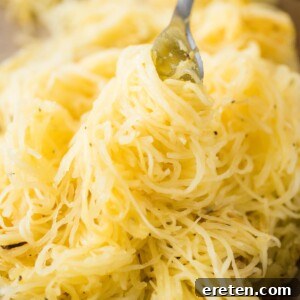
This foolproof method for roasting spaghetti squash yields long, firm strands that perfectly resemble spaghetti, without any mushy or watery texture. The secret lies in a specific cutting and pre-salting technique that makes all the difference for a healthy, low-carb pasta alternative!
Ingredients
- 1 medium Spaghetti Squash
- 1-2 tbsp Oil (avocado or olive oil recommended)
- Coarse Sea Salt, to taste
- Freshly Ground Black Pepper, to taste
Instructions
- Preheat your oven to 425°F (220°C).
- Using a fork, carefully poke several holes all around the whole spaghetti squash.
- Microwave the whole, pierced spaghetti squash for 5 minutes. This softens the rind, making it easier and safer to cut.
- Once softened, cut the squash into 1 ½-inch thick rings. Scoop out and discard the seeds and fibrous pulp (or save them for roasting!).
- Lay the squash rings on a clean surface and sprinkle both sides generously with salt. Let them sit for 10 minutes to allow excess moisture to be drawn out.
- After 10 minutes, use a paper towel to blot off all the released moisture from both sides of the squash rings. This is a crucial step for preventing mushiness.
- Line a baking sheet with either a silicone baking mat or parchment paper. Arrange the blotted squash rings on the baking sheet in a single layer.
- Brush both sides of the squash rings with oil, then sprinkle with additional salt and pepper to taste.
- Roast in the preheated oven for 35-40 minutes, or until the squash is tender and the edges are lightly caramelized.
- Remove the baking sheet from the oven and let the squash cool for a few minutes until it’s comfortable to handle.
- Gently peel the exterior rind from each roasted ring.
- Using a fork, gently scrape and separate the long, spaghetti-like strands from the squash flesh. Serve immediately and enjoy!
Notes
Nutritional information and WW points are calculated using ONLY the spaghetti squash. The total nutritional value and WW points will depend entirely on your choice and amount of oil used, as well as any additional seasonings or toppings.
WW Points All Plans (Spaghetti Squash only): 0
Nutrition Information
Calories: 42 kcal
Carbohydrates: 10g
Protein: 1g
Fat: 0.4g
Saturated Fat: 0.1g
Fiber: 2.2g
Sugar: 3.9g
Nutrition information is an approximation and calculated automatically. For precise figures, consult a registered dietitian.
Additional Info
Side Dish, Vegetable
American, Healthy