
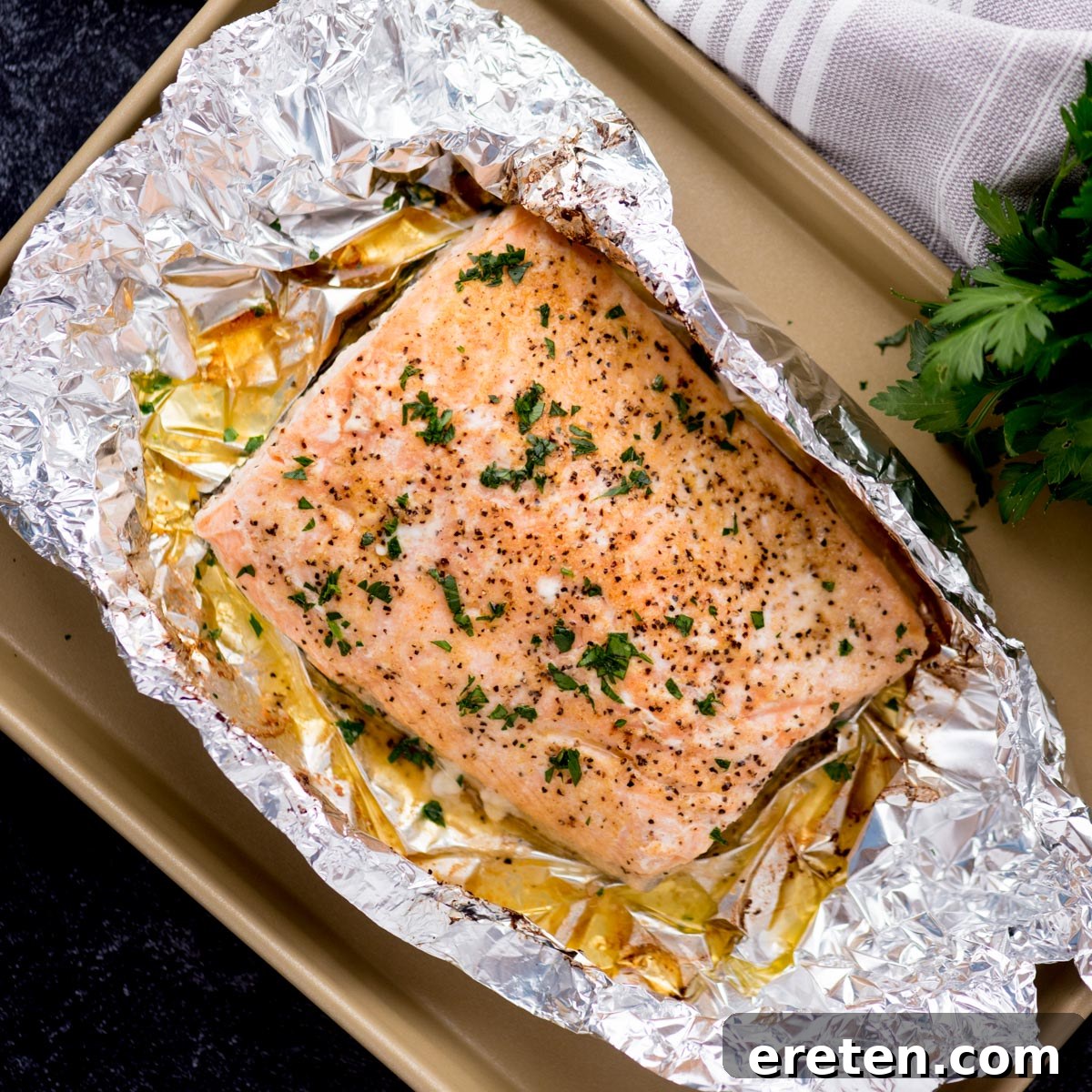
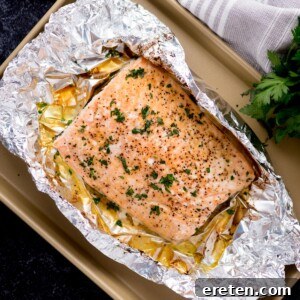
Unlock the secret to perfectly tender, flaky salmon every single time with this incredibly simple Baked Salmon in Foil recipe. In less than 30 minutes from start to finish, you can have a wholesome, gourmet-tasting meal on your table that’s guaranteed to impress with minimal effort. Our special foil-baking technique ensures your salmon stays irresistibly moist and bursting with flavor, making it an ideal choice for busy weeknights or when you simply crave a fuss-free, delicious dinner. Say goodbye to dry, overcooked fish and embrace the ease and excellence of foil-baked salmon.
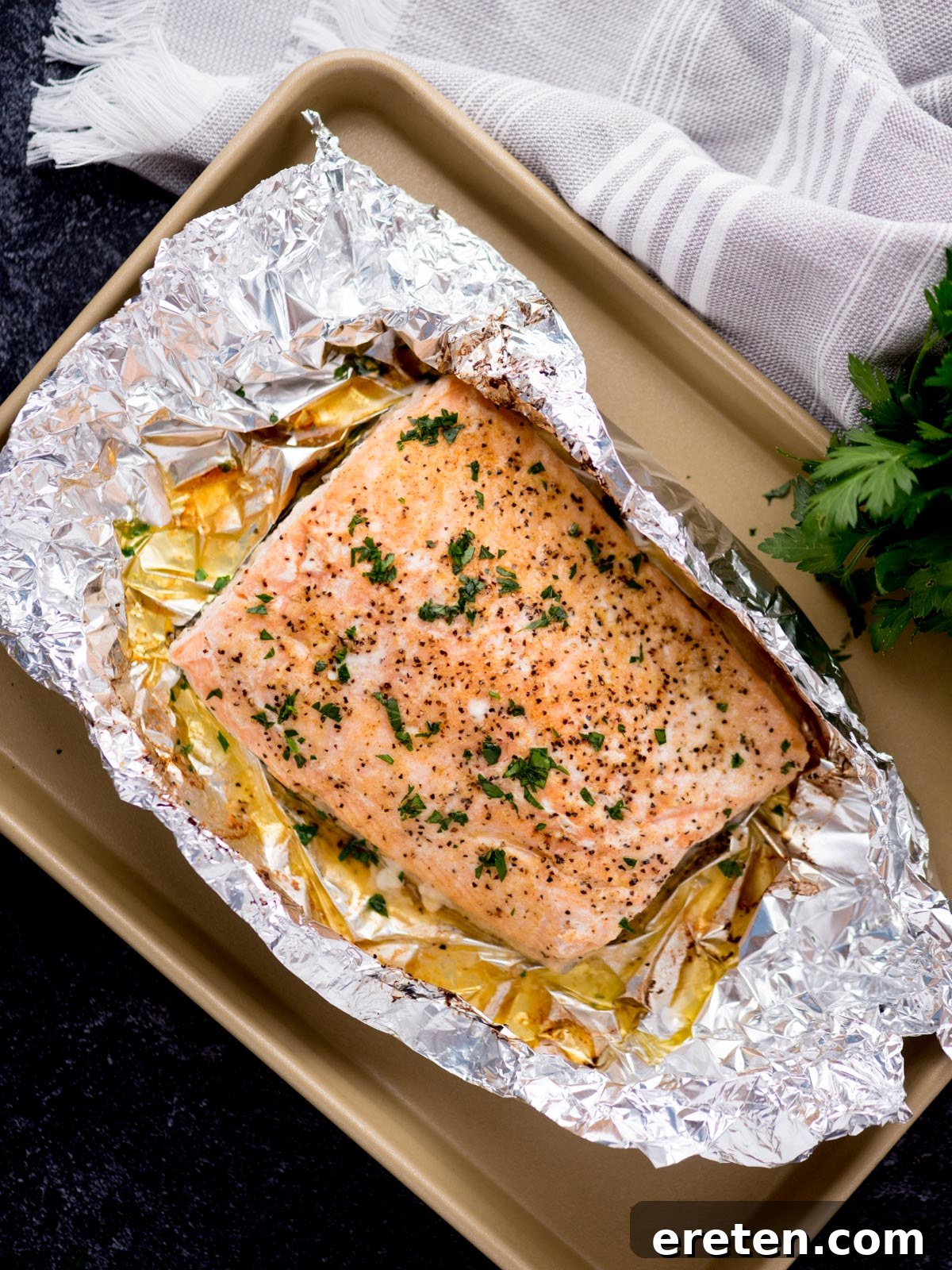
Discover the Magic of Baked Salmon in Foil
There’s so much to cherish about this Baked Salmon in Foil recipe. It stands out not only for its incredible simplicity but also for the speed at which it transforms a fresh salmon fillet into a culinary masterpiece. In under half an hour, you can create a meal that tastes like it took hours of painstaking effort. This method locks in natural juices and flavors, creating a moist, delectable salmon fillet that pairs effortlessly with virtually any side dish you can imagine. It’s truly the ultimate solution for a super simple yet profoundly satisfying dinner.
The beauty of cooking salmon in foil lies in its ability to create a steamy, enclosed environment. This technique ensures even cooking and keeps the fish from drying out, which is a common pitfall when baking fish without protection. The foil acts as a miniature oven, gently steaming the salmon to perfection while infusing it with the aromatic seasonings. This results in a tender, melt-in-your-mouth texture that makes every bite a delight. Beyond the taste, the foil packet minimizes cleanup, turning a potential chore into a breeze, allowing you more time to savor your meal and less time scrubbing pans.
Essential Ingredients for Perfect Oven Baked Salmon in Foil
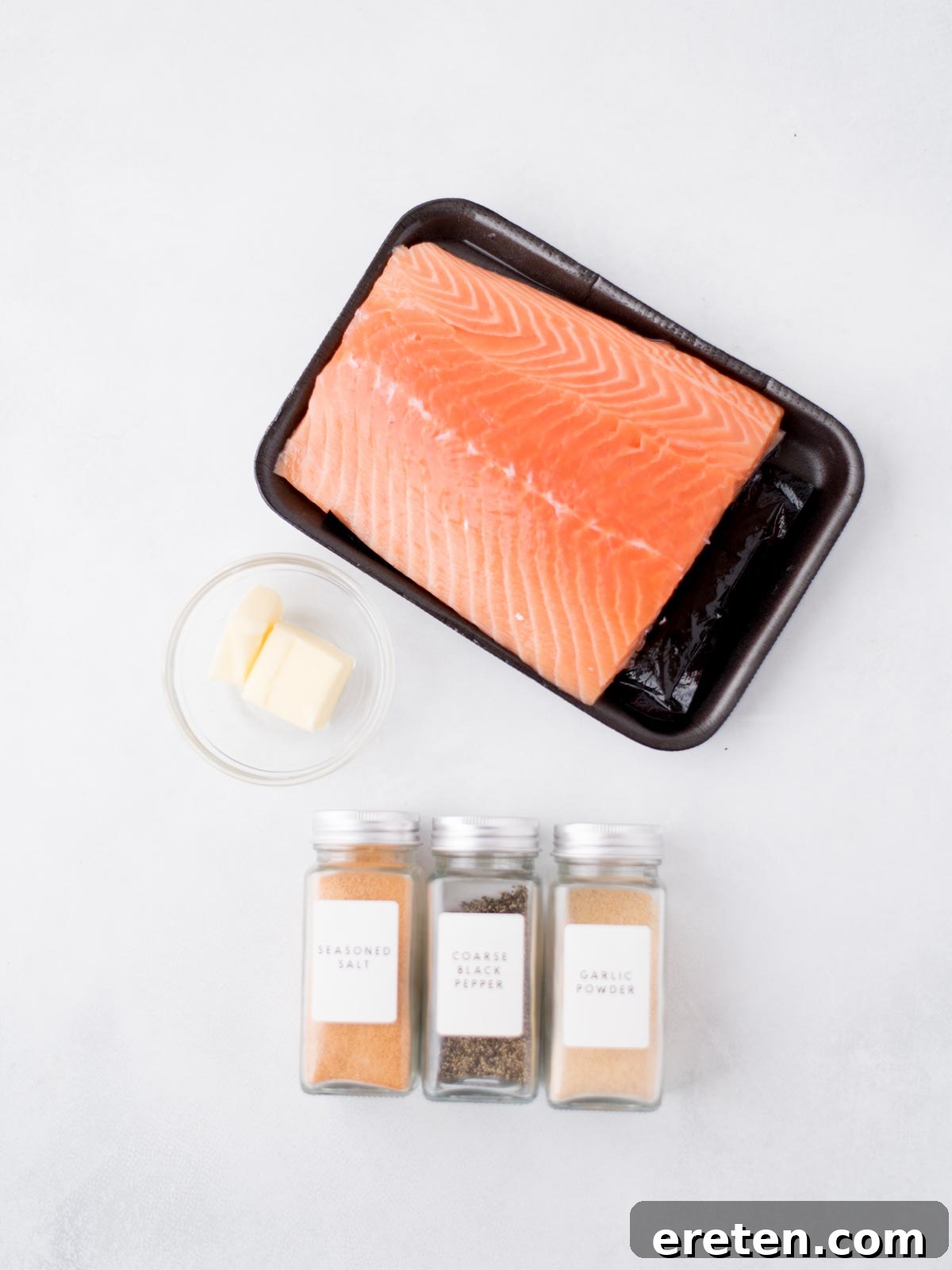
Crafting this succulent oven-baked salmon requires just a handful of quality ingredients. The key is fresh, deboned salmon, which serves as the canvas for our simple yet powerful flavor profile. Each component plays a crucial role in achieving that sought-after moistness and savory taste.
- Deboned Salmon Fillet: Opt for a high-quality, fresh salmon fillet, ideally deboned for effortless eating. Whether it’s Atlantic, Sockeye, or Coho, the freshness is paramount. If using frozen, ensure it’s completely thawed and patted dry before seasoning.
- Seasoned Salt: A blend that often includes salt, pepper, garlic, and other spices, seasoned salt provides a convenient all-in-one flavor boost. It enhances the salmon’s natural taste without overwhelming it.
- Ground Black Pepper: Freshly ground black pepper adds a pungent, woody note that complements the richness of the salmon. Adjust the amount to your preference for a gentle warmth or a bolder kick.
- Garlic Powder: This provides a concentrated, savory garlic flavor without the moisture or texture of fresh garlic, ensuring an even distribution over the fillet. It’s a foundational flavor that almost always pairs beautifully with fish.
- Melted Butter: A generous brush of melted butter is the secret weapon for moisture and richness. It not only contributes to a golden exterior but also carries the flavors of the seasonings deep into the fish, creating a luxurious mouthfeel. For a dairy-free option, olive oil can be used as a substitute, offering a slightly different but equally delicious result.
Step-by-Step Guide: How to Make Salmon Baked in Foil
Preparing this foil-baked salmon is remarkably straightforward, requiring only a few simple steps. Follow these instructions to achieve a perfectly cooked, moist, and flavorful salmon fillet every time.
- Preheat the Oven: Begin by preheating your oven to 425°F (220°C). A hot oven is crucial for cooking the salmon quickly and evenly, ensuring a tender interior without overcooking.
- Prepare the Foil: Tear off a large sheet of heavy-duty aluminum foil. You’ll want enough foil to completely enclose the salmon fillet, creating a sealed packet. Place the salmon fillet, skin side down, in the center of the foil. The skin acts as a natural barrier, preventing the flesh from sticking to the foil and helping to retain moisture.
- Butter the Salmon: Gently brush the melted butter evenly over the top and sides of the salmon fillet. The butter not only adds rich flavor but also helps the seasonings adhere and contributes to the salmon’s moist texture.
- Season Generously: Sprinkle the seasoned salt, ground black pepper, and garlic powder over the buttered salmon. Be sure to distribute the seasonings evenly for maximum flavor penetration. Don’t be shy; salmon can handle a good amount of seasoning.
- Create the Foil Packet: Carefully bring the long edges of the foil together over the salmon. Fold them down several times, creating a tight seam. Then, fold and crimp the short ends inwards, sealing the foil completely around the salmon. The goal is to create a secure “foil boat” or packet that will trap steam and moisture during baking.
- Transfer to Baking Sheet: Place the sealed foil packet onto a baking sheet. This makes it easier to transfer the salmon into and out of the hot oven and catches any potential leaks, although a well-sealed packet should prevent this.
- Bake to Perfection: Bake in the preheated oven for 12 to 15 minutes. The exact cooking time may vary slightly depending on the thickness of your salmon fillet. A good rule of thumb is to cook for 4-6 minutes per half-inch of thickness.
- Rest and Reveal: Once baked, carefully remove the baking sheet from the oven. Let the foil packet rest for 5 minutes before gently opening it. This resting period allows the juices to redistribute throughout the salmon, ensuring maximum flavor and moisture. Be cautious when opening the foil, as hot steam will escape.
- Serve and Enjoy: Your perfectly baked salmon is now ready to be enjoyed! Flake with a fork to check for doneness; it should separate easily.
Essential Kitchen Tools for Baked Salmon
Having the right tools makes cooking this delicious salmon even easier. Here are the simple kitchen essentials you’ll need:
Baking Sheet
Buy Now →
Aluminum Foil
Buy Now →
Measuring Spoons
Buy Now →
Frequently Asked Questions about Baked Salmon
Baked salmon should be cooked until its internal temperature reaches 145ºF (63°C). You can check this with an instant-read thermometer inserted into the thickest part of the fillet. At this temperature, the salmon should flake easily with a fork, indicating it is perfectly cooked. Be vigilant not to overcook it, as prolonged heat will result in a tough, dry, and less flavorful fillet.
While some recipes suggest 350°F or 400°F, I personally prefer to bake salmon at a higher temperature of 425ºF (220°C). This higher heat ensures a quicker cook time, which is critical for achieving a tender and wonderfully moist fillet that doesn’t become dry. The short, high-heat burst cooks the salmon through while preserving its delicate texture.
If you opt to bake your salmon at 400ºF (200°C), you will generally need to cook it for 15-20 minutes. The exact duration will depend significantly on the thickness of the fillet. Thicker cuts will require more time, while thinner ones will cook faster. Always check for doneness using an internal thermometer.
For the most exquisite results, baking salmon at 425ºF (220°C) for 12-15 minutes is highly recommended. This temperature and time combination is fantastic for producing salmon that is both flaky and incredibly juicy, striking the perfect balance between cooked through and still moist.
Expert Tips for Irresistibly Moist Foil Baked Salmon
Achieving perfectly cooked, moist salmon every time is simple with a few key techniques. These tips will elevate your baked salmon from good to truly exceptional.
- Avoid Overcooking: This is the golden rule for salmon. Salmon is done when its internal temperature reaches 145ºF (63°C) and it flakes easily with a fork. Overcooking will quickly lead to dry, unappetizing fish. Use an instant-read thermometer for precision.
- Score the Skin (if present): If your salmon fillet still has the skin on, lightly scoring it (making shallow cuts across the skin) before baking can prevent the fillet from curling up during the cooking process. This ensures even cooking and a flatter, more appealing presentation.
- The Magic of the Foil Packet: The foil packet is your best friend for moist salmon. By fully sealing the salmon within the foil, you create a steaming environment that traps moisture and infuses the fish with all the delicious seasonings. Ensure your packet is completely sealed to prevent steam from escaping. This method is the primary reason why foil-baked salmon is so consistently tender and juicy.
- Rest Your Salmon: Just like with meats, allowing your salmon to rest for 5 minutes after baking, still in its foil packet, is crucial. This resting period permits the juices to redistribute throughout the fillet, resulting in a more succulent and flavorful fish.
- Customize Your Seasonings: While seasoned salt, pepper, and garlic powder are a fantastic base, don’t hesitate to experiment! A squeeze of fresh lemon juice, a sprinkle of fresh dill, a dash of paprika, or even a touch of brown sugar can add delightful new dimensions to your salmon.
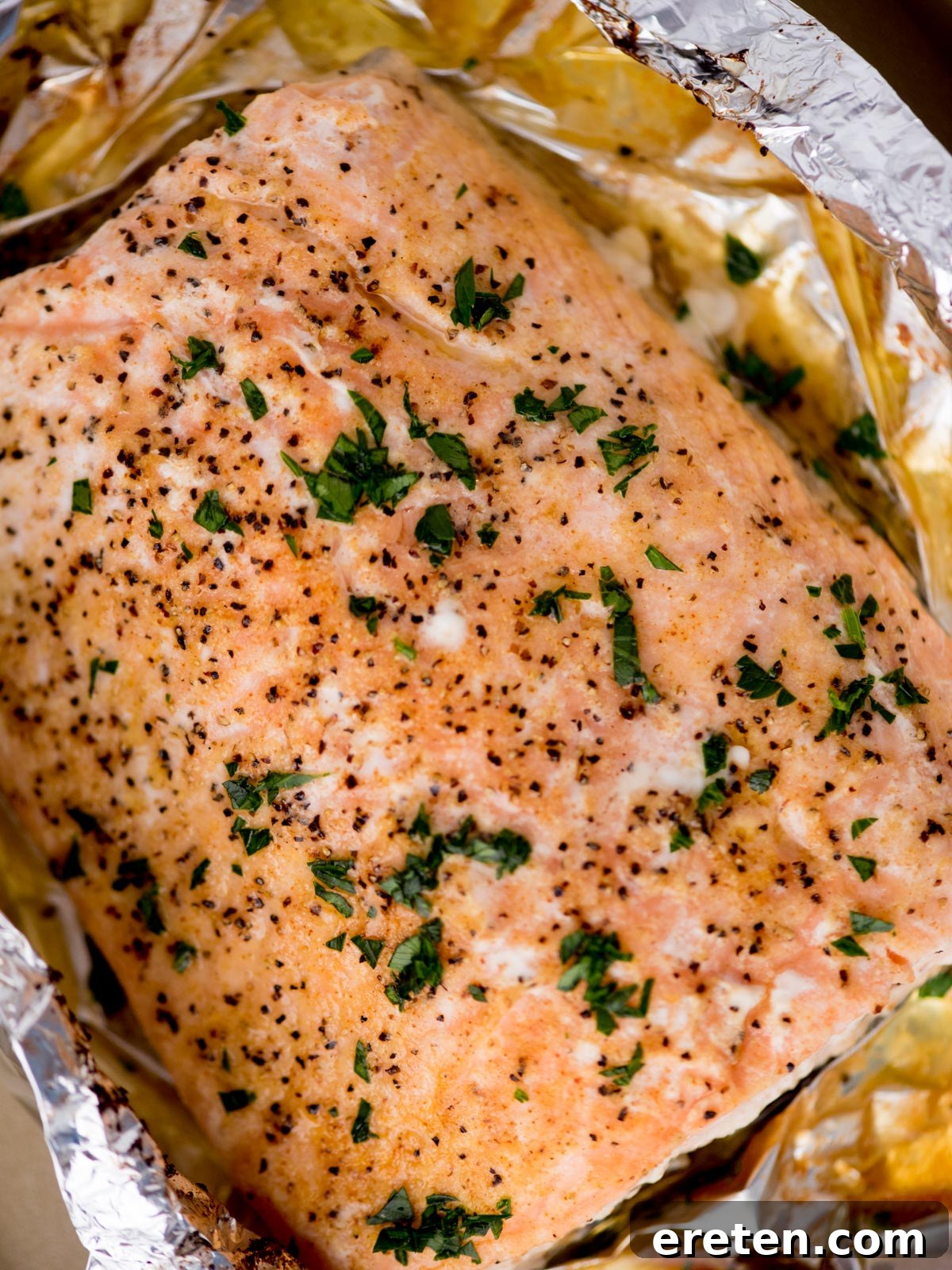
Delicious Ways to Serve Salmon Baked in Foil
Baked salmon is incredibly versatile and pairs beautifully with a wide array of side dishes. A classic touch is to serve it with fresh lemon wedges, allowing you to squeeze bright, zesty juice over the warm, flaky fillet for an added burst of flavor. Beyond that, here are some fantastic suggestions to complete your meal:
- Sautéed Asparagus with Butter and Garlic: The crisp-tender texture and savory notes of asparagus make it a perfect companion.
- Cilantro and Lime Rice: A fragrant and zesty rice dish can perfectly complement the rich flavor of salmon.
- Boursin Mashed Potatoes: Creamy, herby mashed potatoes offer a comforting and indulgent side.
- Garlic Parmesan Roasted Broccoli and Cauliflower: Roasted vegetables bring a lovely caramelization and savory depth to the plate.
- Green Salad with Vinaigrette: A light, fresh salad provides a refreshing contrast to the richness of the salmon.
- Quinoa Salad with Herbs: For a protein-packed and nutritious option, a vibrant quinoa salad is an excellent choice.
- Roasted Sweet Potatoes: Their natural sweetness and soft texture are a delightful pairing with savory salmon.
- Simple Steamed Green Beans: Lightly steamed green beans, perhaps tossed with a hint of garlic, offer a healthy and quick side.
How to Store and Reheat Foil Baked Salmon
Proper storage and reheating are key to enjoying your delicious foil baked salmon leftovers without sacrificing flavor or texture. Salmon is best enjoyed fresh, but it stores well for a few days.
- Storing Leftovers: Allow the baked salmon to cool completely to room temperature before storing. Once cool, transfer the salmon to an airtight container. This helps to prevent it from drying out and absorbing other odors in the refrigerator. Store it in the refrigerator for up to 3 days. Freezing cooked salmon is generally not recommended as it can significantly alter the texture upon thawing.
- Reheating Salmon: Reheating salmon gently is crucial to avoid drying it out.
- Oven Method: This is often the best way to reheat salmon, as it maintains moisture. Preheat your oven to a low temperature, around 275-300°F (135-150°C). Place the salmon in an oven-safe dish, cover it loosely with foil, and heat for about 10-15 minutes, or until just warmed through.
- Microwave Method: While convenient, the microwave can easily dry out salmon. If using, place the salmon on a microwave-safe plate, add a splash of water or broth, and cover it loosely. Heat in short bursts (30 seconds to 1 minute) on a lower power setting until warm.
- Stovetop Method: For a single portion, you can gently reheat salmon in a non-stick skillet over low heat. Add a tiny bit of water or broth and cover the pan to create steam, warming the salmon for a few minutes until heated through.
Be extremely careful not to overheat the salmon, as this is the primary cause of dry, rubbery fish. The goal is to warm it up, not cook it further.
More FAQs for Salmon in Foil
No, there’s no need to flip salmon while it’s baking in the oven, especially when cooked in a foil packet. The enclosed environment of the foil packet ensures that the salmon cooks evenly on both sides through steam and conduction, without any intervention. Flipping is unnecessary and could risk breaking the delicate fillet.
This recipe specifically calls for baking salmon covered, enclosed in a foil boat or packet. This method is crucial for trapping the steam inside, which keeps the salmon incredibly moist and tender as it cooks. Baking it uncovered can lead to a drier texture, as the direct heat of the oven can evaporate the natural juices more quickly.
Both glass and metal pans can be effectively used to bake salmon, and the choice often boils down to personal preference or what you have available. Metal pans, particularly those with a darker finish, tend to conduct heat more quickly and efficiently, leading to faster cooking and potentially a crispier exterior if left uncovered. Glass pans, on the other hand, heat up more slowly and retain heat longer, providing a more even, gentle cook. When using a foil packet as in this recipe, the pan material is less critical since the salmon is protected and cooked primarily by steam within the foil.
Explore More Salmon Recipes You’ll Adore
If you loved the simplicity and flavor of this baked salmon, you’re in for a treat! Salmon is an incredibly versatile fish, and there are countless ways to prepare it to suit any craving. Here are a couple more mouth-watering salmon recipes you might enjoy:
- Lemon Butter Salmon Baked In Foil: A bright and zesty twist on the classic, featuring the irresistible combination of fresh lemon and rich butter.
- Honey Lime Salmon with Jalapeno: For those who enjoy a little sweet heat, this recipe offers a fantastic balance of flavors with a gentle kick.
If you make this incredibly easy and delicious baked salmon recipe and find yourself loving it as much as we do, we would be incredibly grateful for a 5 ⭐️⭐️⭐️⭐️⭐️ rating! Your feedback helps us continue to provide high-quality, free recipes for everyone to enjoy.
Baked Salmon in Foil
sweetlysplendid.com
5 mins
12 mins
17 mins
4 people
Equipment
-
Baking Sheet
-
Aluminum Foil
-
Measuring Spoons
Ingredients
- 1.5 lb salmon fillet (deboned)
- 1 teaspoon seasoned salt
- 1/2 teaspoon ground black pepper
- 1 teaspoon garlic powder
- 2 tablespoons butter (melted)
Instructions
-
Preheat the oven to 425°F (220°C).
-
Place the salmon, skin side down, on a large sheet of aluminum foil.
-
Brush the melted butter evenly over the salmon fillet.
-
Season the salmon generously with seasoned salt, ground black pepper, and garlic powder.
-
Close and seal the foil around the salmon, creating a tightly sealed foil packet or “boat.”
-
Place the foil packet on a baking sheet.
-
Bake in the preheated oven for 12 minutes.
-
Remove from the oven and carefully open the foil, being mindful of escaping steam.
-
Allow the salmon to rest, still in its foil, for 5 minutes before serving.
Notes
- Be careful not to overcook the salmon. It’s done when the internal temperature reaches 145ºF (63°C) and it flakes easily with a fork.
- If the salmon still has skin, you can lightly score it to prevent it from curling while baking.
- Creating a foil packet for the salmon helps trap the steam to give it a moist result. Be sure when you’re making the packet that it’s fully sealed.
Nutrition Information (Approximate)
Nutrition information is automatically calculated, so should only be used as an approximation and can vary based on specific ingredients and preparation methods.
Additional Info
Dinner, Main Course, Main Dish, Main Dishes
American, Mediterranean