From-scratch Chicken Teriyaki Noodles
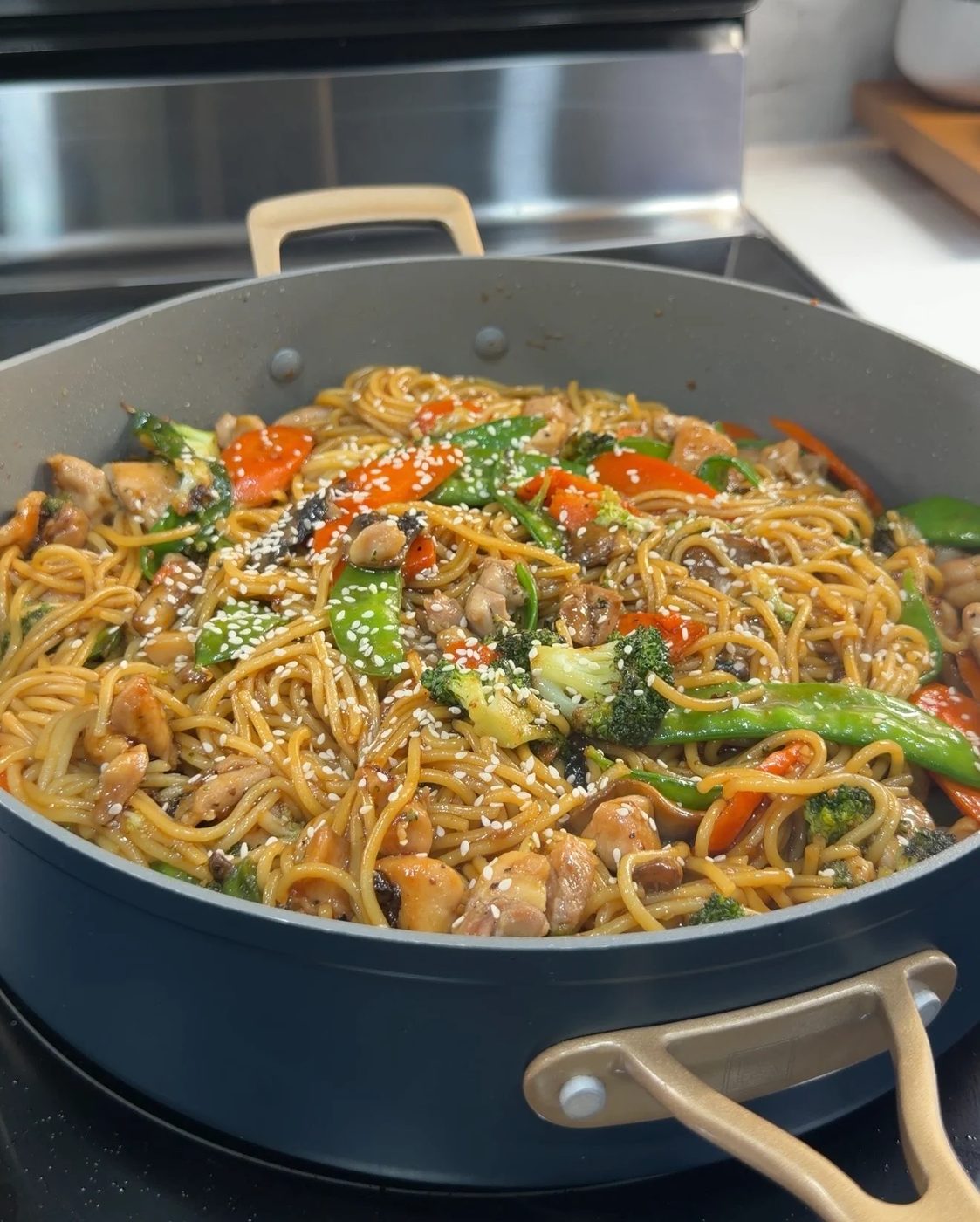
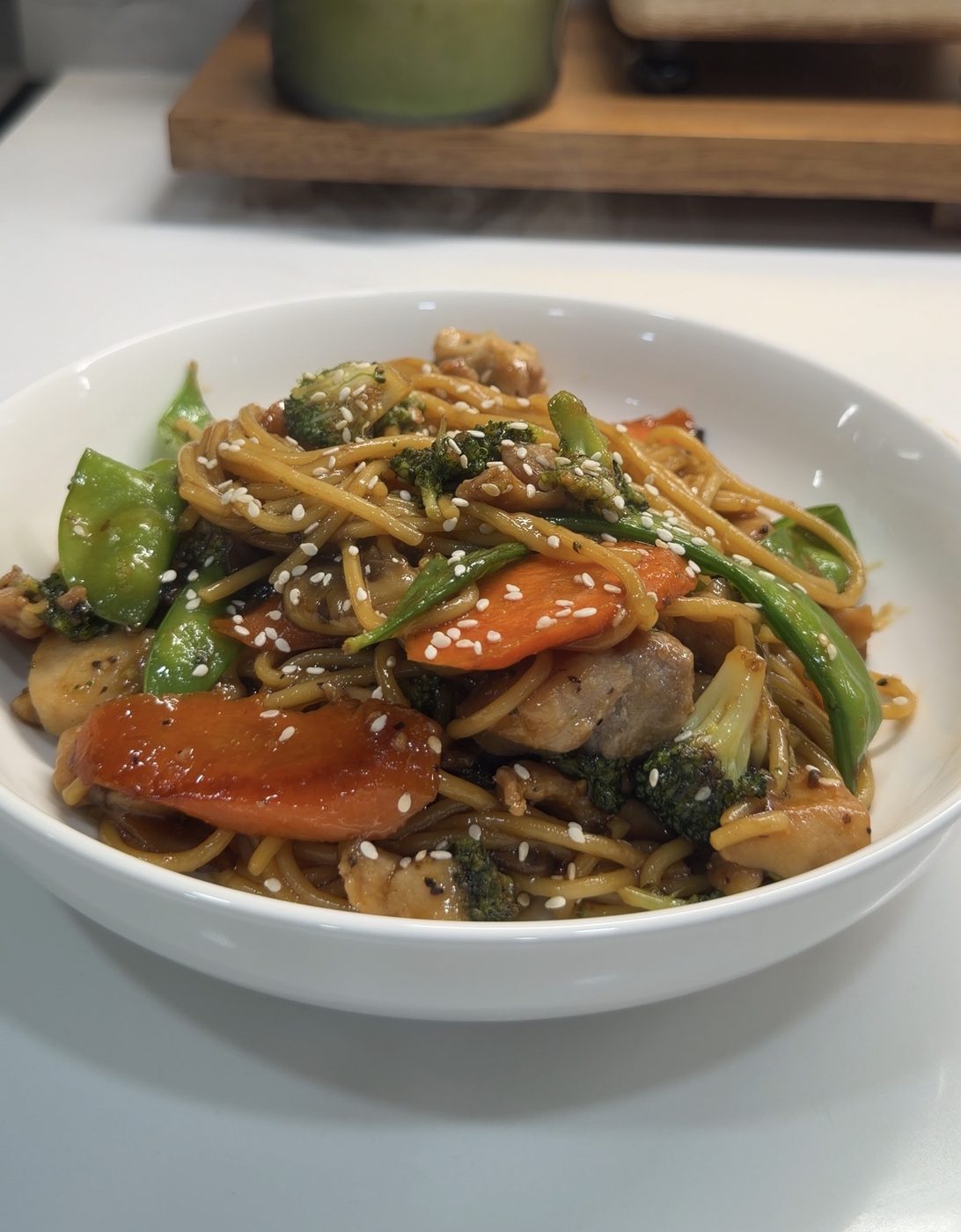
These Teriyaki Chicken Noodles are better, savory, and cozy than takeout on a busy night. Everything gets tossed together in a thick from-scratch sauce that coats the noodles and chicken evenly.
We make these Teriyaki Chicken Noodles by cooking each component separately on purpose. Browning the chicken thighs first gives them real flavor and keeps them juicy, while cooking the vegetables on their own lets them stay crisp-soft rather than steaming. The sauce is cooked separately too, so it thickens properly and coats the noodles rather than turning watery. Once everything is ready, every bite is balanced, glossy, and exactly how a teriyaki noodle skillet should taste.
Why Teriyaki Chicken Noodles stay in the rotation
- Better than takeout – Browning the chicken and thickening the sauce separately gives this dish way more depth than tossing everything into one pan.
- Juicy chicken every time – Using chicken thighs and cooking them first keeps the meat soft.
- A sauce that actually coats – The from-scratch teriyaki sauce thickens properly, so it clings to the noodles rather than pooling at the bottom and being watery.
- Packed with veggies – Broccoli, carrots, snow peas, and mushrooms add balance, texture, and color.
- Well-balanced for busy nights – Everything is ready quickly, but still feels like a complete, hearty meal.
Ingredients You’ll Need
Chicken thighs
Boneless, skinless chicken thighs stay juicy and flavorful, even after browning and tossing with sauce. They’re much more forgiving than chicken breast and hold up better in skillet-style noodle dishes.
Salt & black pepper
Seasoning the chicken before cooking is key. This gives the chicken real flavor on its own so the dish doesn’t rely entirely on the sauce.
Garlic powder & onion powder
These build a savory base without overpowering the teriyaki sauce. Using powders here helps the seasoning stick evenly to the chicken.
Ground ginger
A small amount goes a long way. This adds warmth and ties the chicken seasoning into the flavors of the teriyaki sauce.
Avocado oil
A neutral oil with a high smoke point that’s suited to browning chicken and sautéing vegetables without burning.
Broccoli florets
Adds texture and stays firm well when tossed with sauce and noodles without getting mushy.
Carrots
Bring a touch of natural sweetness and color that balances the savory sauce.
Snow peas
Fresh, Light, and crisp. They add contrast and keep the vegetable mix from feeling heavy.
Mushrooms
Soak up flavor and add a savory, almost meaty depth that works well with teriyaki sauce.
Thin spaghetti
An straightforward pantry noodle that cooks quickly and grabs onto the sauce well, making it a great substitute for traditional Asian-style noodles.
Soy sauce
The salty backbone of the teriyaki sauce.
Brown sugar & honey
This combo gives the sauce sweetness with depth, not sugar-forward flavor.
Garlic & ginger (for the sauce)
Layering these again in the sauce reinforces the flavor and makes everything taste cohesive.
Cornstarch slurry
Thickens the sauce so it coats the vegetables, noodles, and chicken evenly rather than turning watery.
Sesame seeds
A plain finishing touch that adds a little texture and makes the dish feel complete.
Step-by-Step Instructions
- Season the chicken. Cut chicken thighs into bite-size pieces, then season with salt, pepper, garlic powder, onion powder, and ground ginger.
- Brown the chicken. Heat a large skillet over medium-high heat with avocado oil. Add the chicken in an even layer and cook until browned and cooked through, stirring only after it’s had time to sear. Remove to a plate.
- Cook the vegetables. In the same skillet, add broccoli, carrots, snow peas, and mushrooms. Cook until crisp-soft and the moisture has cooked off. Remove and set aside.
- Boil the noodles. While the chicken/veggies cook, boil thin spaghetti in salted water according to package directions. Drain and set aside.
- Make the teriyaki sauce. In a small saucepan, combine soy sauce, ginger, brown garlic, sugar, and honey. Bring to a gentle simmer. Stir in the cornstarch slurry and cook until thick and glossy. Remove from heat.
- Toss it all together. Add the noodles, chicken, and vegetables back to the skillet. Pour the sauce across the top and toss until everything is evenly coated and warmed through.
- Finish and serve. Sprinkle with sesame seeds and serve right away.
Tips for Success
- Don’t crowd the pan. If your skillet is too full, the chicken will steam rather than brown. Cook in batches if needed. This extra step makes a big difference in flavor.
- Brown before saucing. The chicken should be fully cooked and nicely browned Before The sauce ever touches the pan. Adding sauce too early prevents caramelization and can make it taste flat.
- Let the vegetables cook off moisture. Mushrooms and broccoli release water as they cook. Keep the heat high enough so that moisture evaporates rather than pooling in the pan.
- Thicken the sauce separately. Cooking the teriyaki sauce on its own ensures it gets glossy and coats the noodles properly rather than thinning out once everything is combined.
- Use well-salted pasta water. Seasoning the noodles themselves helps balance the sweetness of the teriyaki sauce.
- Toss off the heat. Once everything is coated, remove the skillet from heat so the sauce doesn’t over-reduce or turn sticky.
Screenshot
Storage & Reheating
To store:
Let the Teriyaki Chicken Noodles cool completely, then transfer to an airtight container. Store in the refrigerator for up to 4 days.
To reheat:
Reheat gently in a skillet over medium-low heat or in the microwave in short intervals, stirring in between. If the noodles seem dry, add a small splash of water or soy sauce to loosen the sauce before reheating.
Meal prep tip:
This recipe reheats best when the noodles are soft, not overcooked. If you’re planning to make it ahead, cook the spaghetti on the lower end of the package directions.
Freezing:
Freezing isn’t recommended for this dish. The noodles and vegetables can become soft and watery once thawed, which affects both texture and sauce consistency.
Frequently Asked Questions
Prep 15 minutesCook 15 minutesTotal 30 minutesMakes 4 servings
Ingredients
Chicken
- 1 pound boneless skinless chicken thighs, cut into bite-size pieces
- 1 teaspoon kosher salt
- ½ teaspoon black pepper
- 1 teaspoon garlic powder
- 1 teaspoon onion powder
- ½ teaspoon ground ginger
- 1 tablespoon avocado oil
Vegetables
- 1½ cups broccoli florets
- 3 medium carrots peeled and sliced
- 1 cup snow peas
- 8 ounces mushrooms sliced
Noodles
- 12 ounces thin spaghetti
Teriyaki Sauce
- 1 cup soy sauce (I use low sodium)
- ½ cup brown sugar
- 2 tablespoons honey
- 2 tablespoons minced garlic
- 2 teaspoons ground ginger
- 2 tablespoons cornstarch
- 2 tablespoons water
For Serving
- Sesame seeds for garnish
Method
- Cut the chicken thighs into bite-size pieces and season with salt, pepper, garlic powder, onion powder, and ground ginger.
- Heat a large skillet over medium-high heat and add avocado oil. Add the chicken in a single layer and cook until browned and cooked through. Remove and set aside.
- In the same skillet, add the broccoli, carrots, snow peas, and mushrooms. Cook until crisp-soft and the moisture has cooked off. Remove and set aside.
- Bring a large pot of salted water to a boil and cook the thin spaghetti according to package directions. Drain and set aside.
- In a small saucepan, combine the soy sauce, brown sugar, honey, garlic, and ginger. Bring to a gentle simmer, then stir in the cornstarch slurry. Cook until thick and glossy.
- Return the chicken, vegetables, and noodles to the skillet . Pour the sauce across the top and toss until evenly coated and warmed through.
- Remove from heat and sprinkle with sesame seeds before serving.
Notes
- Chicken thighs are recommended because they stay juicy and flavorful, but chicken breast can be used if cooked carefully.
- Cook the chicken and vegetables in batches if needed to avoid overcrowding the pan.
- Toss everything together off the heat to prevent the sauce from over-reducing or becoming sticky.
- If reheating leftovers, add a small splash of water or soy sauce to loosen the noodles.