

Welcome to the flavorful world of Texas-style chili, reimagined for your busy life! While purists might raise an eyebrow at “Texas Style Chili with Beans,” arguing that authentic Texas chili traditionally omits them, this recipe champions one undeniable truth: maximum flavor. Our rendition takes the legendary depth and rich meaty character of traditional Texas chili and marries it with the wholesome goodness of beans, all while delivering an incredibly satisfying meal in a fraction of the time typically required. Forget simmering for hours; with a few smart shortcuts, you’ll achieve an unbelievably rich, robust, and thick chili that tastes like it’s been slow-cooked all day, ready in just 20 minutes of simmering.
This recipe offers a high meat-to-other-ingredient ratio and a complex flavor profile that sets it apart from many other chili varieties. It’s perfect for those who adore the bold, savory essence of classic Texas chili but also appreciate the texture, heartiness, and nutritional benefits that beans bring to the bowl. Prepare to discover your new favorite chili recipe that balances tradition with modern convenience.

Why You’ll Love this Quick & Flavorful Ground Beef Texas Chili with Beans
Most chili recipes demand a significant time commitment, often simmering for hours to fully develop their intricate flavors. However, with this innovative recipe, you don’t need to sacrifice precious time for exceptional taste. We’re going to unlock that deep, slow-cooked flavor profile in a mere 20 minutes of simmering, making this the ultimate weeknight warrior chili. You’ll be amazed at how quickly you can achieve a thick, delicious, and intensely flavor-packed chili that rivals those that have been on the stove all day.
Texas Chili is famously known for its absence of beans, often stirring lively debates among chili enthusiasts. Yet, I am firmly in the “beans-in-chili” camp, while still profoundly appreciating the unique and powerful flavor of traditional Texas chili. This recipe expertly bridges that gap, offering the best of both worlds. It combines the signature Texas-style spices and a generous meat ratio with a few strategic shortcut ingredients designed to infuse that coveted “slow-simmered” taste in record time. This isn’t just another chili recipe; it’s a culinary triumph that’s bound to become your new go-to for its irresistible flavor and incredible efficiency. Get ready to impress yourself and your family with this hearty and unforgettable dish!
What Exactly is Chili? A Culinary Overview
At its heart, chili, often referred to as chili con carne, is a robust, spicy stew-like dish. Its fundamental components typically include meat (most commonly beef), a variety of chili peppers, an array of seasonings, and often tomatoes. The magic of chili traditionally lies in its slow cooking or simmering process, which allows all the flavors to meld and deepen over time, creating a rich and harmonious taste experience. While the inclusion of beans remains a point of regional and personal preference, many versions incorporate them for added texture, bulk, and nutritional value.
Across the United States and beyond, chili manifests in a fascinating spectrum of varieties. From the meat-centric Texas chili to the unique spice blend of Cincinnati chili (often served over spaghetti), the sweet and smoky notes of New Mexico green chile, or the hearty appeal of white chicken chili, each regional variation boasts its own distinct character, ingredients, and serving traditions. This rich diversity underscores chili’s adaptability and enduring popularity as a comforting and versatile meal.
Unpacking the Distinctive Qualities of Texas Chili
Texas Chili, often simply called “Chili Con Carne” (meaning “chili with meat” in Spanish), stands out in the vast landscape of chili styles. Its most defining characteristic is an unwavering emphasis on the meat, which is the undeniable star of the dish. Unlike many other chili recipes that might rely heavily on a tomato base or a medley of vegetables, Texas chili prioritizes the rich, savory flavor of beef. While some modern interpretations use ground beef for convenience, traditional Texas chili often features hand-cut chunks of beef, such as chuck or brisket, ensuring a substantial and deeply meaty texture in every bite.
Another significant differentiator lies in the spice blend. Beyond the ubiquitous chili powder, Texas chili often features a prominent role for cumin, which imparts an earthy, warm, and slightly pungent aroma. Other spices, like oregano and sometimes a hint of cayenne, contribute to its signature robust and often fiery profile. Tomatoes, while present in some Texas chili recipes, are generally not as dominant as they are in other chili variations, allowing the meat and chili peppers to truly shine.
Culturally, Texas chili is more than just a dish; it’s a culinary institution. It’s frequently served as a hearty stew, often garnished with simple toppings like cheese, onions, or sour cream. In Tex-Mex restaurants, it’s not uncommon to find it generously ladled over enchiladas, adding a layer of rich, savory flavor to the classic Mexican dish.
The debate over beans in Texas chili is legendary. While the most ardent traditionalists insist on a bean-free recipe, emphasizing that “real” Texas chili contains no beans, the reality across the vast state of Texas is more nuanced. With diverse culinary traditions spanning its regions, some areas and home cooks do indeed include beans, reflecting evolving tastes and practical considerations. Our recipe embraces this broader interpretation, delivering the intense flavor of Texas chili with the added appeal of beans.
Essential Ingredients for Your Texas Style Chili with Beans
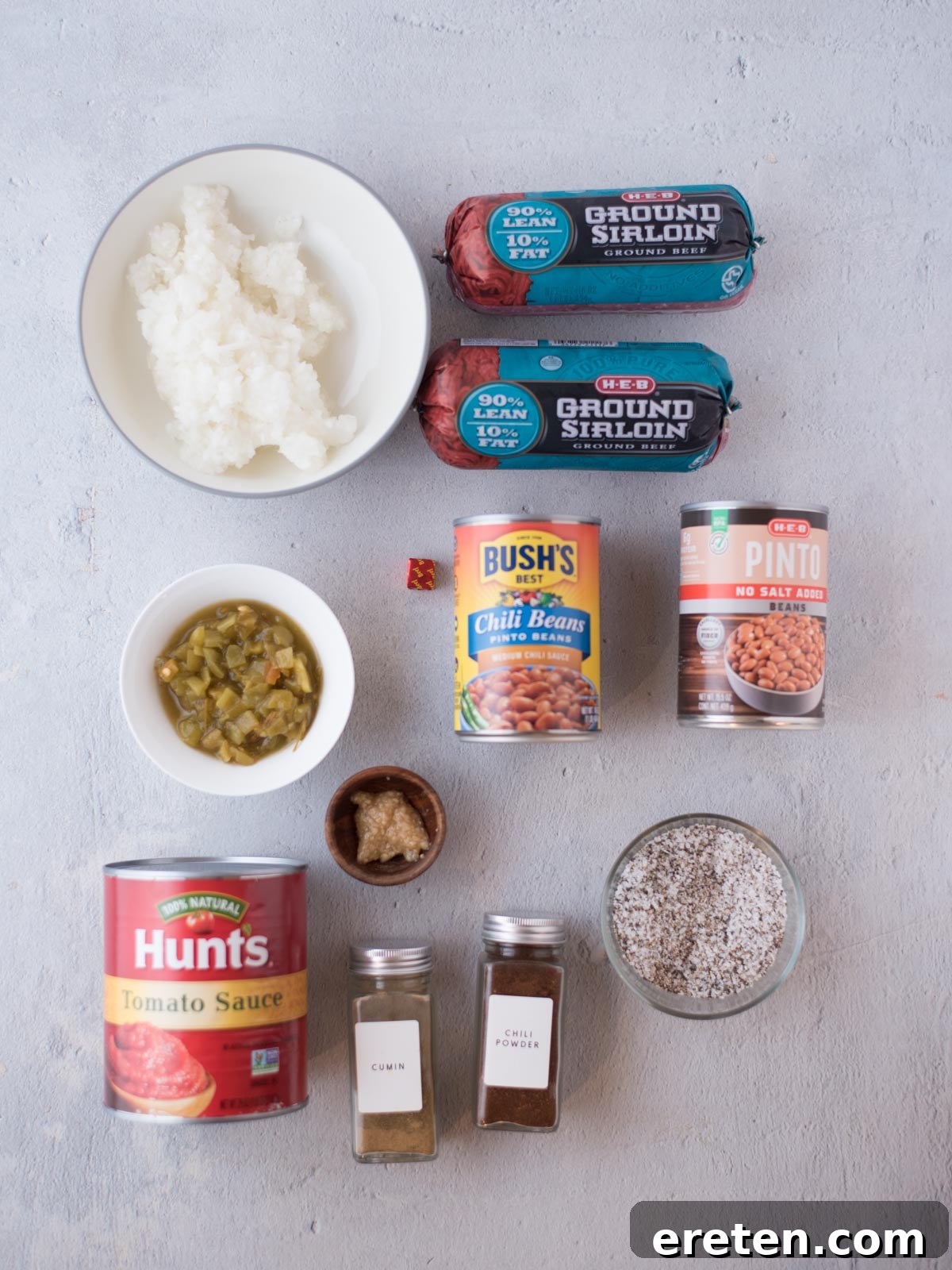
Creating this deeply flavorful Texas-style chili with beans requires a thoughtful selection of ingredients. Each component plays a crucial role in building the chili’s signature taste and texture, ensuring a rich and satisfying meal. Here’s a breakdown of what you’ll need:
- Ground Beef: The foundation of any great chili, providing rich, savory flavor.
- Onion: Aromatic base, adding depth and a subtle sweetness when sautéed.
- Garlic: Essential aromatic, infusing the chili with pungent, savory notes.
- Tomato Sauce: Provides a balanced acidity and a smooth body to the chili.
- Chili Powder: The cornerstone spice, offering a complex blend of dried chilies.
- Cumin: A quintessential Texas chili spice, delivering an earthy, warm, and slightly smoky flavor.
- Salt: Enhances all the flavors and balances the dish.
- Ground Black Pepper: Adds a touch of sharp, spicy warmth.
- Bouillon: A key shortcut ingredient for an instant boost of rich, savory depth, mimicking long simmer times.
- Water: Used to adjust the consistency and carry flavors.
- Roasted Green Chiles: Contributes a mild heat and a distinctive smoky, tangy flavor profile.
- Pinto Beans: Adds a creamy texture and mild, earthy flavor.
- Chili Beans (in sauce): Another brilliant shortcut, these seasoned beans bring a pre-developed chili flavor and help thicken the stew quickly.
- Cayenne (optional): For those who crave an extra kick of heat.
Choosing the Perfect Beans for Your Texas Chili with Beans
While traditional Texas chili may shun beans, for those of us who embrace them, the choice of bean can significantly influence the chili’s texture and flavor. Your preference is key, but here’s a guide to the most commonly used beans in chili, highlighting their unique contributions:
- Kidney Beans: Particularly dark red kidney beans, these are arguably the most popular choice for chili. Their robust size and firm texture allow them to hold their shape beautifully even after extended simmering, adding a satisfying chewiness without becoming mushy. They absorb the chili’s flavors wonderfully, making them a hearty addition.
- Black Beans: Offering a slightly sweeter and more earthy flavor than kidney beans, black beans also have a softer, creamier texture. They tend to soak up the chili’s liquid and spices, becoming incredibly flavorful and contributing to a thicker stew. Their dark color also adds a visually appealing contrast.
- Pinto Beans: A staple in many Southwestern and Tex-Mex dishes, pinto beans are another excellent choice for chili. They boast a milder flavor compared to kidney or black beans and a creamy, tender texture once cooked. Their gentle flavor allows the spices of the chili to shine, while their consistency adds to the overall heartiness.
- Cannellini Beans: Also known as white kidney beans, cannellini beans are characterized by their delicate flavor and exceptionally creamy texture. While less common in traditional red meat chili, they are a fantastic option for lighter chilis, such as white chicken chili, where their mildness complements poultry and lighter broths.
- Chili Style Beans: These are a fantastic shortcut ingredient, often found canned and seasoned with chili spices. They are typically pinto beans already infused with flavors like chili powder, cumin, and sometimes a hint of tomato. Using chili style beans in sauce is a brilliant way to add that desirable “slow-cooked” flavor and thickness to your chili without the need for hours of simmering. They deliver a ready-made depth that significantly cuts down on preparation time.
When selecting your beans, consider the overall flavor profile and texture you desire. A blend of different beans can also add complexity and interest to your chili, making each spoonful a unique experience.
Essential Tools for Crafting this Texas Chili Recipe with Beans
Having the right kitchen tools can make the process of preparing this delicious Texas chili smooth and enjoyable. Here are the key pieces of equipment you’ll want to have on hand:
Dutch Oven
Buy Now →
Meat Chopper
Buy Now →
Measuring Cups
Buy Now →
Measuring Spoons
Buy Now →
Wooden Spoon
Buy Now →
Simple Steps to Make Your Flavorful Chili with Beans
Making this incredibly flavorful Texas-style chili with beans is straightforward and surprisingly quick. Follow these simple steps to achieve a rich, hearty, and satisfying meal in under an hour:
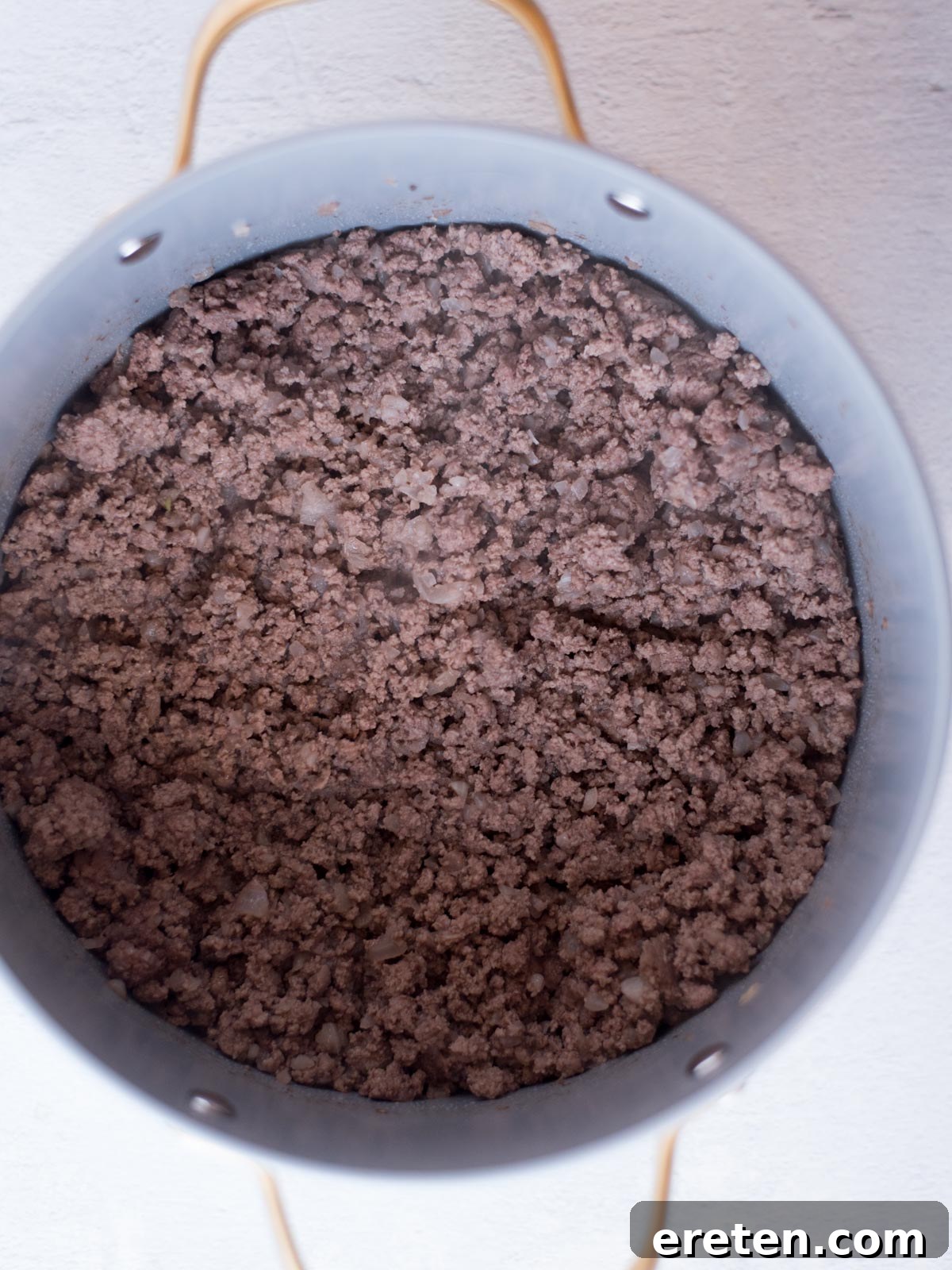
- Brown the Beef and Sauté the Onion: Begin by placing your ground beef and chopped onion into a large stockpot or a Dutch oven over medium heat. Break up the beef with a meat chopper or wooden spoon as it cooks. Continue to cook until the ground beef is thoroughly browned, with no pink remaining, and the onion pieces have softened and become translucent. This step is crucial for building the foundational flavors of your chili. Drain any excess grease from the pot to keep your chili from becoming oily.
- Infuse with Garlic: Once the beef is browned and onions are tender, add the minced garlic to the pot. Stir it well to combine with the beef and onions. Allow the garlic to sauté for about 1 to 2 minutes. Watch carefully, as garlic can burn quickly, which would impart a bitter flavor. You’re looking for it to become fragrant, releasing its pungent, aromatic oils into the mixture.
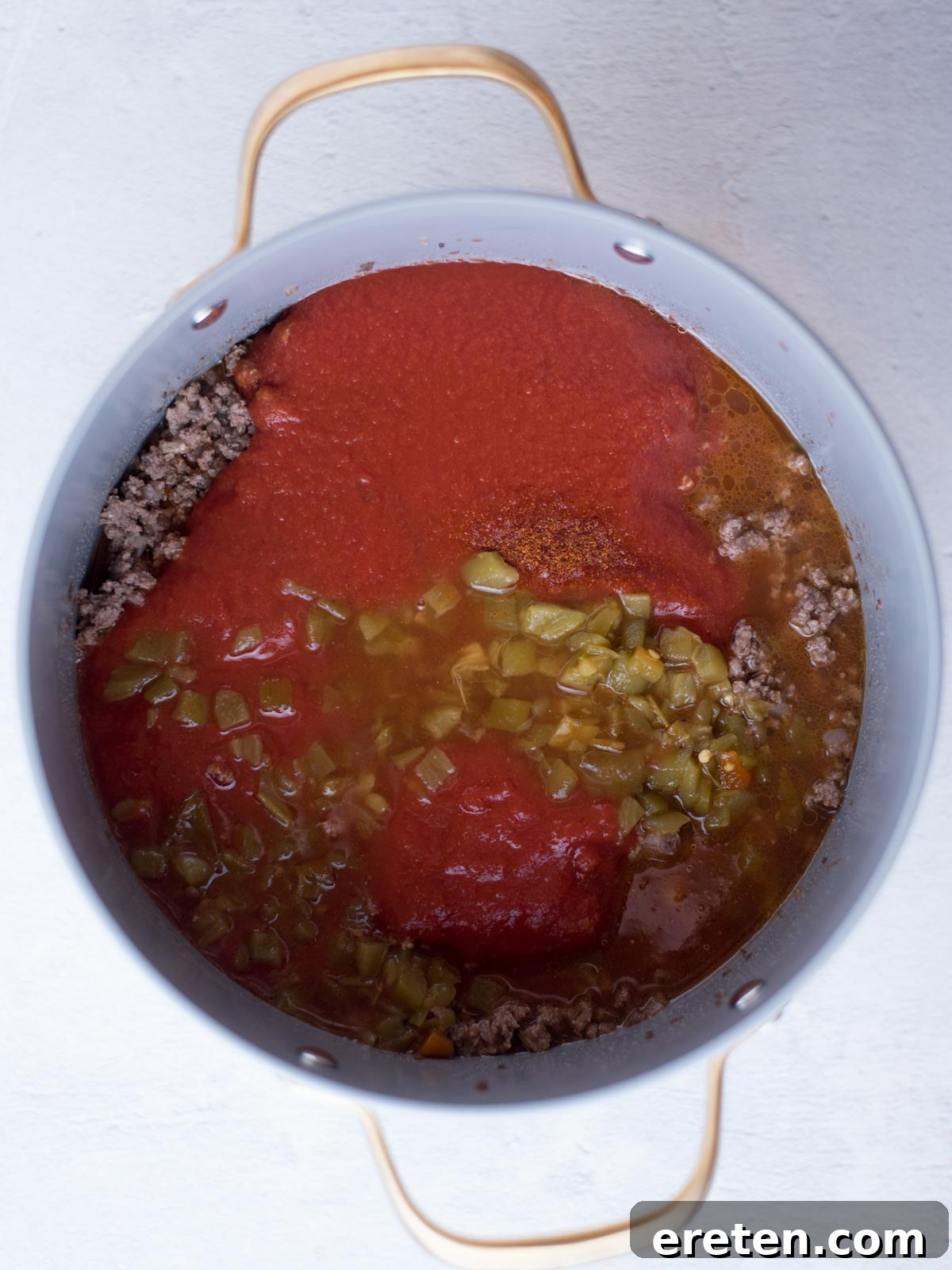
- Build the Flavor Base: Now, it’s time to introduce the heart of your chili’s flavor. Stir in the tomato sauce, chili powder, ground cumin, salt, ground black pepper, beef bouillon cube, water, and the roasted green chiles. If you’re using cayenne for an extra kick, add it now. Mix all these ingredients thoroughly until everything is well combined and the bouillon cube has started to dissolve. Bring this mixture to a gentle, low boil, allowing the spices to bloom and begin merging with the liquids.
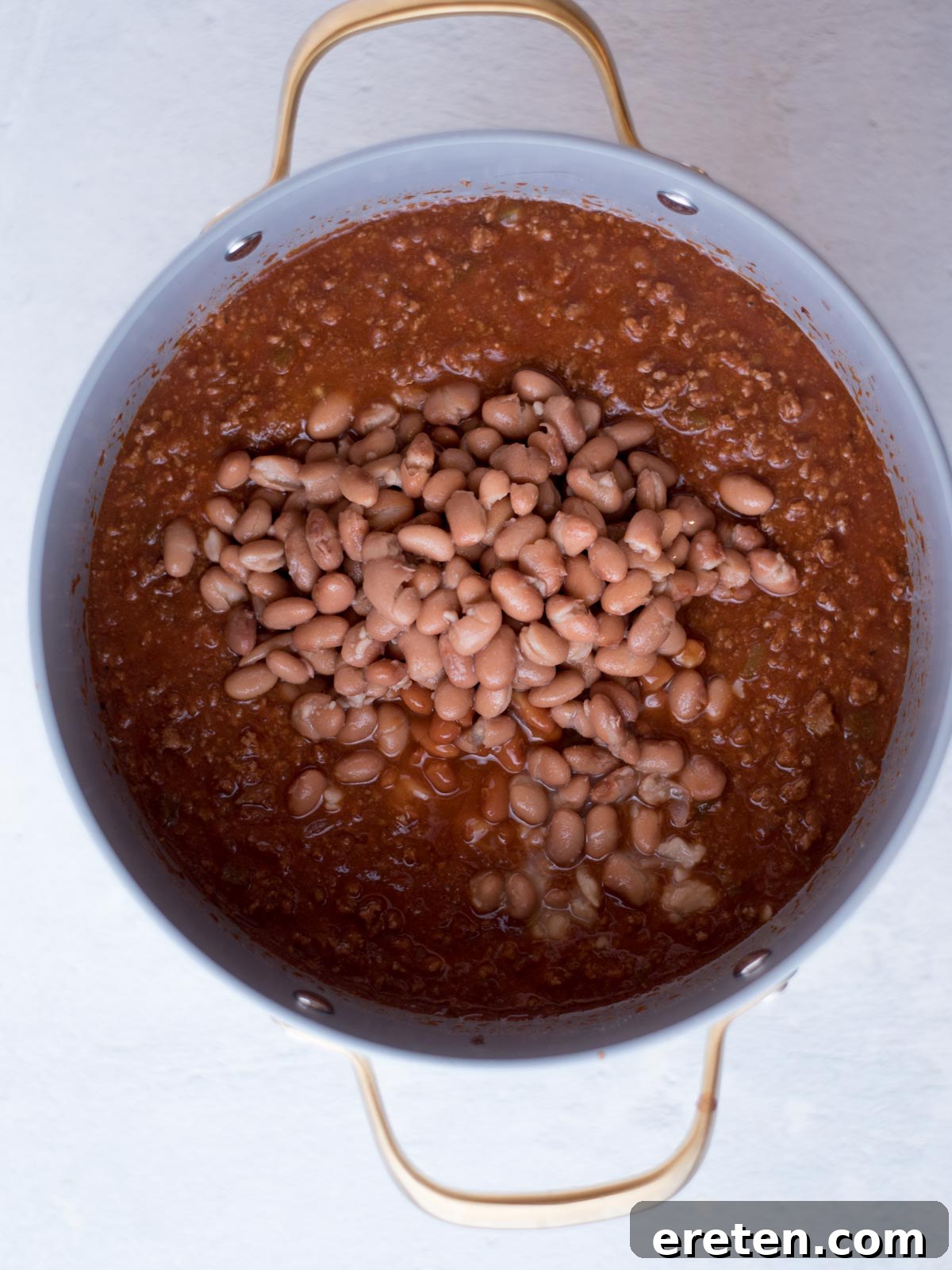
- Add Beans and Simmer to Perfection: Finally, incorporate the drained and rinsed pinto beans along with the chili beans in sauce. Stir everything together gently. Reduce the heat to low, cover the pot, and let your chili simmer for a minimum of 20 to 30 minutes. While 20 minutes is sufficient for the flavors to meld beautifully thanks to our shortcut ingredients, remember that chili, like many stews, often tastes even better the longer it simmers. If you have extra time, letting it go for an hour or more on low heat will only deepen its richness. Stir occasionally to prevent sticking.
Once simmering is complete, your rich, hearty, and flavorful Texas-style chili with beans is ready to be served hot. Garnish with your favorite toppings and enjoy!
Expert Tips on How to Thicken Chili
A thick, hearty chili is often the goal, but sometimes you might find your chili a bit too thin. The best strategy for a perfectly thick chili is to be mindful of the liquid you add from the beginning. However, if you find your chili is still on the runny side, don’t despair! Here are a few reliable methods to help thicken it up to your desired consistency:
Extended Simmering (Uncovered): This is perhaps the simplest and most natural way to thicken chili. Continue to simmer the chili uncovered over low heat. By leaving the lid off, you allow steam and excess liquid to evaporate, gradually concentrating the flavors and thickening the stew. Be patient with this method, stirring occasionally to prevent the chili from sticking to the bottom of the pot. The longer it simmers uncovered, the thicker it will become, and often, the flavors will deepen even further.
Mash a Portion of the Beans: If your chili contains beans, you have an excellent thickening agent readily available. Use a potato masher or an immersion blender to mash a portion of the beans directly in the pot. This action releases starches from the beans, which will naturally thicken the chili without altering its flavor. Aim to mash about one-quarter to one-third of the beans for a noticeable difference while still leaving plenty of whole beans for texture. For an immersion blender, a few quick pulses should do the trick.
Create a Cornstarch Slurry: For a quicker and more controlled thickening method, a cornstarch slurry is your best friend. In a small bowl, whisk together 1 to 2 tablespoons of cornstarch with an equal amount of cold water (or beef broth if you prefer) until a smooth paste forms. It’s crucial to use cold liquid to prevent lumps. Gradually stir this slurry into your simmering chili, mixing continuously. Allow the chili to simmer for a few more minutes after adding the slurry; the heat will activate the cornstarch, causing the chili to thicken completely. Start with a small amount and add more if needed, as it’s easier to add than to remove.
Remember to taste and adjust seasonings after thickening, as the process can sometimes concentrate flavors or require a touch more salt.
Texas Chili with Beans Recipe: Smart Substitutions & Flavor Alterations
This Texas Chili with Beans recipe is incredibly versatile, allowing for various substitutions and alterations to suit your preferences, dietary needs, or what you have on hand. Don’t hesitate to experiment!
- Ground Beef Alternatives: While ground beef is traditional and delicious, this recipe adapts wonderfully to other meats. You could easily substitute ground turkey for a leaner option, ground bison for a richer, slightly gamy flavor, or even ground elk, which is absolutely delicious and brings a unique wild game essence to the chili. Each offers a distinct profile while maintaining the hearty character of the dish.
- Onion Sensitivity Solutions: If you have family members who dislike the texture of onion chunks, there are simple solutions. First, try pulsing the onion in a food processor until it’s very finely minced, almost pureed. This allows you to retain all the essential cooked onion flavor without any noticeable pieces. Alternatively, you can substitute 1-2 tablespoons of dried onion flakes or 1-2 teaspoons of onion powder for the fresh onion. Adjust to taste, adding more as desired.
- Bouillon Cube vs. Broth: The bouillon cube is a secret weapon in this recipe, delivering an incredible depth of savory flavor that makes the chili taste like it’s been simmering for hours. If you can’t find bouillon, or prefer an alternative, you can substitute beef stock or broth. In this case, omit the 1 cup of water from the recipe and replace it with 1 cup of rich beef stock. While beef broth works, beef stock will generally provide a more intense flavor.
- Chili Beans in Sauce Replacement: These specially seasoned canned chili beans are another key shortcut, significantly contributing to the “all-day simmered” flavor in a short amount of time. If they are unavailable, you can substitute an additional 16 ounces of plain pinto beans (drained and rinsed). However, be aware that without the pre-seasoned chili beans, you might want to increase your chili powder and cumin slightly, and consider simmering the chili for a bit longer—perhaps 45-60 minutes—to allow the flavors to fully develop and meld. This will help compensate for the lack of pre-infused flavor.
- Tomato Product Variations: Instead of regular tomato sauce, you could experiment with crushed tomatoes for a chunkier texture, or even a can of diced tomatoes (drained) for added substance. Adjust the water content accordingly to maintain the desired consistency.
- Heat Level Adjustment: For more heat, increase the amount of cayenne pepper, or add a pinch of red pepper flakes with the other spices. For less heat, simply omit the cayenne entirely. You can also add a finely minced jalapeño or serrano pepper along with the garlic for fresh, bright spice.
Feel free to get creative with these suggestions to make this Texas chili truly your own!
What to Serve with Your Hearty Texas Style Chili with Beans
A bowl of hot, savory Texas-style chili with beans is a meal in itself, but pairing it with the right sides can elevate the entire dining experience. Here are some fantastic accompaniments that complement chili perfectly:
- Cornbread: A classic and beloved pairing. The slightly sweet, crumbly texture of cornbread is ideal for soaking up the rich chili juices, offering a delightful contrast to the savory stew.
- Rice: A bed of fluffy white or cilantro-lime rice is excellent for making your chili even more filling. The rice absorbs the chili’s flavors beautifully, creating a satisfying and comforting dish.
- Tortilla Chips: Perfect for dipping and scooping, tortilla chips add a wonderful crunch and a salty contrast. They’re also great for building miniature chili nachos.
- Corn Chips (Fritos): For a truly nostalgic and comforting experience, serve your chili with Fritos. The distinct corn flavor and sturdy crunch are a match made in heaven for chili.
- Bread Rolls: Soft, warm bread rolls are fantastic for wiping the bowl clean and offering a simple, comforting carb alongside your robust chili.
- Side Salad: A crisp, refreshing side salad provides a light and cool counterpoint to the rich, warm chili. A simple green salad with a vinaigrette dressing is often ideal.
Inspired Topping Ideas for Chili with Beans
No bowl of chili is truly complete without a generous array of toppings. These additions not only enhance the visual appeal but also introduce new layers of flavor, texture, and temperature to each spoonful. I always make sure to pile mine high!
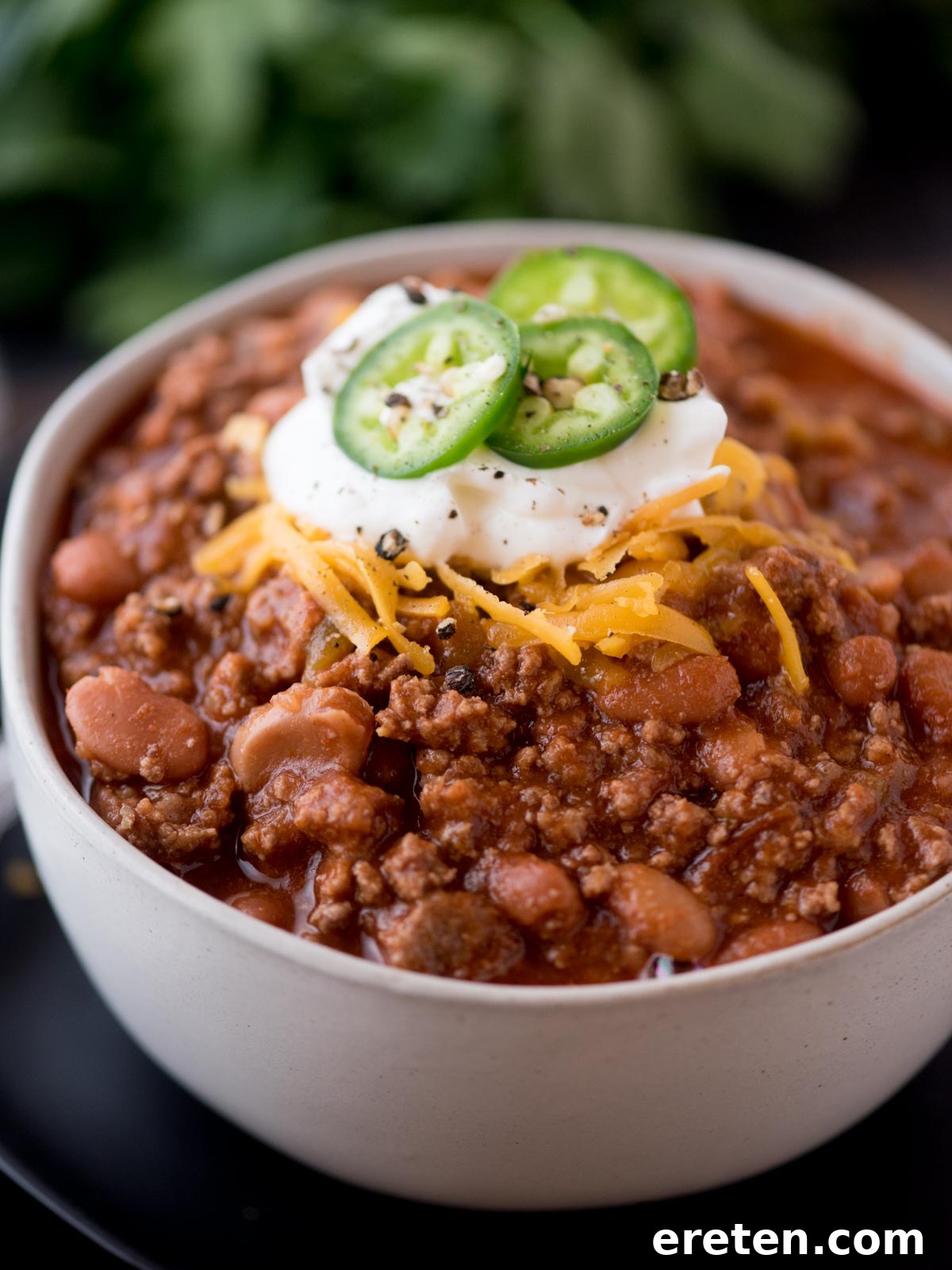
- Shredded Cheese: A melting blanket of sharp cheddar, Monterey Jack, or a Mexican blend adds creamy richness and a tangy counterpoint as it warms and melts into the hot chili.
- Sour Cream or Greek Yogurt: A dollop of cool, tangy sour cream or plain Greek yogurt provides a creamy texture and helps balance the chili’s spice.
- Avocado (or Guacamole): Sliced fresh avocado or a spoonful of creamy guacamole offers a rich, buttery contrast and a refreshing earthy note.
- Chopped Green Onions (Scallions): These provide a mild, fresh onion flavor and a bright, vibrant green color, adding a subtle bite.
- Chopped Cilantro: Fresh cilantro adds a burst of herbaceous, citrusy flavor that brightens the entire dish, particularly good with the Tex-Mex profile.
- Lime Wedges: A squeeze of fresh lime juice just before eating can cut through the richness of the chili, adding a zesty, refreshing finish.
- Jalapeños (Fresh or Pickled): For those who love extra heat and a vibrant crunch, sliced fresh jalapeños are perfect. Pickled jalapeños offer a tangy, briny heat.
And for an exciting culinary adventure, if you’re open to a different regional twist, consider serving your chili Cincinnati-style – piled generously over a bed of hot spaghetti! It’s an unconventional but incredibly popular and delicious way to enjoy chili.
Storage and Reheating Your Delicious Chili with Beans
Proper storage and reheating are key to enjoying your Texas-style chili with beans for days to come. This chili is fantastic for meal prep, and often tastes even better the next day as the flavors continue to meld and deepen.
Storing in the Refrigerator: Once your chili has finished cooking, allow it to cool completely at room temperature for no more than two hours. Transfer the cooled chili into an airtight container. Store it in the refrigerator, where it will remain fresh and delicious for up to 3 to 4 days. Always ensure the container is tightly sealed to prevent air exposure and maintain freshness.
Freezing for Long-Term Storage: Chili is an incredibly freezer-friendly dish, making it an excellent make-ahead meal option. After allowing the chili to cool completely, transfer it to freezer-safe airtight containers or heavy-duty freezer bags. For individual portions, I highly recommend using silicone Souper Cubes, which allow you to freeze chili into perfectly sized blocks that can then be easily popped out and stored in a freezer-safe zip-top bag. Chili can be safely frozen for up to 6 months without significant loss of quality. Label your containers with the date to keep track of freshness.
Reheating Instructions:
- On the Stovetop: For best results, reheat chili in a saucepan over medium-low heat. Stir occasionally to ensure even heating and prevent sticking, adding a splash of water or broth if it appears too thick. Continue heating until it is piping hot throughout.
- In the Microwave: For a quicker option, place your chili in a microwave-safe bowl. Cover it loosely (to prevent splatters) and heat on 50% power for 4-minute intervals, stirring in between, until it’s heated through. Microwave times can vary, so adjust as needed.
Always ensure chili is reheated to an internal temperature of 165°F (74°C) to ensure food safety.
How Long Does Homemade Chili Last in the Refrigerator?
When stored correctly in an airtight container, homemade chili will typically stay fresh and safe to eat in the refrigerator for up to 3 to 4 days. Beyond this period, the quality and safety may start to decline. Always use your best judgment; if the chili develops an off-odor, unusual color, or fuzzy mold, it should be discarded.
Can You Freeze Chili with Beans? Absolutely!
Yes, you can absolutely freeze chili with beans, and it’s actually one of the best dishes for freezing! Chili freezes exceptionally well, making it a fantastic option for meal prepping and having a hearty, homemade meal ready on demand. Simply allow the chili to cool completely to room temperature before portioning it into freezer-safe containers or bags. It can be frozen for up to 6 months. For convenient single servings, I highly recommend freezing chili in silicone Souper Cubes. Once frozen solid, pop out the chili blocks and transfer them to a larger freezer-safe zip-top bag for efficient storage. When ready to enjoy, simply thaw in the refrigerator overnight or reheat directly from frozen (adding a little extra liquid if needed) on the stovetop or in the microwave.
Texas Chili Recipe with Beans FAQs
Chili is almost universally classified as a stew rather than a soup. The distinction lies in its characteristic thickness, hearty consistency, and the substantial amount of meat and other solid ingredients. Soups tend to be more liquid-based with lighter ingredients, whereas stews are robust, chunky, and meant to be a fulfilling meal on their own.
The trick to a truly good chili lies in a combination of factors: selecting quality ingredients, achieving the right meat-to-other-ingredient ratio, and allowing ample time for the flavors to meld and deepen through simmering. Using a balanced blend of fresh spices, quality meat, and a flavorful liquid base are all crucial. Ultimately, it’s about patience and allowing those complex flavors to develop.
The most significant contributors to depth of flavor in chili are the spices, aromatics, and the type of liquid base used. A rich chili powder, earthy cumin, and smoky paprika are foundational spices. Aromatics like sautéed onions and garlic create a savory base. Furthermore, using a high-quality beef bouillon or rich beef stock instead of just water will infuse the chili with a profound savory background that truly elevates its taste.
Generally, yes, chili often tastes significantly better the longer you let it simmer. The prolonged simmering process allows the various spices, aromatics, and meat juices to fully meld, infuse, and transform into a more complex, harmonious, and robust flavor profile. It also helps the chili to naturally thicken and tenderize the meat, resulting in a more satisfying texture. While this specific recipe offers a shortcut for quick flavor development, a longer simmer will almost always enhance the taste further.
When properly cooled and stored in an airtight container, beef chili can safely be kept in the refrigerator for up to 3 to 4 days. Always ensure it’s reheated thoroughly to a safe temperature before consuming again.
Yes, beef broth will generally make your chili taste better than using plain water, as it adds an extra layer of savory flavor. However, the overall impact depends on the other ingredients. For maximum depth, using a beef bouillon cube (as in this recipe) is often preferred, as it delivers a concentrated, rich flavor. If neither bouillon nor stock is available, beef broth is definitely the superior choice over water for enhancing the chili’s richness. The better quality and flavor of your base liquid, the better the final chili will taste.
This is one of the most hotly debated questions in the world of chili! Traditionally, and by strict Texas chili purists, authentic Texas Chili (Chili Con Carne) does NOT include beans. It focuses primarily on meat, chili peppers, and spices like cumin. However, “chili” can be made both with and without beans depending on regional preferences and personal taste. Many home cooks and diverse culinary traditions within Texas itself do include beans such as pinto, kidney, or black beans. Ultimately, whether Texas chili has beans comes down to preference for taste and texture.
Texas Chili and Cincinnati Chili represent two vastly different styles, both in their flavor profiles and customary serving methods:
- Meat: Texas chili is intensely meat-focused, typically using ground beef, chuck, or brisket in chunky pieces. Cincinnati chili also uses ground beef, or sometimes lamb, but often cooked to a very fine texture.
- Spices: This is where the biggest divergence occurs. Texas chili is robust with chili powder and cumin, often with hints of oregano and cayenne. Cincinnati chili is uniquely characterized by warm, sweet spices like cinnamon, cloves, allspice, and a touch of unsweetened chocolate, giving it a distinctive Mediterranean-inspired flavor.
- Tomatoes: Tomatoes are present in some Texas chili recipes but are rarely a dominant feature; some traditional versions omit them entirely. Cincinnati chili, however, commonly incorporates various forms of tomatoes, including sauce and crushed tomatoes.
- Serving Style: Texas chili is typically served as a hearty stew, garnished with common toppings like shredded cheese, sour cream, and fresh onions. Cincinnati chili is famously served over spaghetti and has a unique “way” system for toppings: “Three Way” means chili, spaghetti, and cheese; “Four Way” adds onions or beans; and “Five Way” includes both onions and beans.
Other Delicious Chili Recipes You Might Enjoy!
If you’ve loved this Texas Style Chili with Beans, you’ll be thrilled to explore other fantastic chili recipes designed for every palate and occasion. Whether you’re craving a different meat, a lighter option, or a unique flavor profile, there’s a chili for everyone. Dive into these diverse and delicious options:
- Brisket Chili: For a truly indulgent and smoky experience, slow-cooked brisket chili is unparalleled.
- Crockpot Chicken Chili: A lighter, hands-off option that’s perfect for busy days, delivering tender chicken and robust flavors.
- Instant Pot White Chicken Chili: A creamy, zesty, and quick white chili made with chicken, featuring cannellini beans and green chiles.
- Pumpkin Chili: A unique seasonal twist that adds a subtle sweetness and earthy depth to your chili, perfect for autumn.
- Mexican Chili: Bursting with vibrant Mexican-inspired flavors, often featuring a wider variety of beans and spices.
If you make this recipe and absolutely love it, we would be incredibly grateful for a 5 ⭐️⭐️⭐️⭐️⭐️ rating! Your feedback helps us continue to provide delicious, free recipes to our community.
Texas Chili with Beans

Equipment
-
Dutch oven
-
Meat chopper
-
Measuring cups
-
Measuring spoons
-
Wooden spoon
Ingredients
- 2 lbs ground beef
- 1 small onion chopped
- 2 cloves garlic minced
- 30 ounces canned tomato sauce
- 2 tablespoons chili powder or more to taste
- 2 teaspoons ground cumin
- 1 tablespoon salt
- 1/2 tablespoon ground black pepper
- 1 cube beef bouillon
- 1 cup water
- 4 ounces roasted green chiles
- 16 ounces pinto beans drained and rinsed
- 16 ounces chili beans in sauce
- 1 tablespoon cayenne optional
Instructions
-
Add the ground beef and onion to a large stock pot or Dutch oven over medium heat.
-
Cook until ground beef is cooked through and the onion is translucent.
-
Add the garlic and mix. Let it sauté for about 2 minutes, just until fragrant.
-
Add in the tomato sauce, chili powder, cumin, salt, pepper, bouillon, water, cayenne, and green chiles. Mix to combine and bring to a low boil.
-
Add in the beans and let it simmer for 20-30 minutes.
Notes
- Consider using a food processor or chopper to finely mince the onion. This ensures you get the full flavor contribution without any large, noticeable pieces, which is great for picky eaters.
- While this recipe uses clever shortcuts to achieve deep flavor in 20-30 minutes, remember that chili almost always benefits from a longer simmer. If you have the time, letting it gently bubble for an hour or two (or even longer!) on low heat will further intensify the flavors and create an even richer, more complex stew.
Nutrition
Nutrition information is automatically calculated, so should only be used as an approximation.