

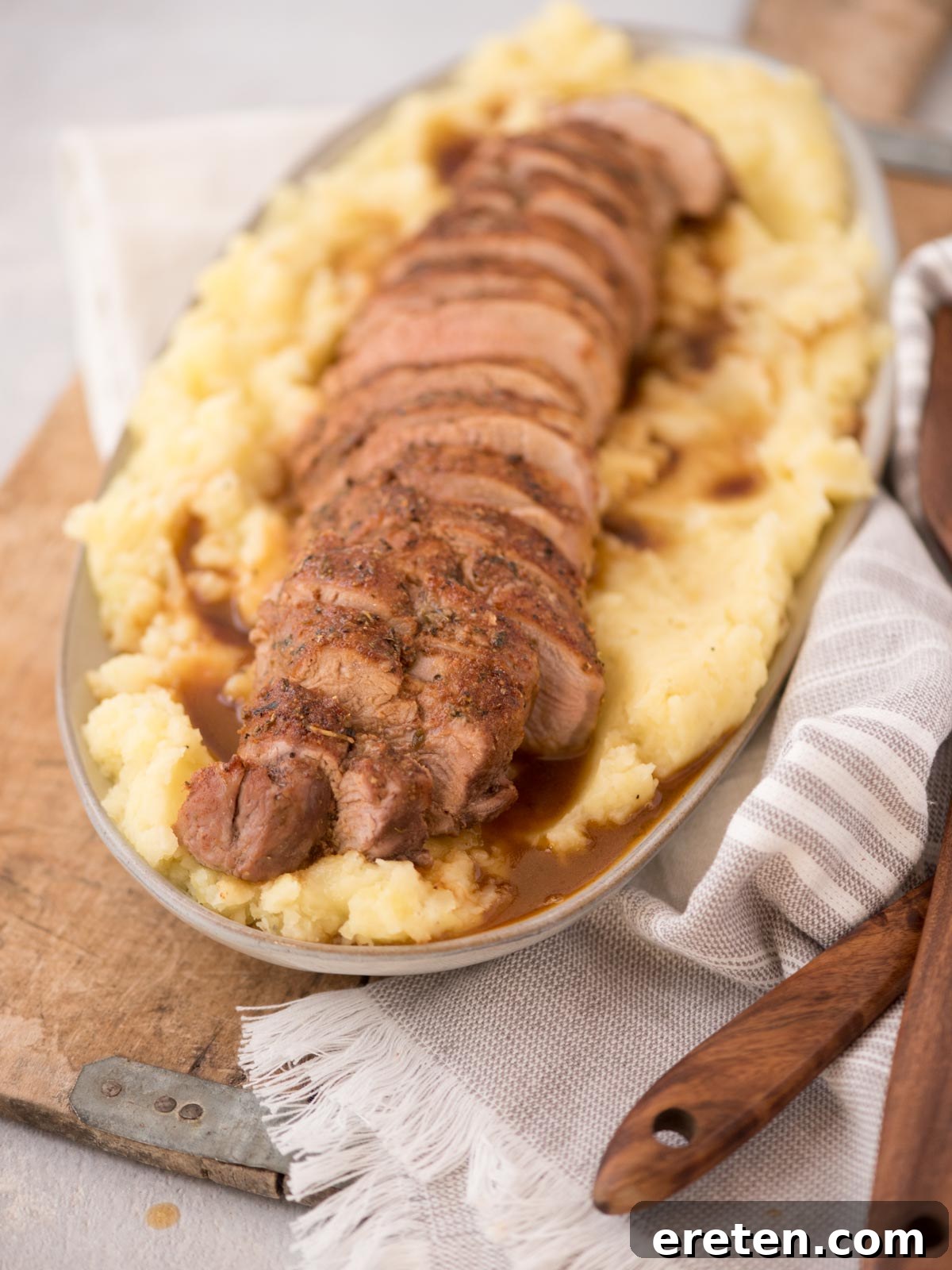
Unlock the secret to a perfectly tender, incredibly juicy, and flavor-packed roast pork tenderloin that will impress every time. Often perceived as a complex dish, preparing pork tenderloin can actually be remarkably straightforward with the right techniques and a blend of simple, aromatic seasonings. Say goodbye to dry, overcooked pork and hello to a succulent main course that’s as easy to master as it is delicious to devour.
This post may contain affiliate links. Should you choose to make a purchase through my links, I may earn a small commission at no extra cost to you. Your support helps keep this content free!
Oven Roasted Pork Tenderloin: A Family Favorite for Any Occasion
There’s nothing quite like the comforting aroma and taste of a perfectly cooked oven-roasted pork tenderloin. This dish exudes warmth and heartiness, yet it’s surprisingly simple and quick to prepare, defying the common misconception that delicious comfort food requires hours in the kitchen. Imagine a meal that tastes like it has been slow-cooked all day, developing deep, rich flavors, but in reality, only requires about 30 minutes of active cooking time. This makes it an absolute game-changer for busy weeknights, transforming an ordinary dinner into something special without the fuss.
Beyond its weeknight appeal, this roasted pork tenderloin recipe is elegant enough to grace your holiday table. Whether it’s the centerpiece of your Christmas dinner or a highlight of your Easter lunch, its sophisticated appearance belies its simple preparation. It offers that coveted “fancy” feel without any of the complicated steps, ensuring you can spend more quality time with loved ones rather than being tethered to the stove. This recipe truly bridges the gap between everyday simplicity and special occasion elegance.
You’ll quickly fall in love with this recipe for a multitude of compelling reasons:
- Effortlessly Quick & Easy: With just a few basic steps and approximately 30 minutes of cooking, you can achieve a gourmet-quality meal. It’s designed for convenience without compromising on flavor or texture.
- Ultimate Comfort Food: This dish delivers a hearty, deeply satisfying experience, wrapping you in the warmth and joy that only classic comfort food can provide. It’s the kind of meal that makes everyone feel happy and content.
- Universally Family-Friendly: Its mild yet flavorful profile, coupled with its tender texture, makes it a hit with all ages, from the youngest picky eaters to the most discerning adults. It’s a guaranteed crowd-pleaser for any family gathering.
- Ideal for Special Occasions: Despite its ease, the finished dish looks and tastes impressive, making it an excellent choice for celebratory meals like Christmas dinner, Easter brunch, or any other festive gathering. It elevates the dining experience without adding stress to your preparation.
- Healthy & Lean Protein: Pork tenderloin is a lean cut of meat, making this a healthier option compared to other pork cuts, rich in protein and essential nutrients.
- Incredibly Versatile: It pairs beautifully with a wide range of side dishes, from classic mashed potatoes to vibrant roasted vegetables, allowing for endless meal possibilities.
Essential Ingredients for Your Perfect Roasted Pork Tenderloin
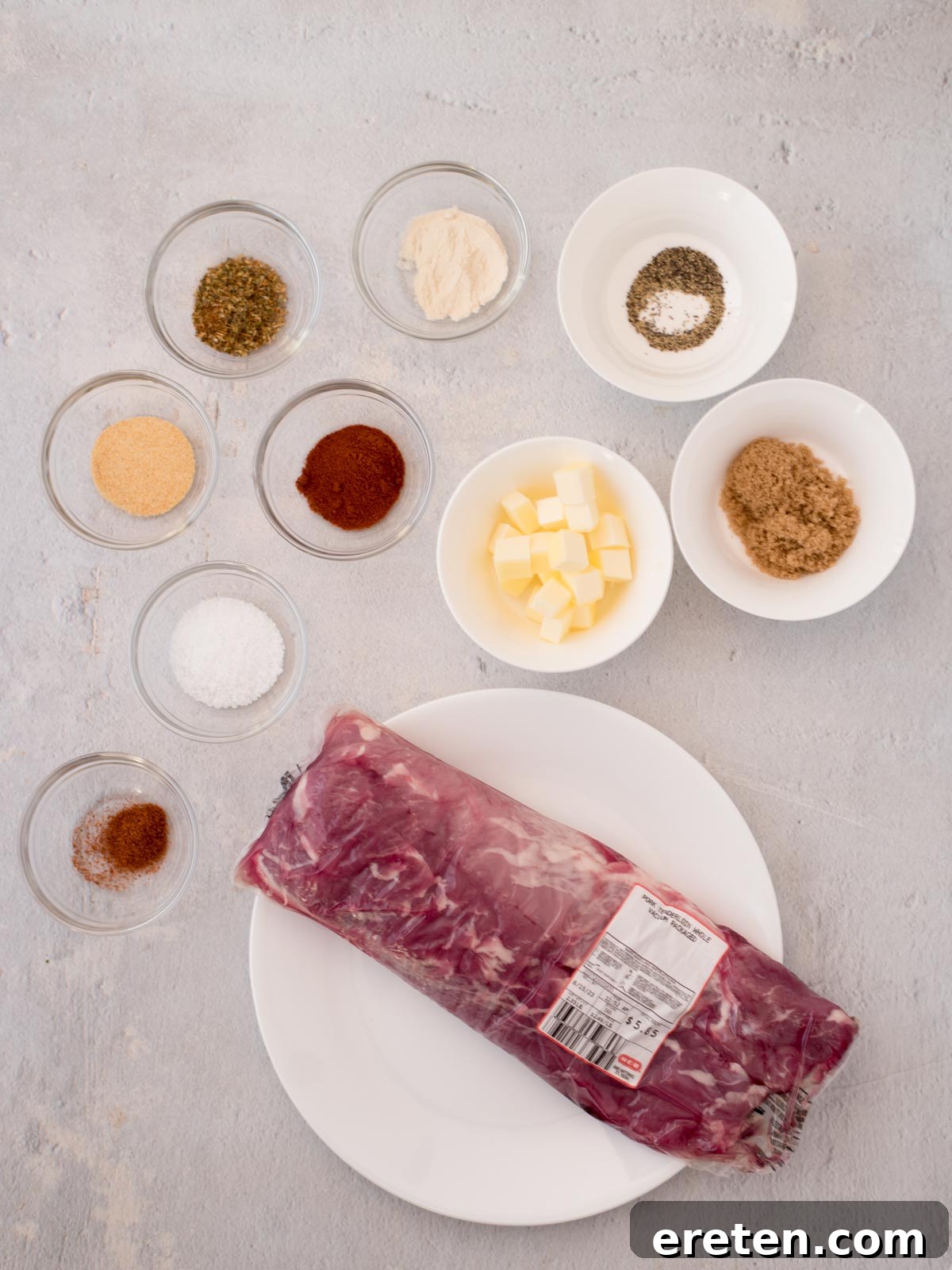
Creating this irresistible oven-roasted pork tenderloin requires a thoughtful selection of ingredients. Each component plays a crucial role in developing the deep, rich flavors and ensuring a tender, juicy result. Here’s what you’ll need to gather:
- Pork Tenderloin: This lean, delicate cut of pork is the star of our dish. Typically found in a two-pack at most grocery stores, which is often ideal for feeding a family or having delicious leftovers. Look for tenderloins that are pinkish-red, free from excessive fat (though a thin layer is fine), and packaged securely. Its inherent tenderness makes it perfectly suited for quick roasting, ensuring a melt-in-your-mouth texture.
- Brown Sugar: Our secret ingredient! Brown sugar not only provides a subtle sweetness that beautifully balances the savory spices but also helps create a caramelized crust on the exterior of the pork during roasting. This caramelization locks in moisture and adds a fantastic depth of flavor.
- Smoked Paprika: This spice is a game-changer, infusing the pork with a rich, smoky aroma and a gorgeous reddish hue. The smoky notes provide a fantastic counterpoint to the sweetness of the brown sugar. If smoked paprika isn’t available, regular sweet paprika can be substituted, though you’ll miss out on that distinctive smoky depth.
- Garlic Powder: A staple in any savory rub, garlic powder delivers a concentrated garlic flavor without the moisture or potential burning of fresh garlic. It contributes significantly to the savory base of our spice blend.
- Onion Powder: Complementing the garlic, onion powder adds another layer of foundational savory flavor. It’s mild yet impactful, rounding out the aromatic profile of the rub.
- Italian Seasoning: This convenient blend of dried herbs (typically basil, oregano, rosemary, thyme, and marjoram) adds an herbaceous, aromatic complexity to the pork. You can easily find it pre-mixed at any grocery store, or for an extra touch of freshness, you can make your own from individual dried herbs.
- Salt: Essential for enhancing all other flavors and aiding in moisture retention. Kosher salt or sea salt are highly recommended due to their coarser texture and purer flavor, which distribute more evenly and season the meat more effectively than fine table salt.
- Black Pepper: Freshly ground black pepper is crucial here. Its pungent, bright notes provide a pleasant contrast to the richness of the pork and the sweetness of the brown sugar. Freshly grinding makes a noticeable difference in potency and aroma compared to pre-ground pepper.
- Cayenne Pepper: For those who appreciate a touch of heat, cayenne pepper adds a gentle warmth and subtle kick, elevating the overall flavor profile. Feel free to adjust the amount or skip it entirely if you prefer a milder dish, ensuring everyone at your table can enjoy it.
- Butter: Small cubes of butter placed on top of the tenderloin before roasting are key to achieving incredible juiciness and a rich, golden finish. As the butter melts, it bastes the meat, helping to tenderize it and impart a luxurious flavor. Both unsalted and salted butter work well; if using salted, you might slightly reduce the amount of added salt in the rub to taste.
How to Roast Pork Tenderloin: A Step-by-Step Oven Recipe
Preparing a succulent oven-roasted pork tenderloin is simpler than you might imagine. Follow these detailed steps to achieve a perfectly cooked, flavorful, and incredibly juicy main course every single time. Precision and attention to detail at each stage will guarantee mouthwatering results.
- Prepare Your Oven and Dish: Begin by preheating your oven to a consistent 400°F (200°C). This ensures the oven is at the optimal temperature when the pork goes in, promoting even cooking. While the oven preheats, lightly spray a 9×13-inch baking dish with cooking spray. This prevents sticking and makes cleanup a breeze. Set the prepared dish aside.
- Pat the Tenderloin Dry: Remove the pork tenderloin from its packaging. Using paper towels, thoroughly pat the entire surface of the tenderloin dry. This crucial step removes excess surface moisture, which is essential for the spice rub to adhere properly and for achieving a beautiful, flavorful crust during roasting. Once patted dry, set the tenderloin aside on a clean surface or plate.
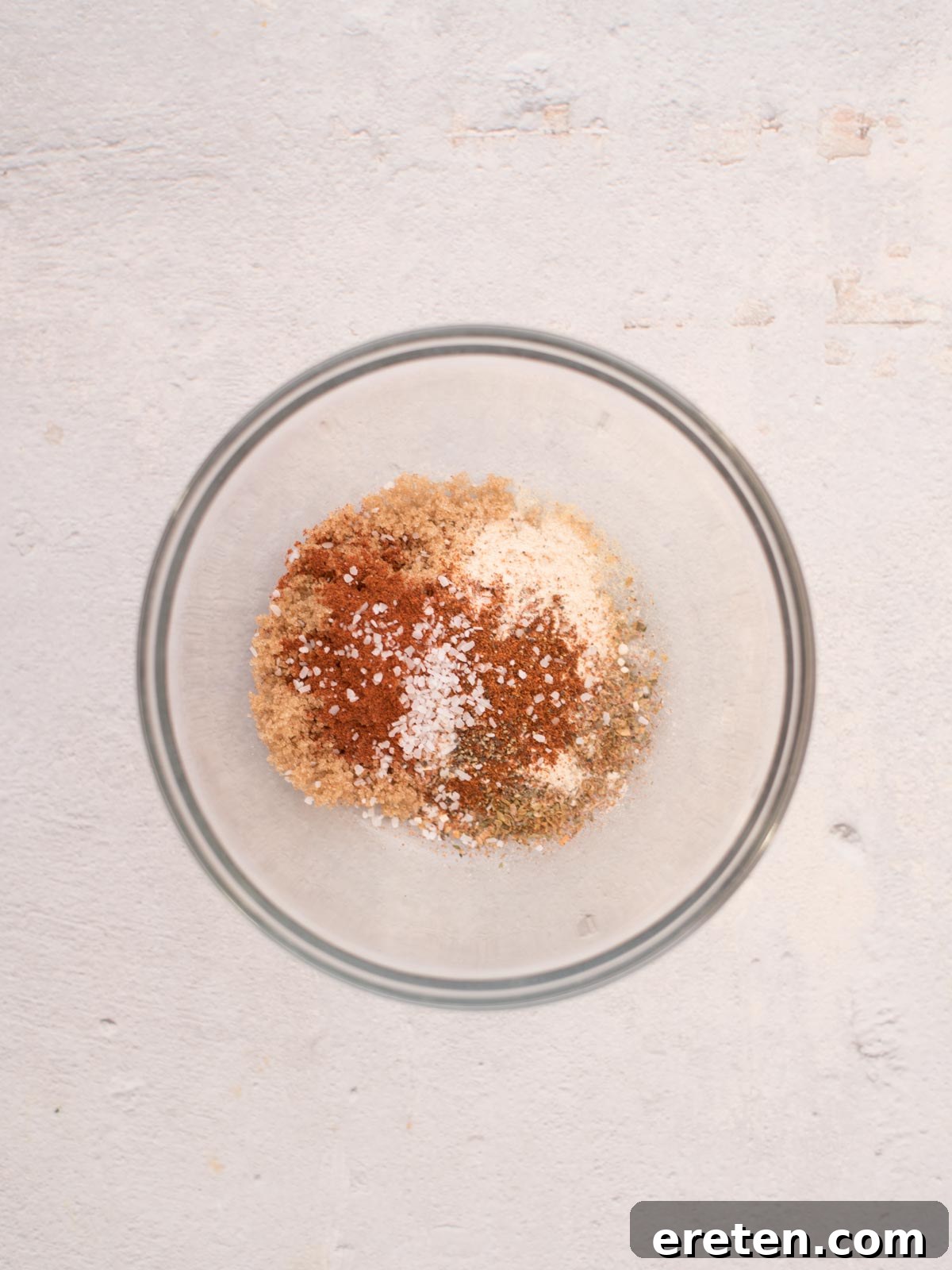
- Combine the Spice Rub: In a small, clean mixing bowl, combine all the dry seasonings: brown sugar, smoked paprika, garlic powder, onion powder, Italian seasoning, salt, black pepper, and cayenne pepper (if using). This dry rub is the key to imparting incredible flavor to your pork.
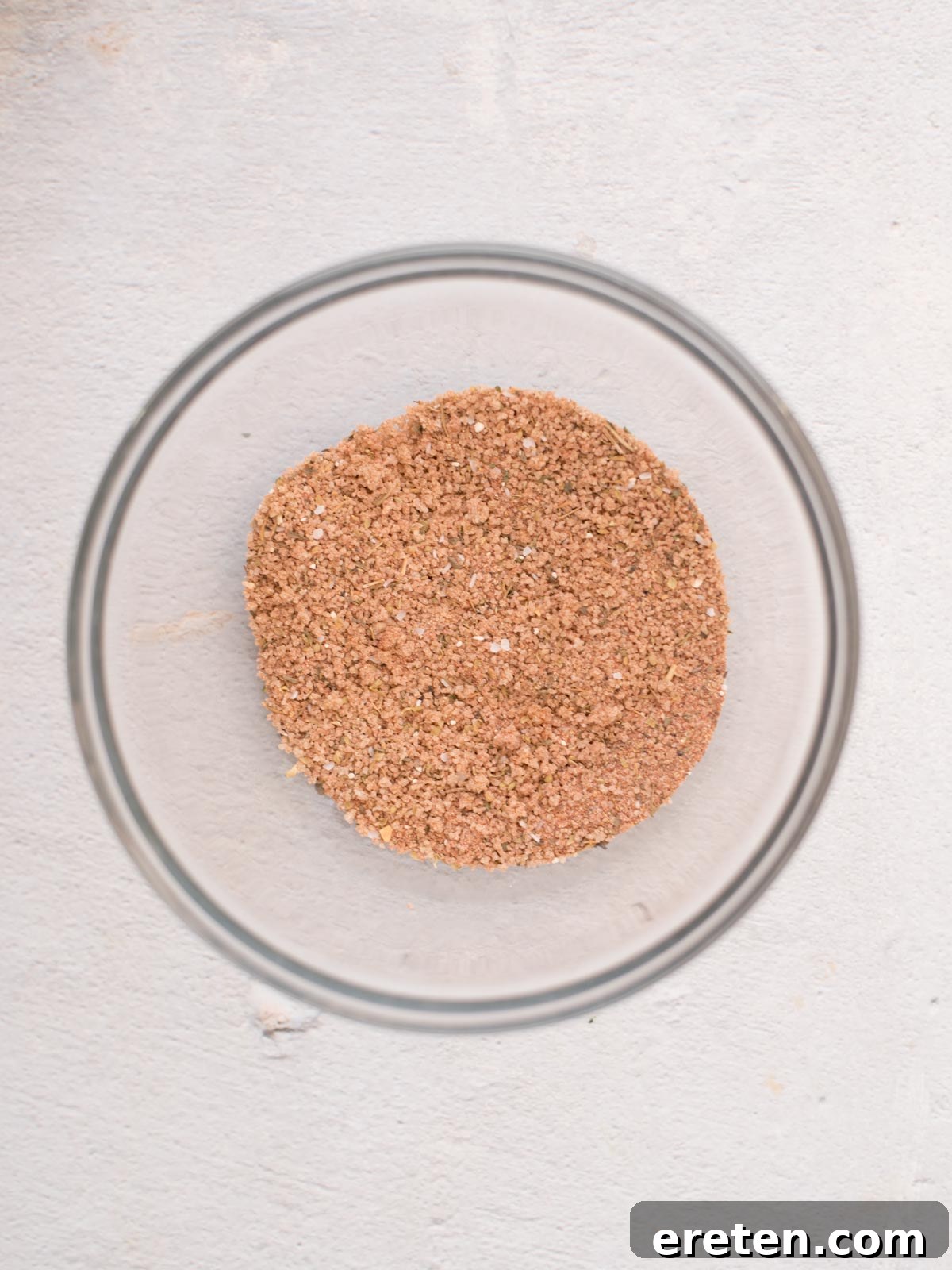
Stir all the ingredients together thoroughly until they are fully combined and evenly distributed. This ensures that every bite of pork gets a balanced burst of flavor.
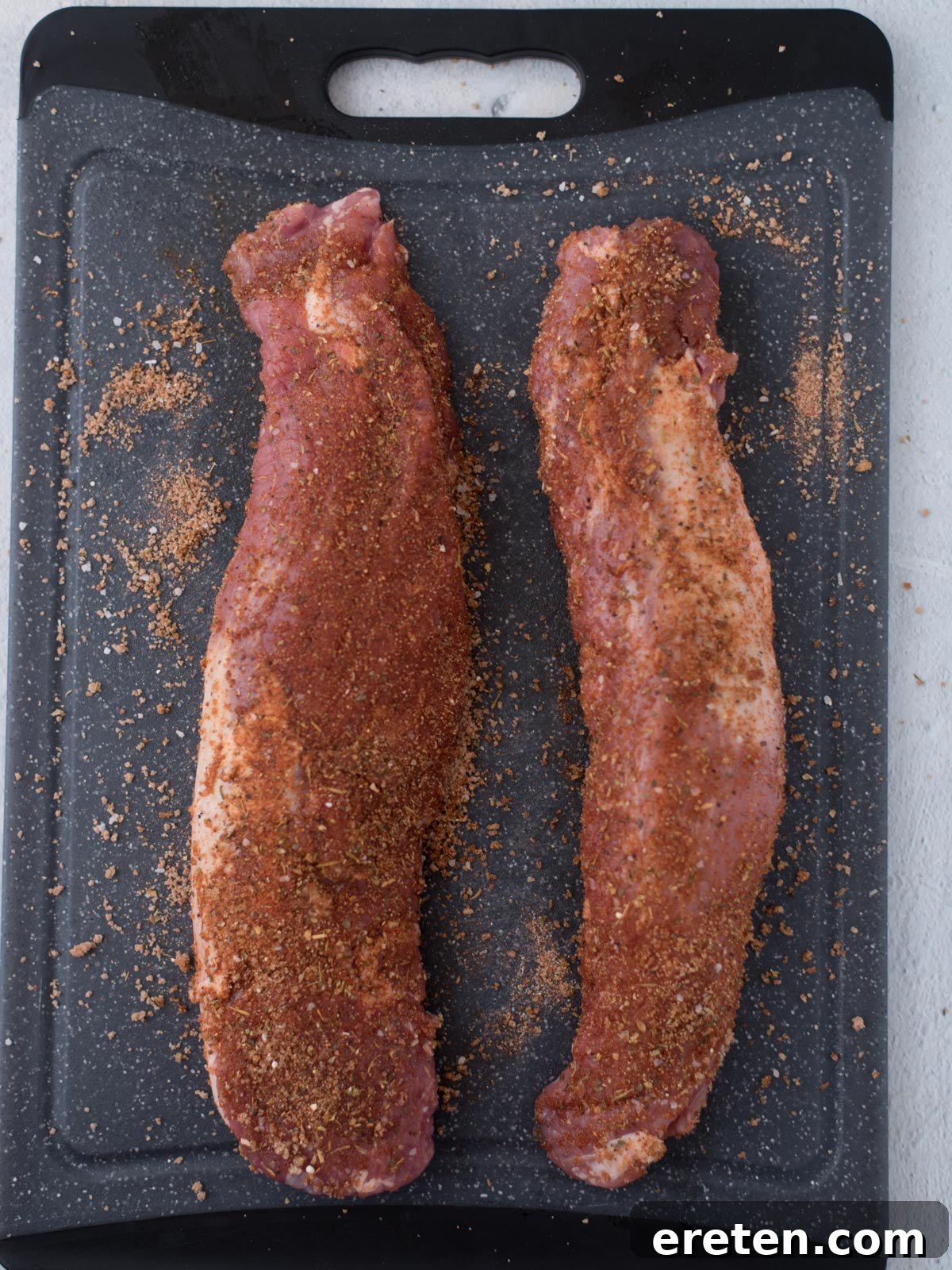
- Season the Tenderloin: Generously sprinkle the prepared rub mixture over all sides of the dried pork tenderloin. Use your hands to gently press and rub the spices into the meat, ensuring it is fully and uniformly covered. This even coating is vital for developing that delicious crust and infusing flavor throughout the tenderloin.
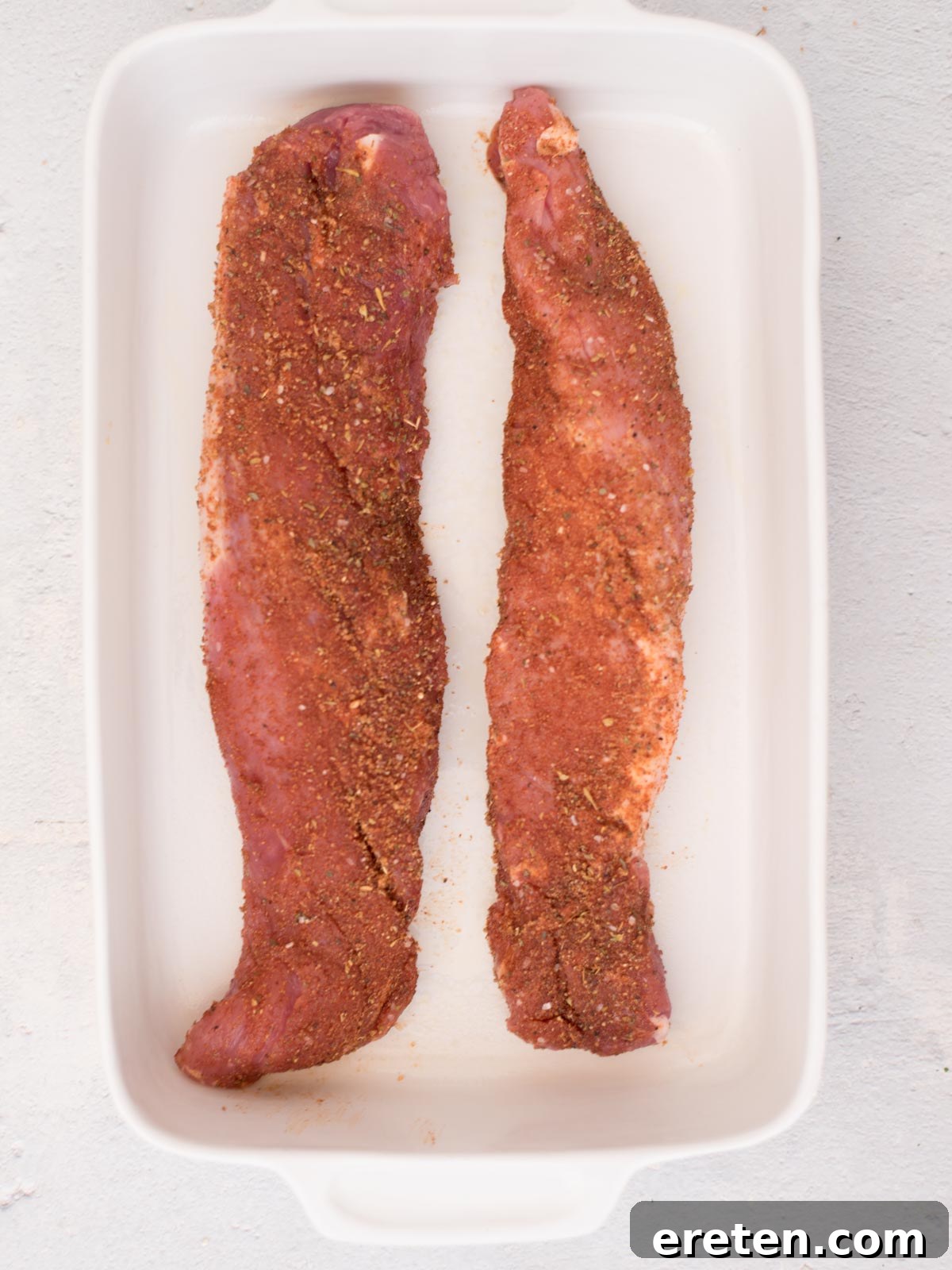
- Place in Baking Dish: Carefully transfer the fully seasoned pork tenderloin into the center of the previously prepared 9×13-inch baking dish. Make sure it lies flat to ensure even cooking.
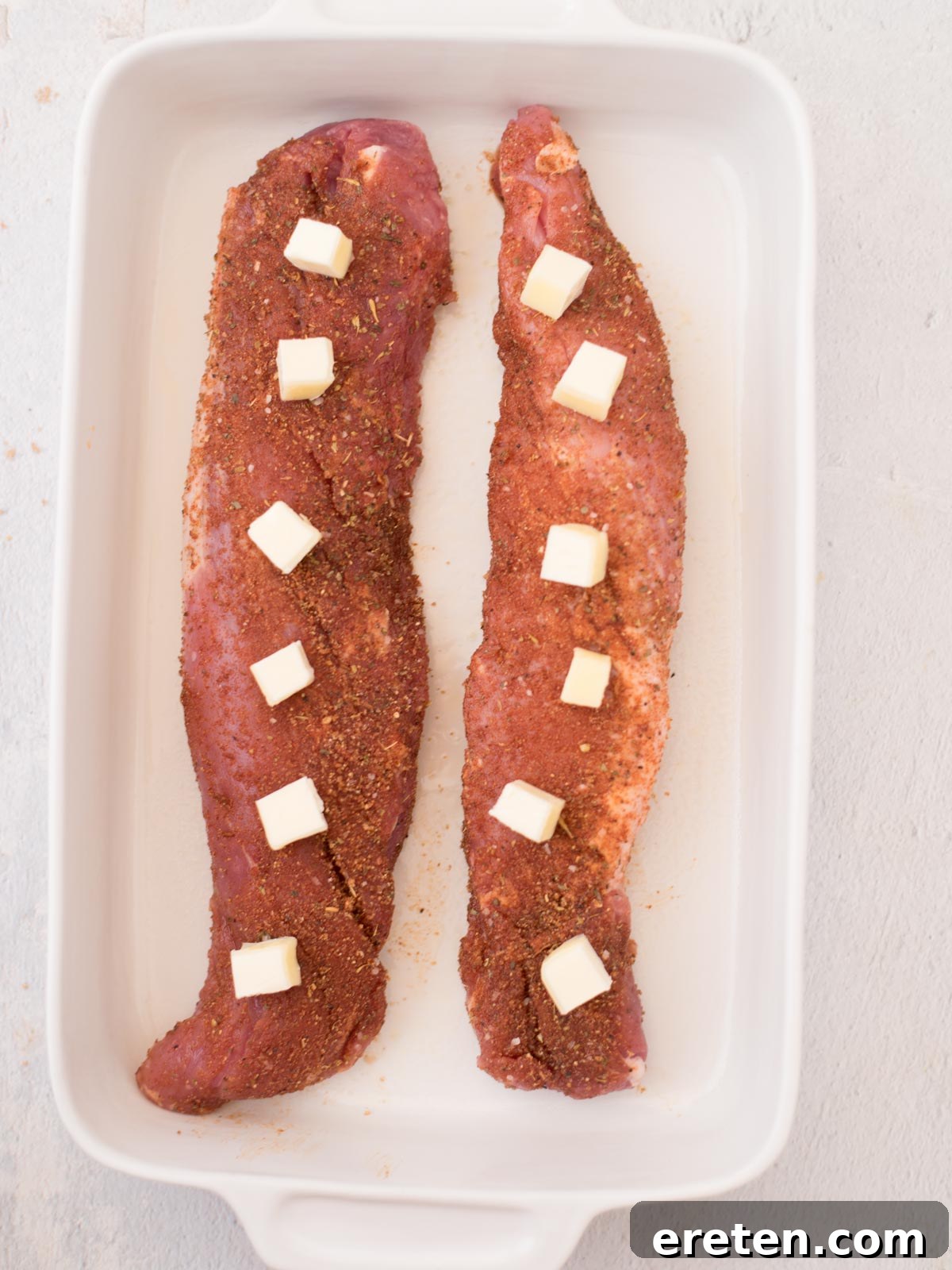
- Add Butter: Evenly distribute the small cubes of butter over the top of the seasoned tenderloin. As the butter melts, it will baste the pork, contributing significantly to its tenderness and juiciness, and helping to create that beautiful golden-brown crust.
- Roast to Perfection: Place the baking dish with the tenderloin into your preheated 400°F (200°C) oven. Roast for 25-30 minutes. The most critical aspect here is monitoring the internal temperature with a reliable meat thermometer. For a medium-rare pork tenderloin, aim for an internal temperature of 145°F (63°C). For a medium doneness, target 160°F (71°C). Remember, the pork will continue to cook a bit after being removed from the oven due to residual heat, a phenomenon known as “carryover cooking.”
- Rest the Meat: Once your desired internal temperature is reached, carefully remove the tenderloin from the oven. This step is non-negotiable for juicy pork. Transfer it to a cutting board or serving platter and allow it to rest for at least 10 minutes. Resting allows the juices, which have been pushed to the center of the meat during cooking, to redistribute throughout the entire tenderloin. Slicing too early will cause these precious juices to escape, resulting in a drier piece of meat.
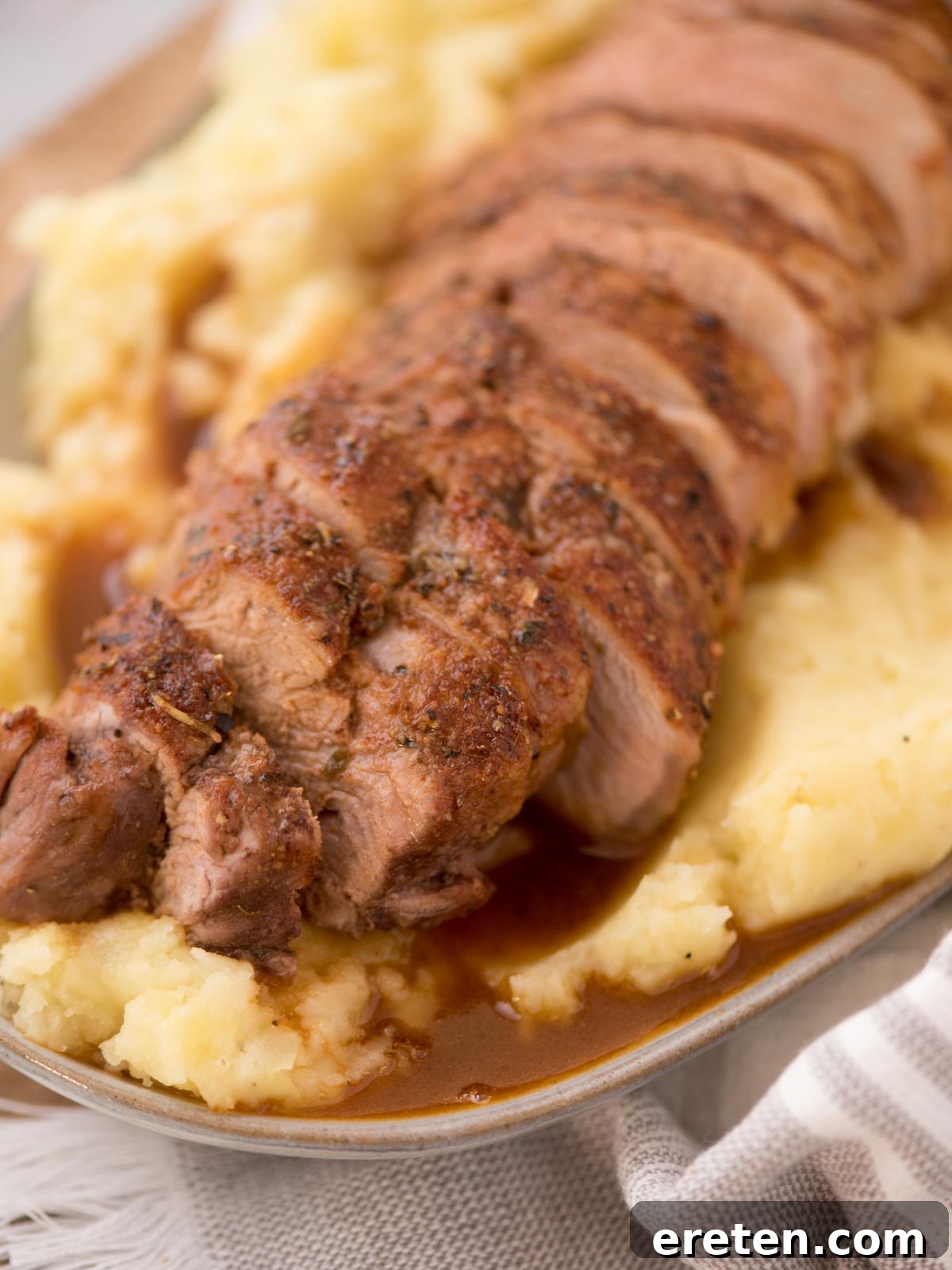
- Slice and Serve: After resting, slice the tenderloin into thick medallions or desired portions. Arrange the succulent slices on a serving platter and get ready to enjoy a truly impressive and flavorful meal.
Optimal Roasting Time for Pork Tenderloin
Determining the exact roasting time for pork tenderloin is crucial for achieving the perfect balance of tenderness and safety. For a standard one-pound pork tenderloin, baking at 400°F (200°C) will typically take between 25 to 30 minutes. However, it’s essential to understand that oven calibration can vary, and tenderloin thickness isn’t always uniform, which means relying solely on time can be misleading. The most accurate and reliable method for ensuring your pork is cooked just right is to use a high-quality meat thermometer. Insert the thermometer into the thickest part of the tenderloin, making sure it doesn’t touch any bone (if present, which is rare for tenderloin) or the bottom of the baking dish. Monitor the internal temperature closely to hit your desired level of doneness, as detailed below.
Understanding the Internal Temperature of Pork Tenderloin
Knowing the correct internal temperature is key to perfectly cooked pork tenderloin that is both safe to eat and delightfully juicy, never dry. The USDA recommends a minimum internal temperature of 145°F (63°C) for pork, followed by a 3-minute rest, for food safety. However, different doneness levels correspond to specific temperatures:
- Medium-Rare: Remove from the oven when the internal temperature reaches 145°F (63°C). The meat will have a slight pink hue in the center and be incredibly tender.
- Medium: Remove when the internal temperature reaches 160°F (71°C). The pork will be slightly less pink but still very juicy and flavorful.
It’s important to reiterate the concept of carryover cooking: the meat’s internal temperature will continue to rise by a few degrees after it’s removed from the oven, especially during the resting period. Therefore, it’s often advisable to pull the tenderloin out when it’s 5 degrees below your target temperature. For example, if you’re aiming for 145°F, remove it at 140°F (60°C). Always factor in this carryover cooking to avoid overcooking and preserve the tenderloin’s precious moisture. A probe thermometer that stays in the meat during roasting can be particularly helpful for precise monitoring.
Recommended Kitchen Tools for Perfect Pork Tenderloin
Having the right tools can make all the difference in preparing your oven-roasted pork tenderloin effortlessly and achieving professional-level results. Here are a couple of essential items that will elevate your cooking experience:
9×13 baking dish
Buy Now →
knife set
Buy Now →
Pro Tips for Roasting Pork Tenderloin
Achieving a consistently perfect roast pork tenderloin is a culinary art that benefits from a few expert insights. Beyond the basic steps, these tips will help you elevate your dish from good to truly exceptional:
- Embrace the Carryover Cooking Rule: As mentioned, meat continues to cook after it’s removed from the heat source. This is crucial for lean cuts like pork tenderloin, which can dry out quickly if overcooked. Always pull your tenderloin out of the oven a few degrees before your target internal temperature. For instance, if you’re aiming for 145°F (63°C) for medium-rare, remove it at 140°F (60°C). The internal temperature will naturally climb during the resting period, reaching perfection.
- Never Skip the Rest: This is arguably the most vital step for a juicy roast. After removing the tenderloin from the oven, resist the urge to slice it immediately. Cover it loosely with foil and let it rest for at least 10 minutes. This allows the muscle fibers to relax and the internal juices, which have migrated to the center during cooking, to redistribute evenly throughout the meat. Cutting too soon will cause these flavorful juices to escape, leaving you with dry pork.
- Invest in a Quality Meat Thermometer: This is your best friend in the kitchen when cooking any protein. A reliable instant-read thermometer takes the guesswork out of cooking and ensures your pork is always cooked to the desired doneness without being over or undercooked. Precision is key for tenderloin, where a few degrees can make all the difference.
- Searing for an Enhanced Crust: While not strictly necessary for this recipe, you can opt to sear the tenderloin on all sides in an oven-safe skillet (like cast iron) before transferring it to the oven. This creates a beautiful, deep golden-brown crust (the Maillard reaction) and locks in even more flavor. If you choose to sear, reduce your oven roasting time accordingly.
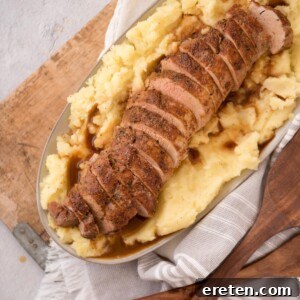
- Don’t Waste the Pan Juices: The savory juices left in the bottom of your baking dish after roasting are liquid gold! These pan juices make an absolutely excellent base for a rich, flavorful brown gravy. Simply deglaze the pan with a little broth or wine, thicken with a roux or cornstarch slurry, and season to taste. This homemade gravy is the perfect accompaniment to pour generously over your tenderloin slices and a side of creamy mashed potatoes.
- Consider a Simple Brine (Optional): For an extra layer of moisture and flavor insurance, especially if you’re worried about drying out the pork, consider brining your tenderloin for 30 minutes to an hour before seasoning and roasting. A simple brine of water, salt, and a touch of sugar can work wonders.
- Carving for Presentation: For best presentation and eating experience, slice the rested tenderloin against the grain into thick medallions. Slicing against the grain shortens the muscle fibers, making each bite incredibly tender and easy to chew.
What to Serve with the Best Oven Pork Tenderloin
This roasted pork tenderloin is a versatile and stunning main dish that pairs beautifully with an extensive array of side dishes, allowing you to tailor your meal to any preference or occasion. Here are some delectable suggestions to complement its rich flavors and tender texture:
- Potatoes (The Ultimate Comfort Pairing):
- Creamy Mashed Potatoes: The classic choice. Their smooth texture and buttery flavor are perfect for soaking up the pan juices or a rich gravy. For an elevated twist, try Boursin mashed potatoes.
- Garlic Hasselback Potatoes: Visually stunning and deliciously crispy, these fan-sliced potatoes offer a fantastic textural contrast and absorb flavors beautifully. Find the recipe for garlic hasselback potatoes here.
- Roasted Baby Potatoes: Simple, rustic, and always a hit. Tossed with herbs and olive oil, they roast alongside the pork beautifully.
- Sweet Potato Casserole: For a touch of sweetness and holiday flair, a sweet potato casserole offers a delightful complement.
- Green Vegetables (Freshness and Balance):
- Easy Oven-Roasted Broccoli: A vibrant and healthy choice that’s simple to prepare and adds a lovely crisp-tender bite. Check out the recipe for oven-roasted broccoli.
- Garlic Green Beans: Sautéed or roasted with garlic, these are a quick and classic accompaniment. Try preparing them from frozen green beans for convenience.
- Asparagus with Lemon: Lightly steamed or roasted asparagus spears brightened with a squeeze of lemon juice offer a refreshing counterpoint.
- Creamed Spinach: A rich and indulgent side that pairs wonderfully with the lean pork.
- Other Hearty Sides:
- Rice Pilaf or Quinoa: For a lighter carbohydrate option, a fluffy rice pilaf or savory quinoa can be excellent choices.
- Glazed Carrots: Sweet and tender, glazed carrots add a pop of color and natural sweetness.
- Dinner Rolls or Crusty Bread: Perfect for mopping up any remaining pan juices or gravy.
- Desserts (A Sweet Ending):
- Cherry Crisp: A warm, fruity, and crumbly dessert that provides a delightful contrast to the savory main course. Here’s a recipe for cherry crisp.
- Peach Cobbler: Made even easier with cake mix, a warm peach cobbler is a comforting and sweet finish to your meal. Find the peach cobbler with cake mix recipe.
- Apple Pie: A classic pairing for pork, offering a comforting and spiced sweetness.
Storing Oven Pork Tenderloin for Freshness
Proper storage is essential to maintain the quality and safety of your leftover oven-roasted pork tenderloin. Once cooked and cooled, place any remaining pork tenderloin in a food-safe, airtight container. This prevents exposure to air, which can lead to drying out and spoilage. According to the USDA guidelines, cooked pork should be consumed within three to four days when stored in the refrigerator. For longer storage, you can freeze cooked pork tenderloin. Wrap individual slices or smaller portions tightly in plastic wrap, then place them in a freezer-safe bag or container. Frozen pork tenderloin can maintain its quality for up to two to three months. Thaw frozen pork in the refrigerator overnight before reheating.
Expert Tips for Reheating Pork Tenderloin Without Drying It Out
Reheating pork tenderloin often leads to dry, tough meat if not done correctly. The key is to reheat gently and quickly, aiming to warm it through without cooking it further. Here are the best methods to bring your leftover pork tenderloin back to life, retaining its moisture and flavor:
- Stovetop Method (Recommended for Slices or Whole): This is often the best method for maintaining moisture.
- Reheating Whole: Place the whole tenderloin in a skillet with a tight-fitting lid. Add a tablespoon or two of broth, water, or leftover pan juices to create steam. Heat over low to medium-low heat, turning the tenderloin every few minutes, until heated through, typically 12 to 15 minutes. The lid traps moisture, preventing dryness.
- Reheating Slices: Arrange slices in a skillet with a little liquid (broth, water, or gravy). Cover with a lid and heat over low heat, flipping slices every minute or so. They should be warmed through in about 3 to 4 minutes total.
- Oven Method (For Larger Portions or Whole):
- Preheat your oven to a low temperature, around 275°F (135°C).
- Place the pork tenderloin (whole or larger slices) in an oven-safe dish with a splash of broth or water. Cover tightly with foil to create a steamy environment.
- Heat for about 15-25 minutes, or until warmed through, checking periodically with a meat thermometer.
- Microwave Method (Least Recommended, but Quick):
- While the quickest, this method is most prone to drying out the meat. Place slices on a microwave-safe plate with a tablespoon of liquid and cover loosely.
- Heat in short bursts (30 seconds at a time) until just warm.
Once reheated, these tender slices are perfect for enjoying as leftovers for dinner with fresh sides, or they can be ingeniously repurposed. Add them to delicious sandwiches for lunch, slice them into salads, or even transform them into quick tacos or quesadillas for a completely new meal.
Pork Tenderloin Oven Recipe FAQs
While their names are similar and often cause confusion, pork loin and pork tenderloin are distinctly different cuts of meat from the pig. A pork tenderloin, as featured in this recipe, is a long, thin, and narrow cut of meat, typically boneless, originating from the muscle that runs along the pig’s spine. It’s known for being incredibly lean and exceptionally tender, making it ideal for quick cooking methods like roasting or searing. In contrast, a pork loin (sometimes called a pork loin roast) is a much broader, thicker, and more substantial cut. It can be sold boneless or bone-in and comes from the back of the pig. Due to its size and potential fat cap, pork loin often benefits from longer cooking times and can be dry if not cooked carefully, while tenderloin remains moist with proper handling.
Roasting is an exceptional way to cook pork tenderloin primarily because this lean cut thrives under high, consistent heat. Pork tenderloin cooks beautifully at temperatures ranging from 350°F to 425°F (175°C to 220°C). When roasted in the oven, the meat is enveloped by heat from all sides, promoting even cooking throughout the tenderloin. This gentle yet thorough heat application helps to lock in moisture, ensuring the pork remains incredibly juicy and tender from edge to center. The dry heat of roasting also allows for the development of a delicious, caramelized exterior, adding depth of flavor and texture to the dish.
For achieving the best results with pork tenderloin, it is generally not necessary to cover it while roasting. When using the proper cooking method, such as the one outlined in this recipe, leaving the tenderloin uncovered allows for the development of a beautiful, golden-brown crust on the exterior, which adds significantly to both flavor and texture. Covering the pork can steam it rather than roast it, potentially preventing that desirable crispness. If you’re concerned about dryness, focus on correct internal temperature monitoring and adequate resting time rather than covering, as these are the true keys to a juicy and tender roast.
Preventing pork tenderloin from drying out is crucial, as overcooking is the most common mistake made with this lean cut. The primary strategy involves precise temperature control and understanding carryover cooking. Pork tenderloin should be cooked at an optimal temperature (around 400°F/200°C) and only for a relatively short duration, typically 25-30 minutes for a one-pound tenderloin. The absolute best way to ensure moist pork is to use a reliable meat thermometer and remove the tenderloin from the oven when its internal temperature reaches 145°F (63°C) for medium-rare, or no higher than 160°F (71°C) for medium. Crucially, always factor in carryover cooking; pull the meat a few degrees early, and allow it to rest for 10 minutes, uncovered. My method emphasizes these steps, guaranteeing a wonderfully juicy and tender pork tenderloin every single time.
While searing pork tenderloin before baking is not strictly mandatory for this recipe to achieve a delicious and juicy result, it is an optional step that can significantly enhance its exterior. Searing the tenderloin in a hot pan (such as cast iron) on all sides before transferring it to the oven creates the Maillard reaction. This process produces a rich, deep brown crust with intensely flavorful notes that are distinct from those developed by simple roasting. If you desire that extra layer of crispy texture and concentrated flavor, a quick sear is an excellent addition, just be sure to adjust your oven cooking time accordingly.
More Delicious Pork Recipes to Explore
If you loved this tender and flavorful pork tenderloin, you’ll surely enjoy these other fantastic pork recipes from our kitchen. Each offers a unique way to savor this versatile protein:
- Crispy Fried Pork Chops with Gravy: A classic comfort food dish featuring perfectly crisp pork chops smothered in rich, savory gravy.
- Baked Ranch Pork Chops: An incredibly easy and flavorful recipe where pork chops are baked to tender perfection with a zesty ranch seasoning.
- Slow Cooker Sweet Pulled Pork: Effortlessly delicious pulled pork, slow-cooked until fall-apart tender in a sweet and tangy sauce, perfect for sandwiches or tacos.
- Authentic Pork Carnitas: Learn how to make traditional Mexican carnitas, achieving incredibly tender, flavorful, and crispy pork that’s fantastic in tacos, burritos, and more.
If you whip up this delicious recipe and absolutely love it, we would be incredibly grateful for a 5 ⭐️⭐️⭐️⭐️⭐️ rating! Your feedback helps us continue to provide free, high-quality recipes for everyone to enjoy.
Perfectly Roasted Pork Tenderloin
sweetlysplendid.com
10 mins
40 mins
50 mins
12 servings
Print Recipe
Ingredients
- 1 pound pork tenderloin
- 1 tablespoon brown sugar
- ½ teaspoon smoked paprika
- ½ teaspoon garlic powder
- ½ teaspoon onion powder
- ½ teaspoon Italian seasoning
- ½ teaspoon salt
- ¼ teaspoon ground black pepper
- ¼ teaspoon cayenne pepper (optional, for a touch of heat)
- 2 tablespoons butter, cut into small cubes
Instructions
- Preheat the oven to 400°F (200°C). Spray a 9×13-inch baking dish with cooking spray and set it aside.
- Pat the pork tenderloin completely dry with paper towels and set it aside.
- In a small bowl, combine the brown sugar, smoked paprika, garlic powder, onion powder, Italian seasoning, salt, black pepper, and cayenne pepper (if using). Stir together until the spice mixture is fully combined and uniform.
- Generously sprinkle the rub mixture on all sides of the tenderloin, ensuring it is fully covered and gently pressed into the meat.
- Place the prepared tenderloin into the center of the baking dish.
- Top the tenderloin evenly with the small cubes of butter.
- Bake the tenderloin in the oven for 25-30 minutes, or until the internal temperature reaches 145°F (63°C) for medium-rare or 160°F (71°C) for medium. Remember that the meat will continue to cook slightly after being removed from the oven due to carryover cooking.
- Remove the tenderloin from the oven and set it aside to rest for 10 minutes, lightly tented with foil. This allows the juices to redistribute, ensuring maximum tenderness and moisture.
- Slice the rested tenderloin into medallions and serve immediately. Enjoy your perfectly roasted pork!
Notes
Nutrition
Carbohydrates: 1g,
Protein: 8g,
Fat: 3g,
Saturated Fat: 2g,
Polyunsaturated Fat: 0.3g,
Monounsaturated Fat: 1g,
Trans Fat: 0.1g,
Cholesterol: 30mg,
Sodium: 117mg,
Potassium: 157mg,
Fiber: 0.1g,
Sugar: 1g,
Vitamin A: 119IU,
Vitamin C: 0.1mg,
Calcium: 6mg,
Iron: 0.4mg
Nutrition information is automatically calculated and should only be used as an approximation.
Additional Information
Dinner, Main Course, Main Dish
American