
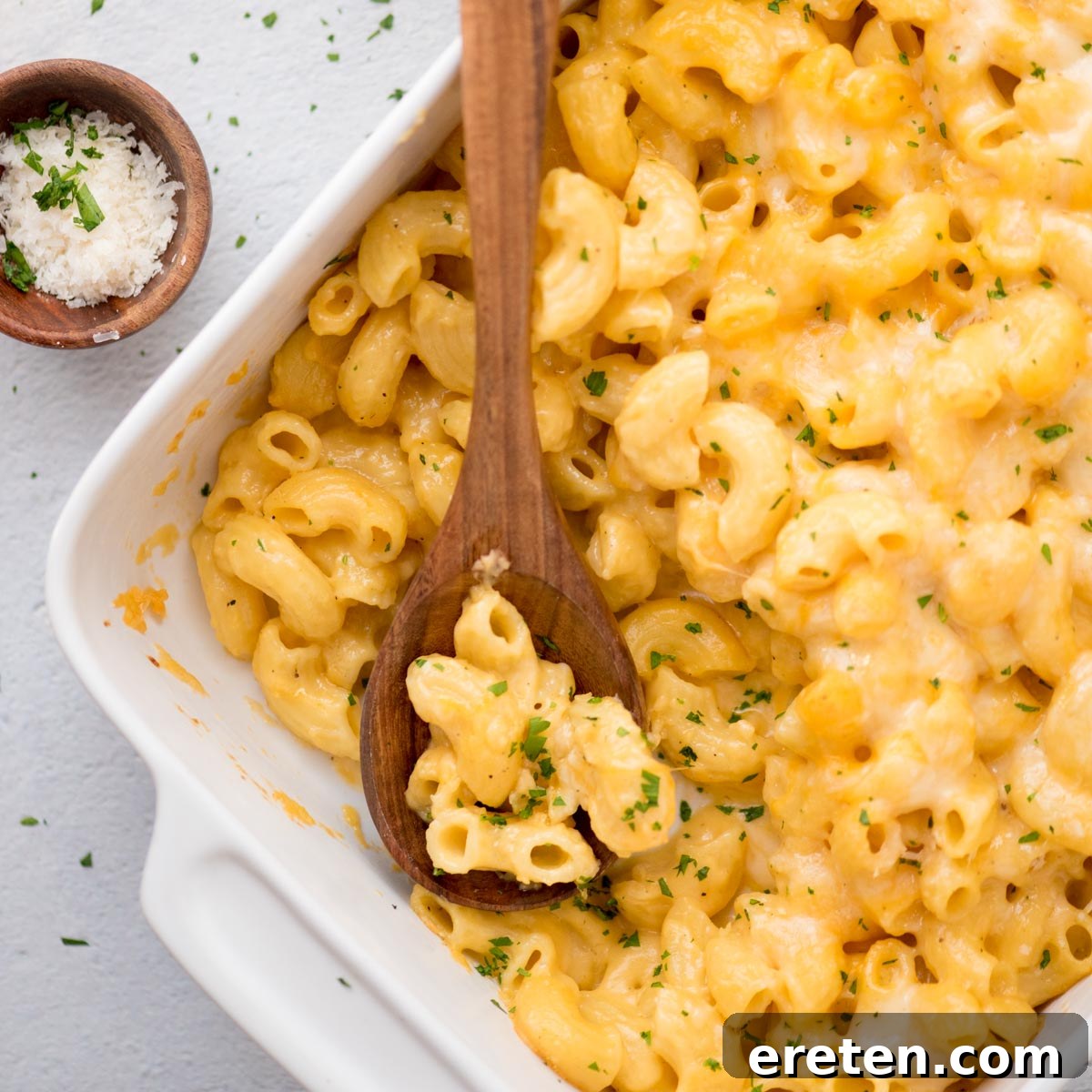
The Ultimate Guide to Creamy Baked Macaroni and Cheese: A Family Favorite Recipe
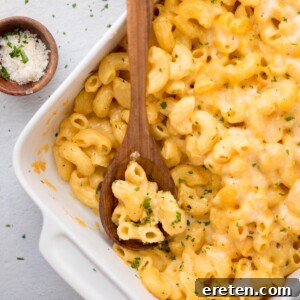
Few dishes can rival the heartwarming embrace of a perfectly crafted plate of baked macaroni and cheese. This isn’t merely any mac and cheese; this is the definitive homemade version, meticulously designed to be irresistibly creamy, wonderfully tangy, and, of course, supremely cheesy. It’s a culinary masterpiece that’s surprisingly easy to prepare, making it an ideal choice for busy weeknights, special family gatherings, or even as a hearty main dish all on its own. Prepare to embark on a culinary journey with a recipe that promises to become a cherished staple in your home.
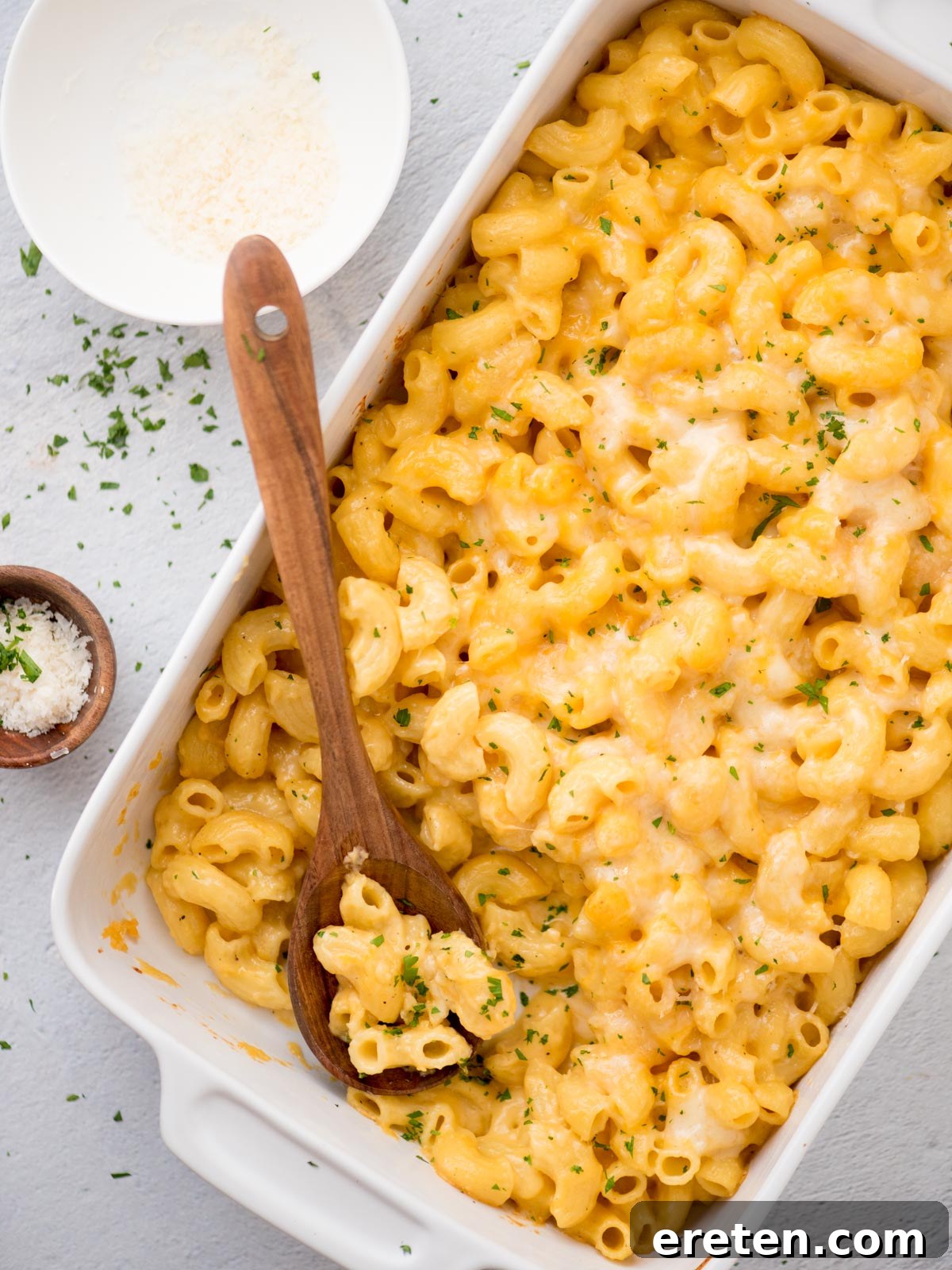
Why This Creamy Baked Mac and Cheese Will Be Your New Go-To Recipe
Imagine perfectly cooked pasta shells, each one luxuriating in a rich, velvety cheese sauce that’s bursting with flavor. Whether you’re serving this as a satisfying standalone meal to eager children or as an elegant side dish at your next dinner party, this creamy baked mac and cheese recipe consistently earns rave reviews and requests for seconds. There’s truly nothing comparable to the enticing aroma and exquisite taste of homemade macaroni and cheese – from the moment it emerges from the oven, its bubbly, golden-brown crust hinting at the luxuriously smooth interior. This recipe delivers on all fronts, promising a dish that is guaranteed to delight every palate.
It’s more than just a meal; it’s the kind of comforting, family-friendly dinner that effortlessly brings everyone together around the table. The irresistible scent wafting from your kitchen will have even the most reluctant helpers eager to set the table, hoping to get a taste of this deliciousness sooner!
Top Reasons You’ll Adore This Homemade Baked Macaroni and Cheese:
- Effortlessly Delicious: This recipe is incredibly straightforward to follow, making it accessible for cooks of all skill levels, from beginners to seasoned chefs. It’s guaranteed to be a unanimous hit with every member of your family.
- The Epitome of Comfort Food: When you’re in need of a dish that soothes the soul, warms the heart, and satisfies the deepest cravings, this baked mac and cheese stands supreme as the ultimate comfort food experience.
- Versatile for Any Occasion: Its remarkable adaptability makes it a true kitchen hero. It’s equally perfect for feeding a large crowd at a festive party, contributing to a holiday potluck, or simply enjoying a cozy weeknight dinner with loved ones.
- Consistently Creamy, Never Dry: Say goodbye to dry, crumbly baked macaroni and cheese! Our meticulously crafted method ensures a consistently creamy, luscious texture that remains perfect from the first spoonful to the very last.
- Simple, Accessible Ingredients: You’ll appreciate that this recipe calls for straightforward, easy-to-find ingredients, many of which you likely already have stocked in your pantry and refrigerator.
- Infinitely Customizable: With a wealth of variation options available, you can effortlessly tailor this recipe to suit your unique taste preferences, incorporate seasonal ingredients, or even accommodate specific dietary needs.
- Make-Ahead Friendly: For ultimate convenience, large portions of this dish can be prepared in advance, making meal prep for busy days or entertaining guests an absolute breeze.
- Irresistible Golden Crust: The baking process creates a beautiful, bubbly, golden-brown cheese topping that adds a delightful textural contrast to the creamy interior, making every bite a multi-sensory experience.
Essential Ingredients for Your Perfect Baked Mac and Cheese
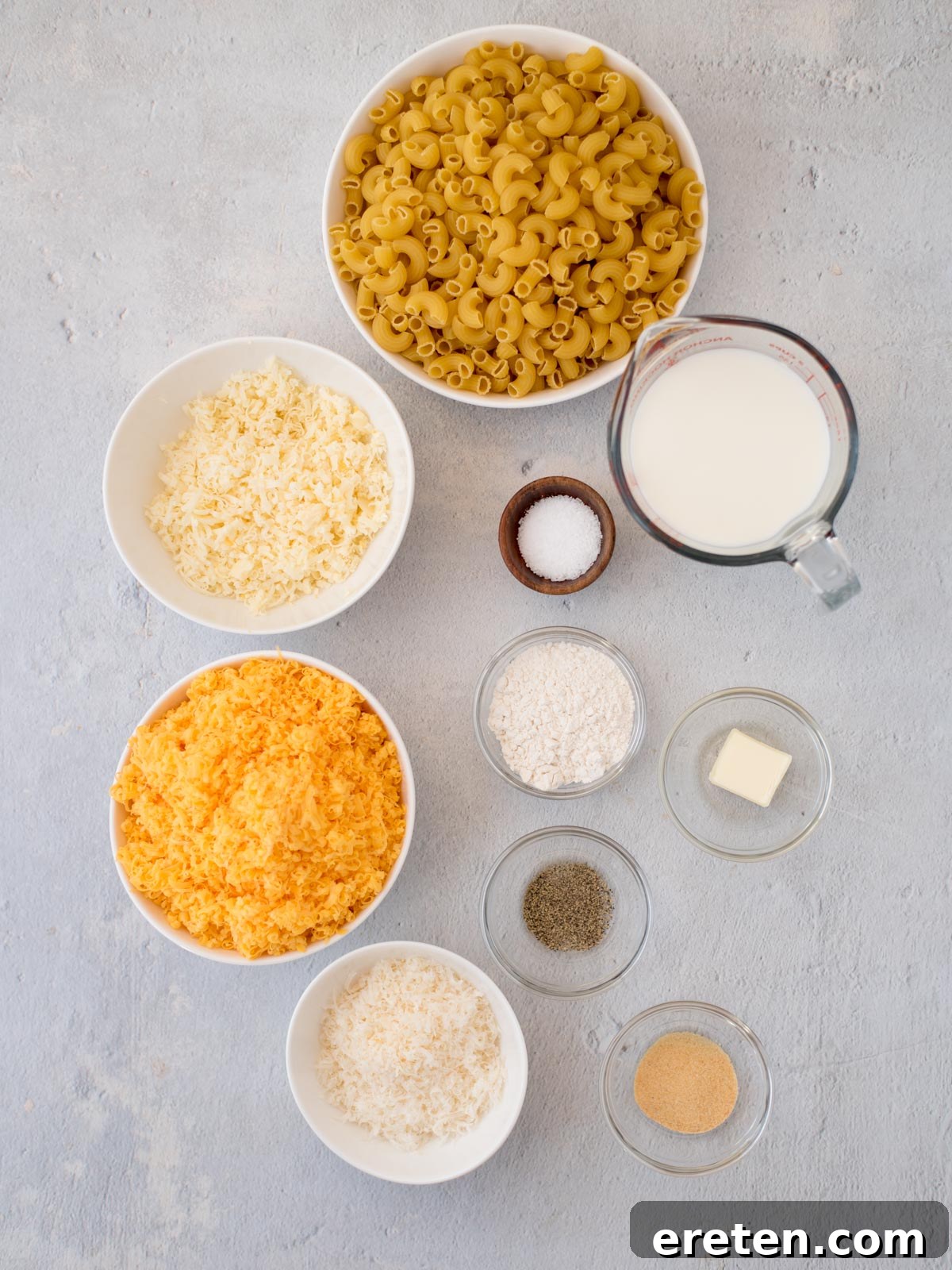
The secret to an extraordinary baked macaroni and cheese lies fundamentally in the quality of its ingredients and the meticulous balance of flavors. Here’s a detailed look at what you’ll need to create this culinary delight, accompanied by a few crucial tips for each component:
- Elbow Macaroni (uncooked): The quintessential choice for macaroni and cheese due to its classic shape and excellent ability to trap and hold the rich cheese sauce within its curves. However, don’t hesitate to experiment with other small, sturdy pasta shapes like cavatappi, small shells, or penne, ensuring they are cooked al dente.
- Unsalted Butter: This forms the vital fat component of our rich roux, which is the thickening agent for the sauce. Using unsalted butter grants you precise control over the overall saltiness of your finished dish, allowing for perfect seasoning adjustments.
- All-Purpose Flour: Absolutely essential for creating the roux, which in turn forms the creamy béchamel sauce. The flour-butter mixture thickens the milk to that perfect, velvety consistency, preventing a thin or runny sauce.
- Whole Milk: For the absolute creamiest, most decadent results, whole milk is unequivocally recommended. Its higher fat content contributes significantly to the luxurious texture and mouthfeel of the cheese sauce, making it incredibly rich and smooth.
- Sharp Cheddar Cheese (grated, not pre-shredded): This is truly the star of the show, providing the iconic, robust, and tangy flavor that defines classic mac and cheese. Grating your own sharp cheddar at home ensures superior melt and an incredibly smooth sauce. Pre-shredded varieties often contain anti-caking agents (like cellulose) that hinder smooth melting and can impart a slightly grainy or gritty texture. It’s crucial to avoid mild cheddar, as its flavor will be easily overwhelmed by other ingredients in this dish.
- Garlic Powder: Adds a subtle, warm, and aromatic depth that beautifully complements the cheesy richness without overpowering it. It’s a foundational flavor enhancer that elevates the entire profile.
- Coarse Kosher or Sea Salt: Absolutely essential for seasoning the sauce and bringing out the full spectrum of flavors in the cheeses and milk. Remember to adjust the quantity or completely omit this if you choose to use salted butter, to prevent the dish from becoming overly salty.
- Ground Black Pepper: A touch of freshly ground black pepper introduces a pleasant hint of warmth and a subtle spice, balancing the richness of the cheese and adding a classic finish.
- Gruyere Cheese (grated, not pre-shredded): This semi-hard, nutty Swiss cheese adds a sophisticated, complex, and slightly sweet flavor that significantly elevates the overall complexity and depth of the cheese sauce. As with cheddar, grating fresh Gruyere is paramount for the best texture and taste.
- Parmesan Cheese (grated, not pre-shredded): Contributes a delightful salty, umami kick and plays a crucial role in forming that desirable golden-brown crust on top of the baked dish. Freshly grated Parmesan offers superior flavor and melts far better than its pre-shredded counterparts.
Delicious Variations to Customize Your Baked Mac and Cheese Experience
While the classic recipe provides an utterly perfect foundation, one of the greatest joys of preparing homemade mac and cheese is its incredible versatility. Don’t hesitate to get creative and tailor this recipe to your unique personal preferences with these exciting and delicious variations:
- Pasta Perfection: While elbow macaroni is the traditional and beloved choice, feel entirely free to substitute with other sturdy pasta shapes. Excellent alternatives include cavatappi (known for its corkscrew shape that beautifully traps sauce), medium shells, penne, or rotini. The most crucial factor is choosing a pasta that can stand up to the rich cheese sauce without becoming mushy during the cooking and baking process. Always ensure your chosen pasta is cooked al dente before combining.
- Butter Choices: If you only have salted butter on hand, it can certainly be used as a substitute for unsalted. However, if you opt for salted butter, be acutely mindful of the salt content contributed by the various cheeses and significantly reduce or completely omit any additional salt called for in the recipe to avoid over-salting your dish.
- Exploring New Cheese Horizons: For a distinctly different flavor profile, consider swapping out or complementing Gruyere with other excellent melting cheeses. Try Fontina for a mild and creamy texture, Jarlsberg for a slightly sweeter, nutty note, Gouda for its smooth, buttery characteristics, Muenster for a mild, tangy touch, or Emmental cheese for a classic Swiss flavor. A thoughtful mix of two to three different types of cheese often yields the most complex and satisfying flavor.
- Expanding Hard Cheese Options: Beyond Parmesan, you can explore other hard, aged cheeses for a sharp, salty, and aromatic finish. Excellent substitutes include Pecorino Romano, which offers a bolder, saltier punch, or Asiago cheese, known for its rich, nutty flavor.
- Turn Up the Heat with Spice: If you’re a fan of a spicy kick, easily incorporate a pinch of cayenne pepper, a dash of hot sauce, or a finely diced jalapeño into the cheese sauce. For an extra fiery touch, consider topping the mac and cheese with shredded pepper jack cheese before it goes into the oven.
- Crunchy Topping Bliss: For those who crave a delightful textural contrast, prepare a simple yet effective crunchy topping. Mix panko breadcrumbs with a tablespoon or two of melted butter and a sprinkle of Parmesan. Generously sprinkle this mixture over the mac and cheese before baking for a truly golden, satisfyingly crunchy crust.
- Luxurious Creaminess Overload: To achieve an even more decadent and ultra-creamy mac and cheese, consider replacing half a cup of the whole milk with an equal amount of heavy cream or half-and-half. This small adjustment makes a significant difference in the richness and velvety smooth texture of the sauce.
- The Ultimate Cheese Pull: If your culinary goal is a magnificent, gooey cheese pull when serving, strategically add some freshly shredded Monterey Jack or mozzarella cheese to the topping alongside the Gruyere and Parmesan. Even a little Colby Jack will contribute to that satisfying, stretchy sensation that everyone loves.
- Protein Power-Up: Effortlessly transform this side dish into a complete and hearty meal by mixing in cooked protein. Shredded rotisserie chicken, crispy bacon bits, diced ham, savory pulled pork, or even ground beef can be excellent and satisfying additions.
- Veggie Boost: Sneak in some extra nutrition and flavor by stirring in blanched broccoli florets, sautéed spinach, roasted mushrooms, or diced bell peppers with the pasta before the final bake.
Step-by-Step: How to Make Creamy Baked Mac and Cheese
While the end result is incredibly decadent and impressive, the process of making this creamy baked mac and cheese is surprisingly straightforward. It breaks down into a few simple and manageable stages: perfectly cooking the pasta, preparing the luscious cheese sauce from scratch, combining all the components, adding a final irresistible layer of cheese, and baking it to golden perfection. Let’s walk through each step to ensure your success!
- Prepare Your Baking Dish: Begin by preheating your oven to 375°F (190°C). Then, lightly spray a standard 9×13 inch baking dish with avocado oil spray or any other preferred non-stick cooking spray. Set this prepared dish aside.
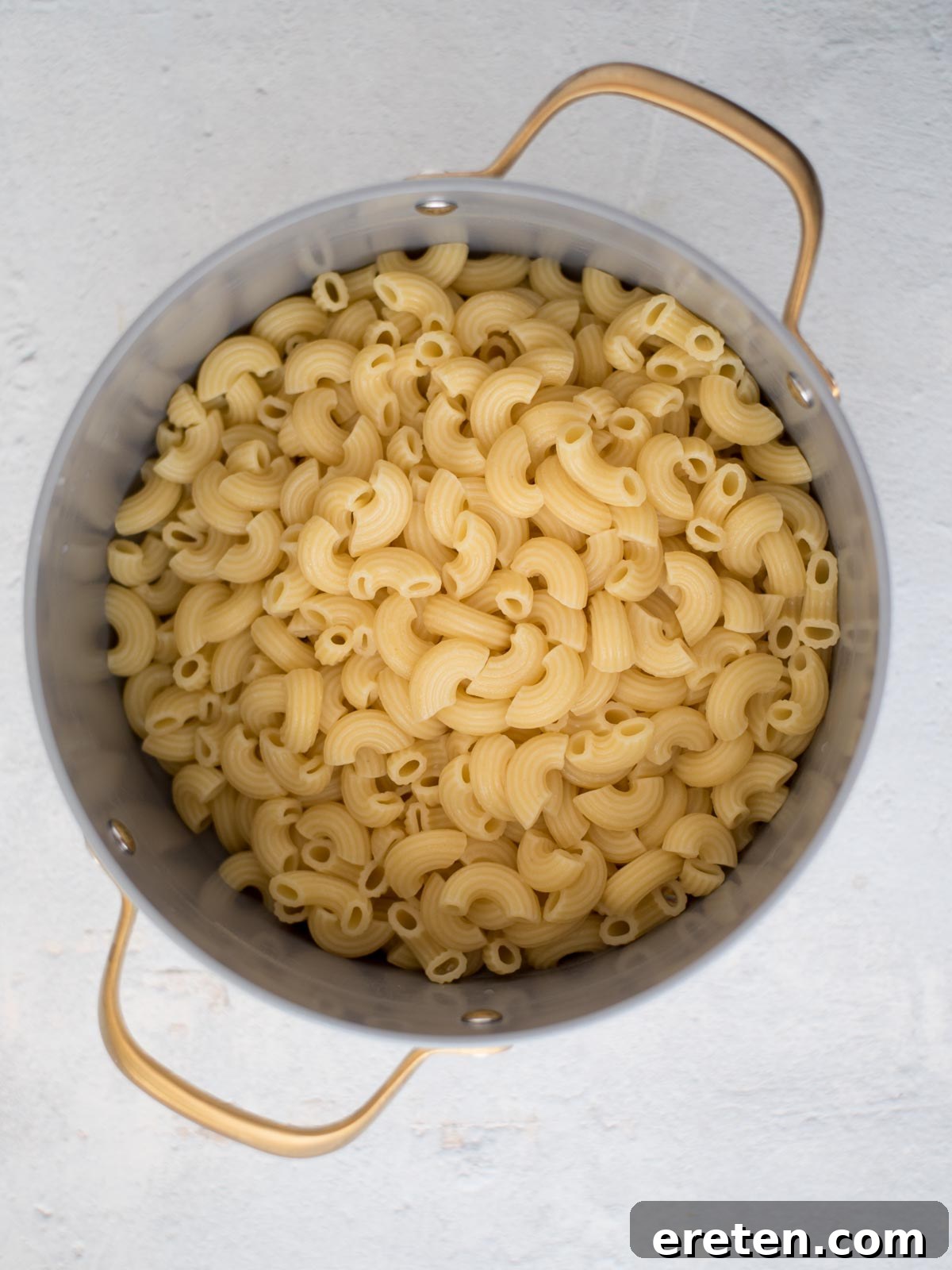
- Cook the Pasta Al Dente: Bring a large pot of generously salted water to a rapid, rolling boil. Add the elbow macaroni and cook it according to the package directions, aiming for an al dente texture (firm to the bite). This is a crucial step, as the pasta will continue to cook slightly when combined with the hot sauce and during the baking process in the oven.
- Initiate the Roux: While your pasta is actively cooking, melt 4 tablespoons of unsalted butter in a large saucepan or a sturdy Dutch oven over medium heat. Once the butter is completely melted and shimmers, gently sprinkle in the 1/4 cup of all-purpose flour. Whisk continuously for 1 to 2 minutes until a smooth, pale golden roux forms. This dedicated whisking is absolutely vital for ensuring a lump-free and silky-smooth cheese sauce later.
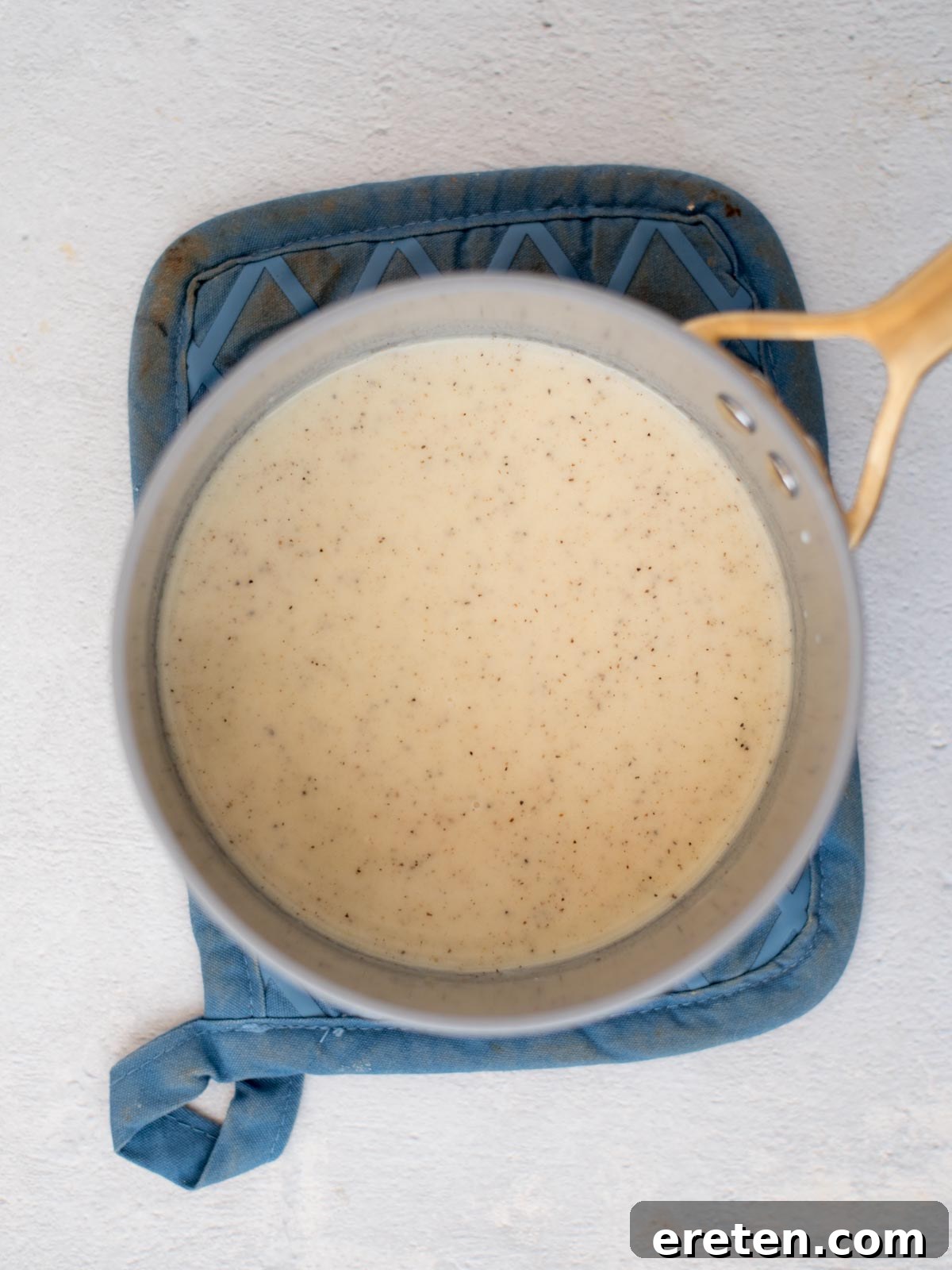
- Create the Béchamel Base: Gradually and slowly pour the 1 1/2 cups of whole milk into your prepared roux, whisking continuously and vigorously throughout this process to prevent any lumps from forming. Continue to whisk consistently until the sauce is smooth, has visibly thickened, and begins to bubble gently. This process typically takes about 3 to 5 minutes.
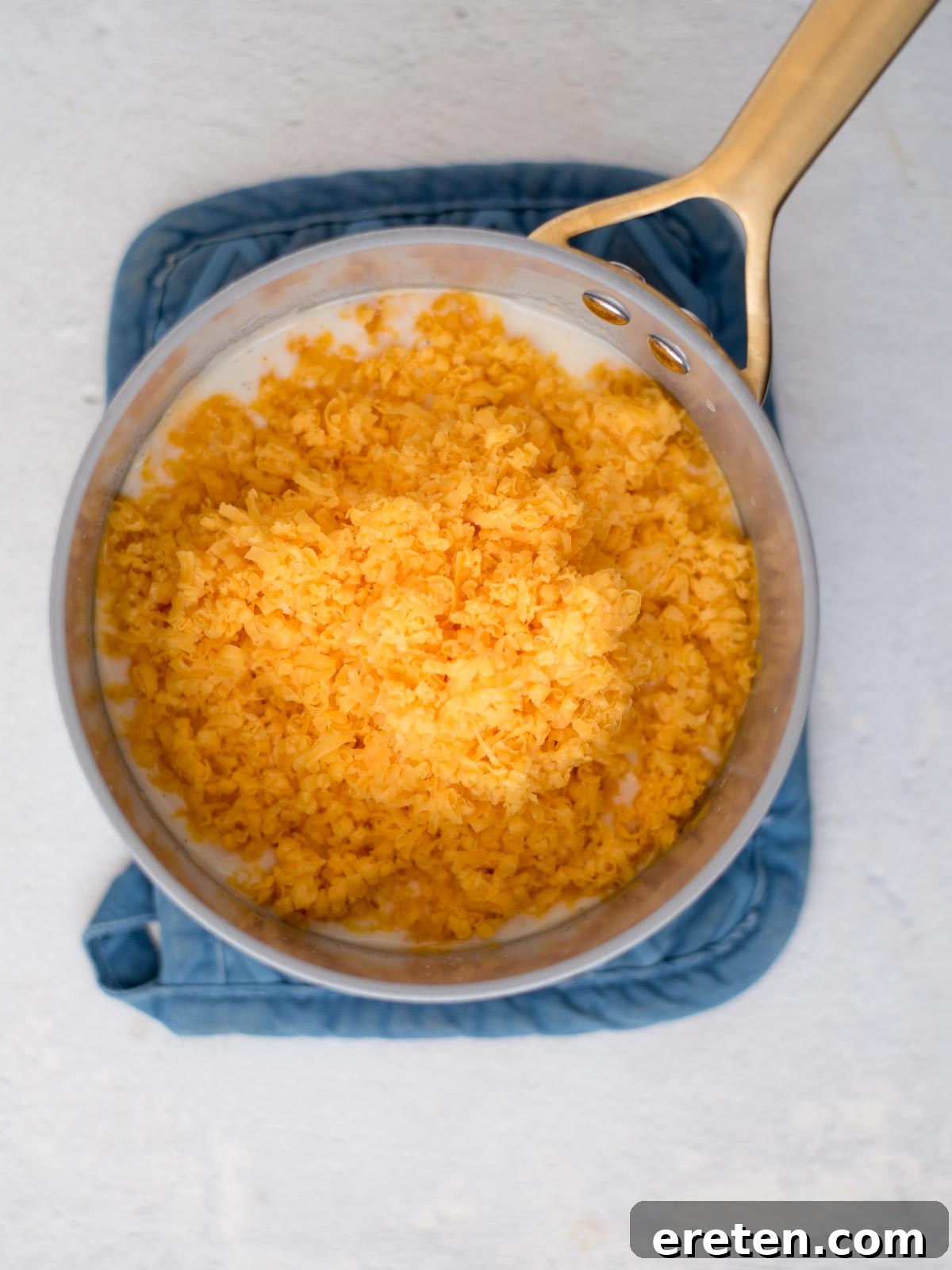
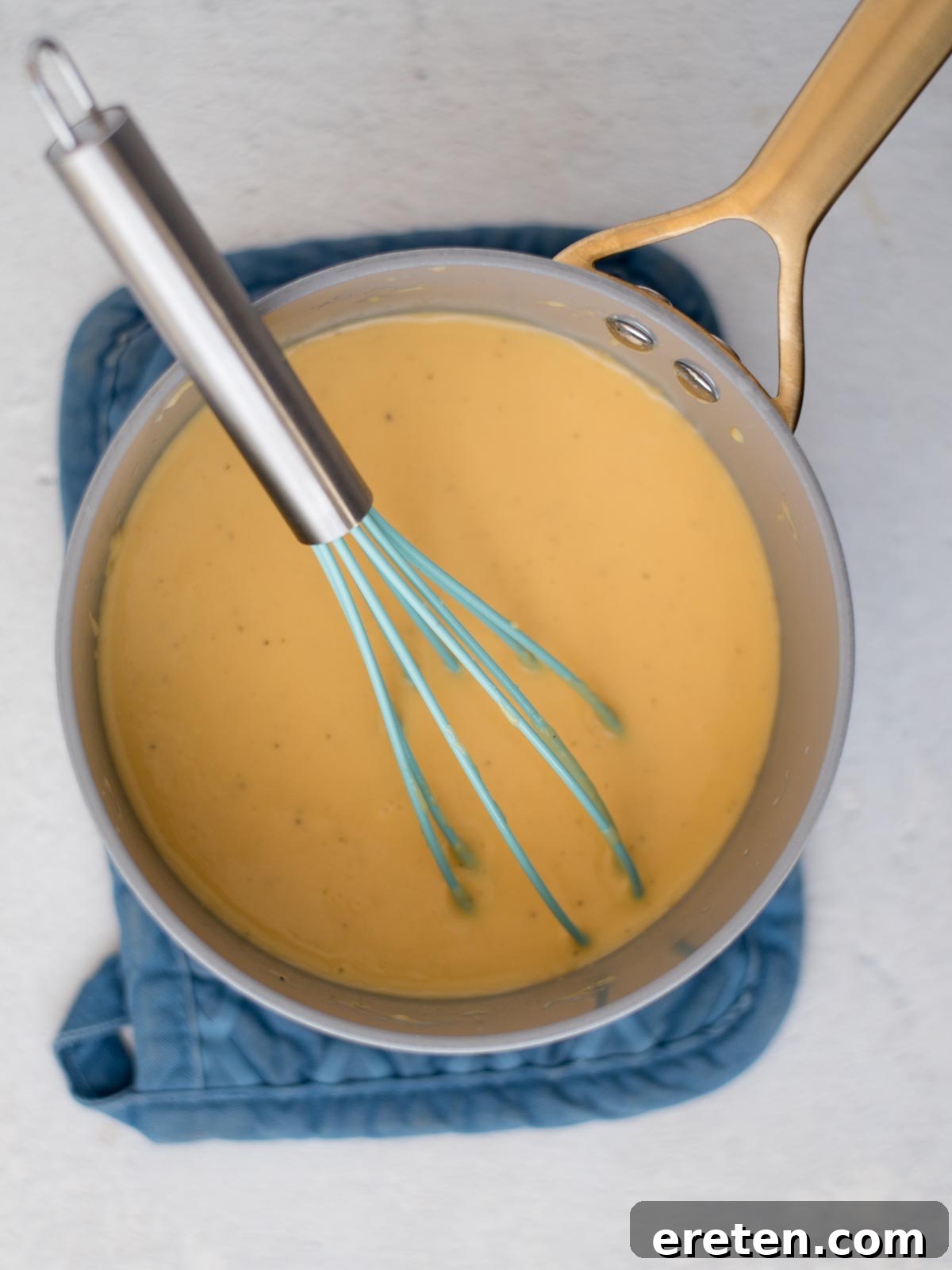
- Melt the Cheeses and Season: Remove the saucepan from the heat source. Add the 8 ounces of freshly grated sharp cheddar cheese, 1 teaspoon of garlic powder, 1 teaspoon of coarse kosher or sea salt (remember to adjust or omit if you used salted butter), and 1/2 teaspoon of freshly ground black pepper. Stir vigorously with either a whisk or a sturdy spatula until all the cheese has melted completely and the sauce transforms into a perfectly smooth and wonderfully creamy consistency.
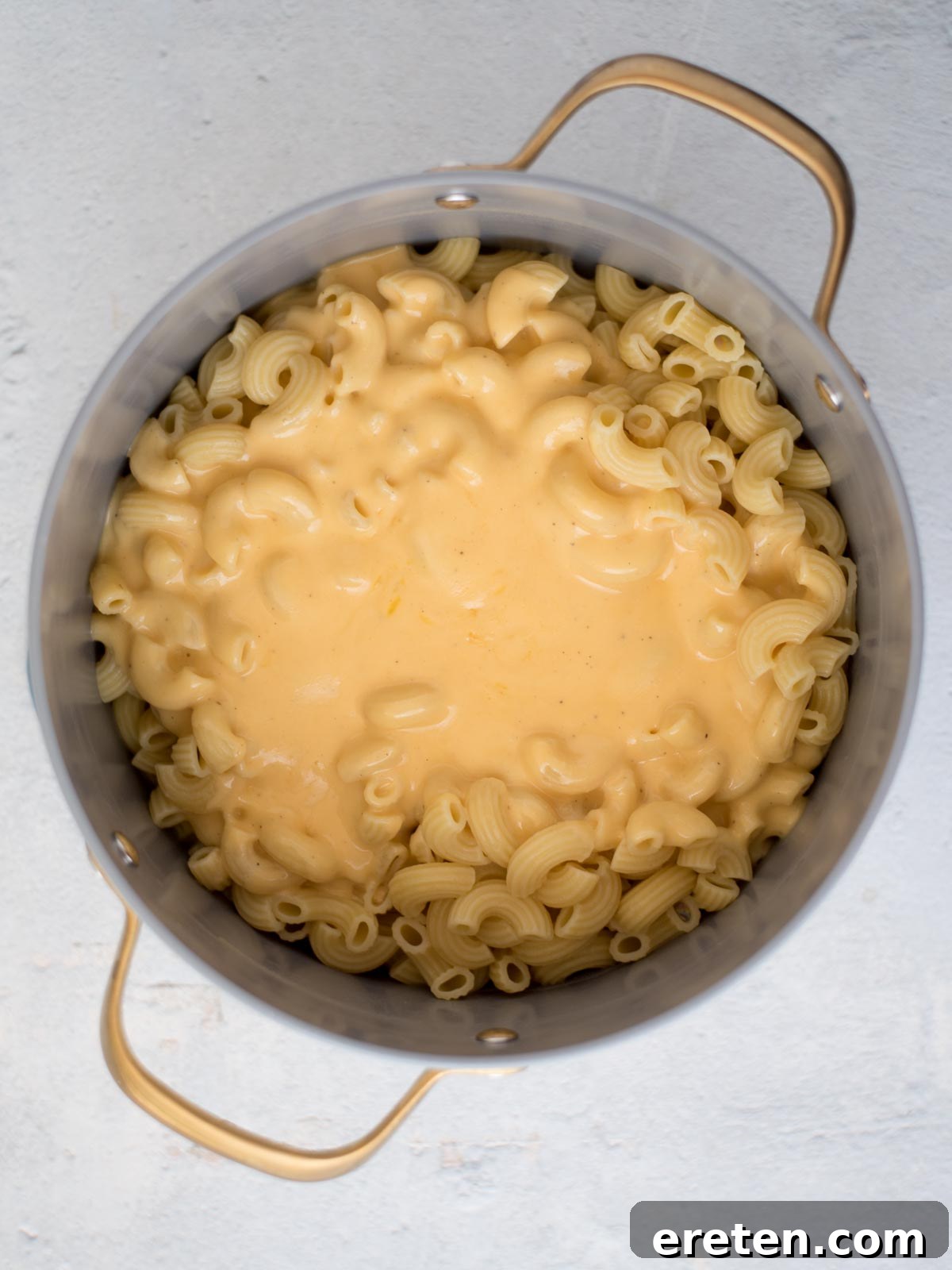
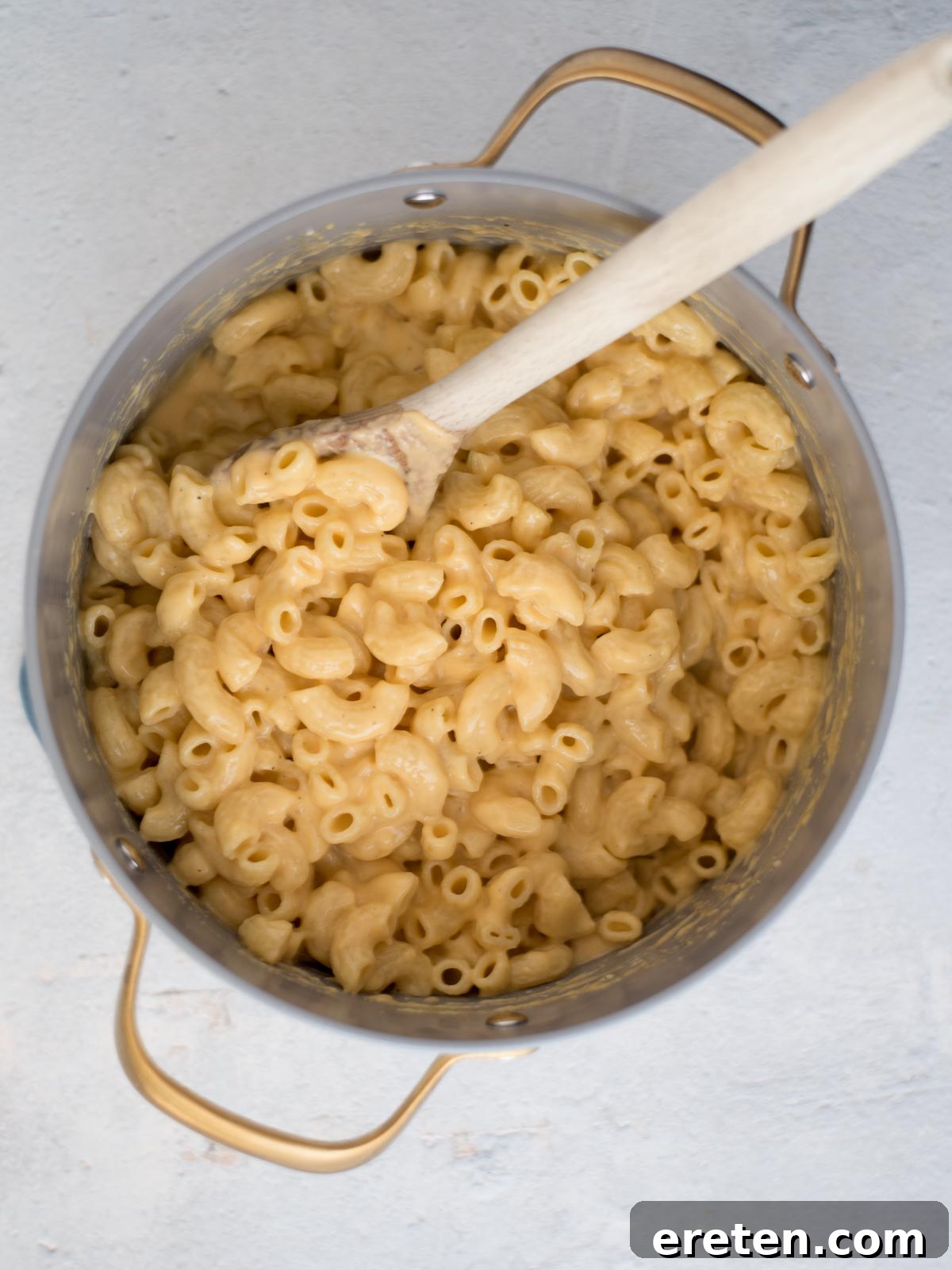
- Combine Pasta and Sauce: Thoroughly drain the cooked pasta and return it to the large pot you used for boiling (or directly into the saucepan containing the cheese sauce if it’s sufficiently large). Pour the entire prepared cheese sauce over the pasta. Mix gently but thoroughly with a spoon or spatula until every single piece of macaroni is evenly and lovingly coated in the rich, creamy sauce.
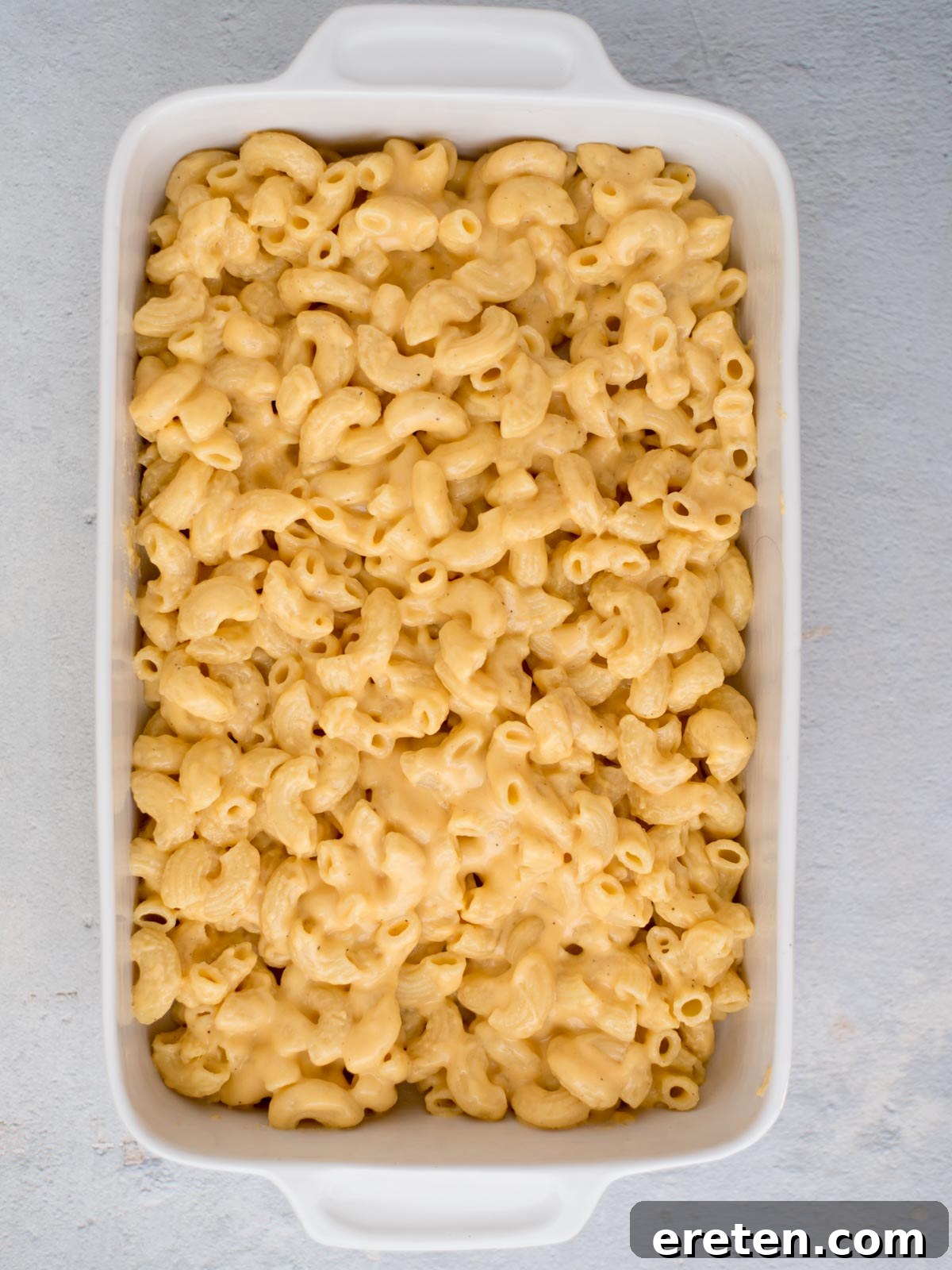
- Transfer to Baking Dish: Carefully pour the sauced pasta mixture into your previously prepared 9×13 inch baking dish. Using a spatula, spread the mixture out evenly across the dish to ensure consistent baking and a uniform top layer.
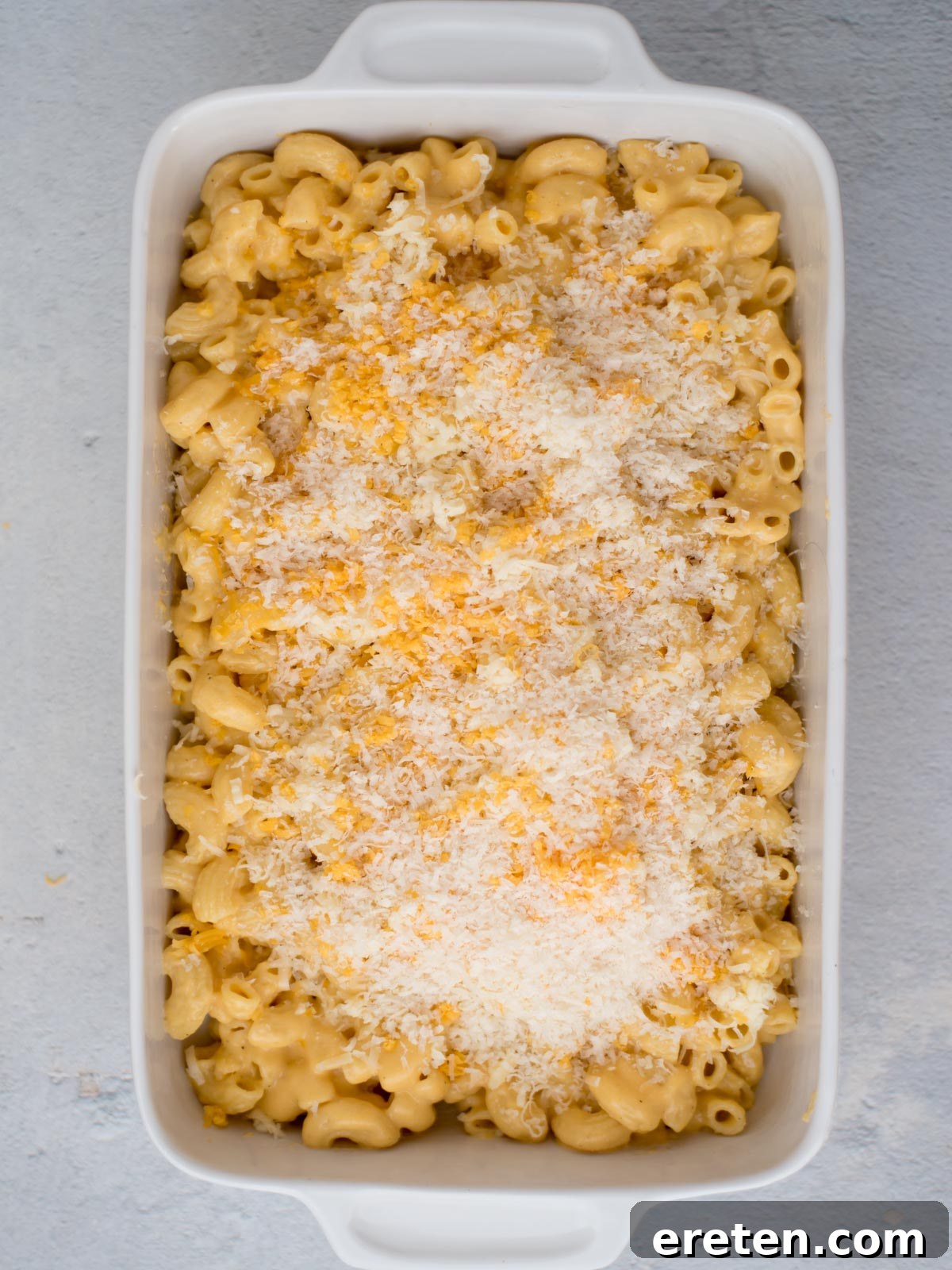
- Add the Final Cheese Topping: Generously sprinkle the 1/2 cup of freshly grated Gruyere cheese and the 1/4 cup of freshly grated Parmesan cheese over the entire surface of the macaroni mixture. This final layer of cheese will melt and bubble, creating that coveted golden, slightly crisp crust.
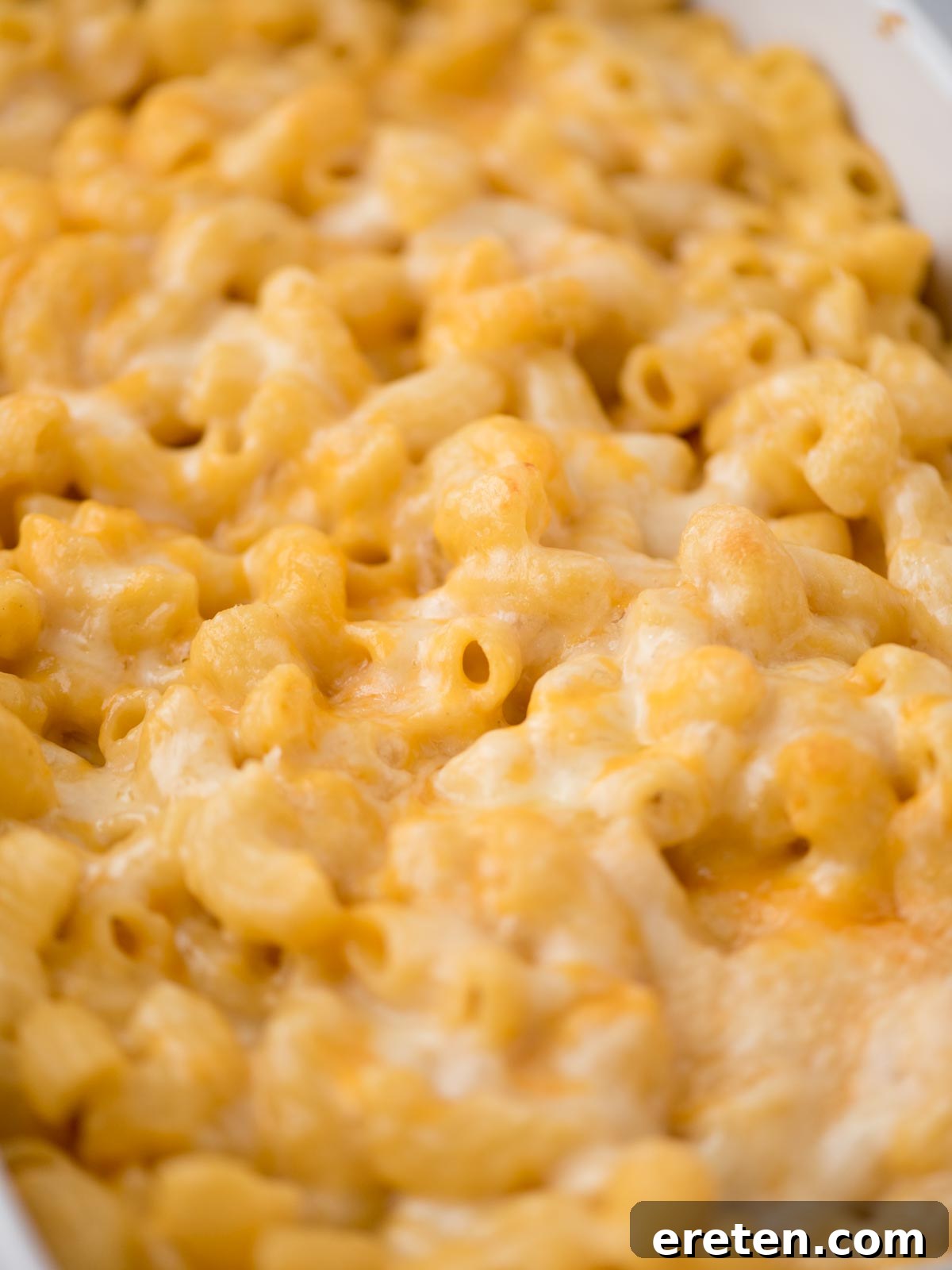
- Bake to Golden Perfection: Place the baking dish into your preheated oven. Bake for approximately 10 to 15 minutes, or just until the cheese topping is thoroughly melted, gloriously bubbly, and has achieved a beautiful light golden-brown hue. Exercise caution not to overbake, as this is a common pitfall that can lead to dry mac and cheese.
- Serve and Savor: Once baked, carefully remove the dish from the oven and allow it to rest for a few minutes before serving. This brief resting period permits the sauce to set slightly, preventing it from being too runny. Scoop out generous portions and savor every single cheesy, creamy, and comforting bite!
Expert Tips for the Cheesiest, Creamiest Baked Mac and Cheese
Achieving mac and cheese perfection is an attainable goal with these expert insider tips. Follow these suggestions closely to ensure your dish is consistently creamy, bursting with flavor, and a true crowd-pleaser every single time you prepare it:
- Always Grate Your Own Cheese: This is unequivocally the most crucial tip for a superior mac and cheese. Pre-shredded cheeses are typically coated with anti-caking agents (such as cellulose or potato starch) that prevent them from clumping together in the package. However, these very agents also inhibit smooth melting, often resulting in a grainy, clumpy, or oily cheese sauce. Freshly grated cheese, on the other hand, melts beautifully and seamlessly, yielding a silky, homogeneous, and utterly luxurious sauce.
- Master the Roux: A perfectly smooth roux is the absolute foundation of a lump-free and evenly thickened cheese sauce. Whisk your melted butter and flour constantly and thoroughly for 1-2 minutes until it forms a uniform, lightly golden paste. Do not rush this critical step, as it prevents raw flour taste and ensures proper thickening.
- Warm Your Milk Slightly: For an even smoother sauce and to prevent the roux from clumping (or “shocking” the sauce), gently warm your milk before incorporating it. You can do this by heating it lightly on the stovetop or briefly in the microwave. Always pour the warm milk into the roux slowly and in a steady stream while continuously whisking to integrate it seamlessly and create a velvety béchamel.
- Opt for Whole Milk for Richness: The higher fat content found in whole milk contributes significantly to the richness, body, and overall creaminess of the sauce. While lower-fat milks can be used in a pinch, they typically result in a slightly thinner, less decadent, and less luxurious texture.
- Embrace Bold Cheese Flavors: Do not shy away from using sharp cheddar! Using mild or even medium cheddar will result in a bland mac and cheese where the delicate cheese flavor gets completely lost amidst the other ingredients. Sharp cheddar provides that essential tangy, robust, and unmistakable flavor that truly defines classic mac and cheese.
- Prevent Dryness at All Costs: The ultimate enemy of baked mac and cheese is dryness. To combat this, avoid overbaking. The goal is simply to melt the topping cheese until it’s bubbly and lightly golden, not to cook the pasta further or evaporate all the liquid from the sauce. Furthermore, never leave your mac and cheese in a hot, turned-off oven; the residual heat will continue to dry it out, leading to a disappointing result.
- Don’t Overcook the Pasta (Al Dente is Key): Cook your pasta to an al dente stage, or even slightly underdone from the package instructions. The pasta will absorb some of the rich sauce and continue to cook subtly in the oven, ensuring it remains perfectly tender with a slight bite, rather than becoming mushy.
- Season Generously and Taste: Always taste your cheese sauce before combining it with the pasta. Adjust the salt, pepper, and garlic powder as needed. Proper seasoning is absolutely paramount to preventing a bland or uninspired dish. Remember, cheese itself contributes salt, so taste and adjust gradually.
- Consider a Crunchy Topping: While not strictly required for this recipe, a simple topping of buttery panko breadcrumbs or crushed crackers adds a wonderful textural contrast and a golden, visually appealing finish that many find irresistible.
Recommended Equipment for Your Homemade Mac and Cheese Journey
Having the right tools at your disposal can significantly enhance your mac and cheese making experience, making it both more enjoyable and efficient. Here are a few essential pieces of kitchen equipment that will prove invaluable:
- 9×13 Baking Dish: This standard size is perfect for creating family-sized portions of mac and cheese and ensures even baking for a consistent result.
- Large Saucepan: A robust medium to large saucepan (or a Dutch oven) is absolutely essential for preparing your foundational cheese sauce.
- Silicone Whisk: A silicone whisk is highly recommended as it prevents scratching your non-stick pans and is instrumental in ensuring a smooth, lump-free roux and an impeccably blended sauce.
- Box Grater: An indispensable tool for freshly grating all your cheeses. This ensures the creamiest possible sauce and avoids the additives found in pre-shredded varieties.
- Liquid Measuring Cups: Crucial for accurate and precise measurement of milk and other liquid ingredients, ensuring consistency in your recipe.
- Measuring Spoons: Essential for precise seasoning and spice measurements, allowing you to fine-tune the flavor profile of your mac and cheese.
- Colander/Strainer: A sturdy colander is indispensable for quickly and efficiently draining the cooked pasta, ensuring no excess water dilutes your rich sauce.
How to Serve Your Irresistible Homemade Baked Mac and Cheese
This creamy baked mac and cheese is incredibly versatile and delicious enough to shine in any role. It can confidently stand alone as a satisfying and hearty main course, or it can truly elevate a meal as an exceptional side dish alongside a wide variety of main courses. Here are some fantastic pairing suggestions to inspire your next meal:
- Buffalo Chicken Sliders: The tangy, spicy flavors of buffalo chicken provide a perfect and exciting counterpoint to the rich, creamy goodness of the mac and cheese.
- Oven-Baked Ribs: A truly classic BBQ pairing! The tender, savory ribs complemented by a side of mac and cheese create a profoundly comforting and incredibly hearty meal that’s perfect for any gathering.
- Smoked Chicken Breast: The subtle yet distinct smoky notes of perfectly cooked smoked chicken would beautifully complement and enhance the cheesy richness of this dish.
- Boneless Chicken Wings: Another universally crowd-pleasing combination, especially ideal for game day parties, casual get-togethers, or simply a fun family meal.
- BBQ Pulled Pork Sandwiches: Serve a generous scoop of this mac and cheese alongside your favorite BBQ pulled pork sandwich for a complete, satisfying, and authentically Southern-inspired feast.
- Grilled Steak or Chicken: For a more elevated and balanced meal, consider serving a smaller, indulgent portion of mac and cheese alongside a perfectly grilled steak, juicy chicken breast, or any other preferred grilled meat.
- Roasted Vegetables: To perfectly balance the richness of the mac and cheese, complement it with a vibrant and healthy side of roasted vegetables like tender asparagus, crisp green beans, or caramelized Brussels sprouts.
- Crisp Green Salad: A simple, fresh green salad tossed with a light vinaigrette dressing offers a wonderfully refreshing and crisp contrast to the warm, creamy depths of the mac and cheese.
Storing and Reheating Your Creamy Baked Mac and Cheese
Leftover mac and cheese is a true culinary delight, and with the right storage and reheating techniques, you can enjoy its creamy goodness for days or even weeks to come. Always remember to allow any extra mac and cheese to cool completely to room temperature before attempting to refrigerate or freeze it.
How to Store Leftovers:
Refrigerator: To store refrigerated mac and cheese, transfer any cooled leftovers into an airtight container. When properly stored in the refrigerator, your mac and cheese will maintain its delicious flavor and desirable texture for up to 5 days. For optimal results and to prevent the formation of a dry crust, we highly recommend pressing a piece of plastic wrap directly onto the surface of the mac and cheese before securely sealing the container.
Freezer: For extended storage, mac and cheese actually freezes exceptionally well, allowing you to enjoy it for up to 3 months. To freeze, portion your cooled leftovers into individual or two-person serving sizes. Place these portions in airtight freezer-safe containers or well-sealed heavy-duty freezer bags. Personally, I find using convenient Souper Cubes incredibly practical for freezing perfect individual portions, which simplifies the reheating process immensely.
Want to discover more comforting recipes?
Explore our exclusive collection of family-friendly crockpot meals that aren’t available anywhere else!
Click the link below to get your free ebook and unlock a world of delicious, easy-to-make dinners.
Discover Our Free Ebook!
How to Reheat Leftover Mac and Cheese:
From the Refrigerator: To reheat refrigerated mac and cheese, the microwave is often the most convenient and effective tool. For each individual serving, add approximately 1/2 to 1 teaspoon of milk or water to the mac and cheese, then stir it gently to loosen. Cover the dish loosely with a paper towel or a microwave-safe lid to trap steam. Microwave at full power for 2-3 minutes, making sure to stir halfway through, until the mac and cheese is heated through completely and has regained its creamy consistency. The added liquid helps to restore its original smooth texture and prevent dryness.
From the Freezer: For frozen leftovers, you have a couple of options. You can first defrost the mac and cheese in the microwave at 50% power for approximately 5 minutes, or until it is partially thawed. Then, add a small splash of milk or water (about 1-2 teaspoons per serving) and heat at full power for another 2-3 minutes, stirring occasionally, until it’s piping hot and creamy throughout. Alternatively, for best results, you can transfer frozen portions to the refrigerator to thaw overnight, and then follow the simple refrigerated reheating instructions the next day.
Frequently Asked Questions About Baked Mac and Cheese
Got burning questions about achieving the absolute perfect baked mac and cheese? We’ve compiled answers to some of the most common queries and concerns to help you master this beloved comfort food:
The possibilities for exciting cheese combinations in mac and cheese are vast and incredibly delicious! Most culinary enthusiasts and home cooks agree that a truly great baked mac and cheese always starts with a robust foundation of freshly shredded sharp cheddar for its iconic and classic flavor profile. From this solid base, you can introduce a delightful variety of other cheeses to add depth, complexity, and unique characteristics. Popular and highly recommended choices include Gruyere (for delightful nutty notes and superb melting), Gouda (for a mild sweetness and creamy texture), Brie (when you desire a buttery, exceptionally rich creaminess), Parmesan (for its salty, umami kick and crisp crust contribution), Comté, Muenster (for mild tanginess), or even a small amount of Mozzarella for that coveted extra stretchiness and gooey factor. The paramount rule is to select high-quality cheeses known for melting smoothly and beautifully, without breaking or turning into an oily mess under heat. Experiment with a thoughtful blend of two to three different types for the most balanced, interesting, and irresistible flavor profile.
Several factors can unfortunately contribute to a less-than-creamy baked mac and cheese. One of the most common culprits is overbaking; leaving the dish in the oven for too long, or even letting it “cool” in a hot, recently turned-off oven, can cause excessive moisture evaporation and dry out the precious sauce. Another potential reason is undercooking your pasta initially, which then absorbs too much of the liquid from the cheese sauce during the subsequent baking process, leaving less for the sauce itself. Furthermore, and perhaps most frequently, using pre-packaged shredded cheese is a significant contributor. These cheeses often contain anti-caking agents (like powdered cellulose) that actively prevent them from melting smoothly, frequently resulting in a grainy, separated, or less creamy sauce. For optimal creaminess, always opt for freshly grated, high-quality block cheese.
Whether or not to cover mac and cheese during baking is a common question and often depends on the specific recipe and your desired final outcome. For some longer-cook, deeper casserole-style mac and cheese recipes, covering the dish with aluminum foil for a portion of the baking time can be beneficial. This helps to retain moisture, ensuring a creamier interior, and prevents the top from browning too quickly or becoming overly crisp. However, for this particular recipe, which bakes for a relatively shorter period primarily to melt the cheese topping and achieve a bubbly, lightly golden finish, covering is not strictly required. If you prefer a softer, less crusty top, or if your oven tends to brown dishes aggressively, a loose foil cover for the initial half of the baking time can certainly be used, removed for the last few minutes to brown.
Adding flour to baked mac and cheese is a critical step, as it is essential for developing a roux. A roux, which is a cooked mixture of fat (in this case, butter) and flour, acts as a foundational thickening agent for the milk. This creates a smooth, luscious béchamel sauce, which then becomes the creamy base for your cheese sauce. Without the flour, the sauce would remain thin, watery, and unable to properly cling to the pasta. It would likely separate into an unappetizing oily and watery mixture rather than forming that desirable smooth, cohesive coating that defines excellent mac and cheese.
A bland baked mac and cheese is typically a direct result of two primary issues: insufficient seasoning or the unfortunate use of cheeses that simply lack robust flavor. Ensure you are properly salting your pasta water (it should taste like the sea!) and seasoning your cheese sauce generously with salt, freshly ground black pepper, and garlic powder. More importantly, when selecting your cheeses, it is crucial to avoid overly mild varieties, such as mild cheddar, as their delicate taste tends to get completely lost and overwhelmed in the overall dish. Always opt for sharp, aged, and intensely flavorful cheeses like sharp cheddar, nutty Gruyere, or pungent Parmesan to deliver that essential, powerful cheesy punch and depth of flavor.
Mac and cheese can become noticeably oily after baking, and this phenomenon can often be attributed to the type and specific quality of the cheese utilized. Cheeses with an exceptionally high fat content, or those that contain added anti-caking agents (which are commonly found in many pre-shredded varieties), are more prone to separating and releasing excess oil when subjected to high heat. To effectively minimize oiliness, it is always recommended to use freshly grated, good-quality block cheeses. Furthermore, selecting varieties that don’t have the absolute highest fat content can help. Additionally, adhering to the proper baking temperature and duration plays a crucial role; overbaking can cause the cheese to break down further and release more fat.
As touched upon earlier, covering your baked mac and cheese before placing it in the oven can indeed be quite beneficial for several reasons. While this specific recipe, with its shorter baking time, doesn’t always strictly require it, covering the dish with foil for at least part of the baking process serves two main purposes: firstly, it helps prevent the top from becoming overly browned or excessively crispy (which some prefer to avoid). Secondly, and perhaps more importantly, it significantly helps to retain moisture within the dish, ensuring that the mac and cheese stays wonderfully creamy and doesn’t dry out. If you prefer a softer, more uniformly creamy interior with a less crusty top, or if your oven tends to brown foods very quickly, using a loose foil tent for the majority of the baking time, and then removing it for the last few minutes, can be a great option.
Yes, you absolutely can! To prepare this delicious mac and cheese ahead of time, follow the recipe instructions up to the point of baking (step 8, after topping with cheese). Allow the entire dish to cool completely to room temperature. Once cooled, cover the baking dish tightly with plastic wrap, and then with a layer of aluminum foil. It can be safely refrigerated for up to 2 days. When you’re ready to bake, remove it from the refrigerator and let it sit at room temperature for about 30 minutes to an hour to take the chill off. Then, bake as directed in the recipe, possibly adding an extra 5-10 minutes to the baking time to ensure it heats through evenly and completely. You might also want to stir in an extra splash of milk or cream before baking if the sauce appears overly thick from chilling.
While classic elbow macaroni is a universally beloved choice for its iconic shape and its unparalleled ability to hold and cradle the rich cheese sauce, the “best” pasta often comes down to personal preference and how effectively it interacts with the creamy sauce. Other excellent and popular choices include small shells, cavatappi (often called corkscrew pasta), rotini, or even medium-sized penne. When making your selection, look specifically for pasta shapes that feature nooks, ridges, or hollows. These textural elements are fantastic for trapping and holding plenty of that delicious, gooey cheese sauce, ensuring every bite is packed with flavor. Regardless of the shape you choose, the most important factor is always cooking it to a perfect al dente stage to prevent any mushiness and maintain a pleasant chew.
More Comfort Food Recipes You’ll Love:
If you’re a devoted fan of hearty, comforting dishes like our ultimate creamy baked mac and cheese, then you’ll undoubtedly want to explore these other equally delicious and satisfying recipes. They are perfect for expanding your repertoire of soul-warming meals:
- Smoky Mac and Cheese: A unique and exciting twist on the classic, featuring a delightful infusion of smoky flavor that adds a whole new dimension.
- Loaded Twice Baked Potatoes: These potatoes are creamy, incredibly cheesy, and absolutely packed with flavor, making them a satisfying meal in themselves or a decadent side.
- Cheesy Au Gratin Potatoes: Layers upon layers of thinly sliced potatoes baked to tender perfection in a rich, bubbling, and intensely cheesy cream sauce.
- Garlic Parmesan Roasted Broccoli and Cauliflower: A healthy yet incredibly flavorful side dish that pairs wonderfully, offering a fresh contrast to rich and creamy main courses.
- Classic Meatloaf: The ultimate hearty dinner, universally loved and perfect when served with a side of creamy mashed potatoes or, of course, our baked mac and cheese.
- Homestyle Chicken Pot Pie: A truly comforting classic featuring a flaky, golden crust and a rich, creamy filling packed with tender chicken and vegetables.
- Creamy Tomato Soup: A simple yet deeply satisfying soup that makes for a perfect light meal or appetizer, especially when paired with a grilled cheese sandwich.
If you make this recipe and absolutely love it as much as we do, we would be incredibly grateful if you could leave a 5 ⭐️⭐️⭐️⭐️⭐️ rating! Your valuable feedback helps us continue to share free, delicious recipes and tips with our wonderful community.
Creamy Baked Mac and Cheese Recipe
Print Recipe
This baked homemade macaroni and cheese is the very best in comfort food. It’s creamy, tangy, and of course, so cheesy. It’s easy to make, family-friendly, and goes great with just about everything. It’s also perfect as a main dish meal all by itself.
Ingredients
- 16 ounces elbow macaroni (uncooked)
- 4 tablespoons unsalted butter
- 1/4 cup all-purpose flour
- 1 1/2 cups whole milk
- 8 ounces sharp cheddar cheese (grated, not pre-shredded)
- 1 teaspoon garlic powder
- 1 teaspoon coarse kosher or sea salt (omit if using salted butter)
- 1/2 teaspoon ground black pepper
- 1/2 cup Gruyere cheese (grated, not pre-shredded)
- 1/4 cup Parmesan cheese (grated, not pre-shredded)
Instructions
- Preheat the oven to 375°F (190°C).
- Spray a 9×13 baking dish with avocado oil spray and set aside.
- Bring a large pot of water to a rolling boil.
- Add the elbow macaroni and cook until al dente according to package instructions.
- While the pasta is cooking, melt the butter in a saucepan over medium heat.
- Once the butter has melted, add the flour and whisk until it is smooth and makes a roux, about 1-2 minutes.
- Slowly pour in the milk, whisking continuously to keep it smooth and prevent clumps. Cook until thickened.
- Turn off the heat and add in the cheddar cheese, garlic powder, salt, and pepper. Mix together until the sauce is smooth and creamy.
- Drain the pasta and return it to the pot.
- Pour in the cheese sauce and mix it until all of the cooked macaroni is covered.
- Pour the pasta into the prepared baking dish and spread it evenly.
- Top the pasta with the Gruyere and Parmesan cheese.
- Bake in the oven for 10-15 minutes, just until the cheese is melted and bubbly.
- Remove from the oven and enjoy!
Notes for Success
- Always use freshly grated cheese for a smooth, creamy sauce, as pre-shredded cheese contains anti-caking agents that can hinder proper melting and lead to a grainy texture.
- Ensure your roux is smooth and lump-free by whisking constantly when adding both the flour to the butter and the milk to the roux.
- Do not replace sharp cheddar with mild or medium varieties; doing so will result in a significant loss of robust cheesy flavor.
- Avoid overbaking the mac and cheese to prevent it from becoming dry and losing its luscious creaminess.
- Consider warming your milk slightly before adding it to the roux; this helps prevent temperature shock and minimizes the chance of lumps forming.
Nutrition Information (Approximate)
Serving Size: 1 serving
Calories: 303 kcal | Carbohydrates: 32g | Protein: 13g | Fat: 14g | Saturated Fat: 8g | Polyunsaturated Fat: 1g | Monounsaturated Fat: 3g | Trans Fat: 0.2g | Cholesterol: 38mg | Sodium: 403mg | Potassium: 143mg | Fiber: 1g | Sugar: 2g | Vitamin A: 397IU | Vitamin C: 0.05mg | Calcium: 250mg | Iron: 1mg
Nutrition information is automatically calculated and should only be used as an approximation. Actual values may vary based on specific ingredients and preparation methods.
Additional Information
Course: Main Course, Side Dish
Cuisine: American
Like this recipe? We’d love to hear from you! Leave a comment below!